


Intelligent Energy Storage: The 11th Grade Science Project Powering Our Future Grid
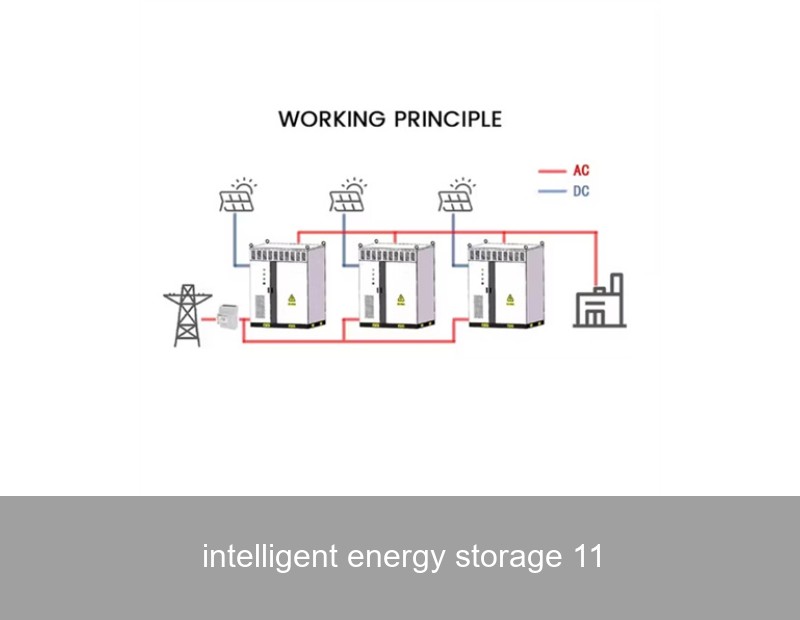
Imagine your typical high school science fair. Among the baking soda volcanoes and plant growth experiments, you might find an 11th grader presenting a model home powered by a small solar panel and a battery. They’re not just showing off a simple circuit; they’re explaining how their system "decides" to store solar energy at noon to power lights in the evening. That student is demonstrating the core principle of intelligent energy storage. Now, scale that concept up to power factories, hospitals, and entire communities, and you’ve entered the realm of the technology that is fundamentally reshaping how we generate, store, and consume electricity globally.
At its heart, intelligent energy storage isn't just about having a big battery in your basement. It's about integrating advanced software, predictive algorithms, and real-time data analytics with robust battery hardware to create a system that doesn't just store energy—it manages it. For businesses and homeowners in Europe and the US facing volatile energy prices and a growing desire for sustainability, this intelligence is the key to resilience, savings, and a cleaner grid.
The Data Behind the Boom: Why Intelligence is No Longer Optional
The shift towards renewable energy is undeniable. In the US, solar and wind are set to provide 22% of electricity generation in 2024, a record high. Europe is charging ahead even faster, with renewables making up 44% of the EU's electricity mix in 2023. But here's the phenomenon every 11th-grade science student quickly discovers: the sun doesn't always shine, and the wind doesn't always blow. This intermittency creates a challenge for grid stability.
This is where the data makes a compelling case for intelligence. A simple, "dumb" battery can charge and discharge, but it operates in a vacuum. An intelligent energy storage system, however, connects to a stream of real-time and forecast data:
- Weather Forecasts: Predicting solar yield and wind patterns for the next 48 hours.
- Utility Price Signals: Monitoring time-of-use rates, demand charges, and real-time electricity prices.
- On-site Consumption Patterns: Learning when a factory's machines cycle on or when a household typically uses the most power.
- Grid Health Data: Responding to frequency fluctuations or potential outages.
By synthesizing this data, the system's software makes autonomous decisions to optimize for a specific goal—be it maximizing self-consumption of solar power, minimizing electricity bills, or providing backup power. It's the difference between a calculator and a supercomputer.
Beyond the Battery: Hardware vs. Intelligence
Let's break down the components, much like our 11th grader would label their project diagram. Every system has two critical halves:
| Component | Role | The "Intelligence" Factor |
|---|---|---|
| Battery Hardware (Li-ion, LFP) | The physical storage medium. Determines capacity (kWh), power output (kW), lifespan, and safety. | Advanced chemistry like Lithium Iron Phosphate (LFP) offers longer life and enhanced safety, forming a stable foundation for intelligent operation. |
| Battery Management System (BMS) | The "brain" of the battery pack. Monitors cell voltage, temperature, and state of charge for health and safety. | A sophisticated BMS is the first layer of intelligence, ensuring the hardware operates within its optimal window. |
| Power Conversion System (PCS/Inverter) | Converts DC battery power to AC for home/grid use, and vice-versa. | Modern, bi-directional inverters enable seamless switching between grid-tied and off-grid modes. |
| Energy Management System (EMS) & Software | The high-level "orchestrator." This is where true intelligence lives. | Uses algorithms and external data to make strategic decisions on when to charge, discharge, or hold. This is the core of intelligent energy storage. |
The magic happens when all these components are designed to work in perfect harmony from the ground up. This integrated approach is what defines leading providers. At Highjoule, for instance, our IntelliBESS product line is built on this principle. We don't just source batteries and add software; we engineer the LFP battery packs, the thermal management, the inverter technology, and the proprietary Adaptive Grid AI software as a single, optimized unit. This ensures maximum efficiency, longevity, and a simpler, more reliable experience for the user.
Case Study: A Texas School District & A Smarter Grid
Let's move from theory to a real-world example that highlights the financial and practical power of intelligence. Consider a public school district in Texas, USA—a region known for both abundant sun and an occasionally fragile grid, with extreme temperatures driving high cooling costs.
The Challenge: The district faced crippling "demand charges"—fees based on their highest 15-minute power draw each month—which made up nearly 40% of their electricity bill. Their existing solar panels reduced energy consumption but did little to flatten these demand spikes when all the school's HVAC systems kicked in simultaneously on a hot afternoon.
The Intelligent Solution: The district deployed a 2 MWh Highjoule IntelliBESS system across several campuses. Unlike a simple setup, the system was programmed with a primary goal: peak shaving. Its software continuously monitored the total campus power draw in real-time. When it predicted a surge that would set a new monthly peak (and a huge charge), it would instantly dispatch stored solar energy to supplement the grid supply, smoothly "shaving" the peak.
The Data-Driven Result: In the first year of operation:
- Demand Charges Reduced by 28%: This translated to annual savings of over $180,000.
- Increased Solar Self-Consumption: Surplus midday solar energy was stored and used later, increasing the value of their solar investment from 30% to over 80%.
- Reliability Backup: The system provided seamless backup power during brief grid outages, keeping critical systems online.

Image Source: Unsplash - Representative image of commercial solar installation.
This case isn't just about savings; it's about grid support. By reducing their peak demand, the school district actively alleviated stress on the local grid during times of highest strain, showcasing how decentralized, intelligent storage can create a more resilient energy network for everyone.
Highjoule Solutions for Every Scale: From Home to Microgrid
The principles of intelligent energy storage apply universally, but the solutions are tailored. Whether for a family home in Germany or an industrial plant in Ohio, the need for control, savings, and sustainability is the same.
Residential: The Highjoule HomePower Hub
For homeowners, intelligence means simplicity and peace of mind. Our HomePower Hub integrates with existing or new solar arrays. Its software learns your family's daily rhythms and local weather patterns, automatically deciding the most economical time to use grid power, solar power, or battery power. In regions with time-of-use rates, it can avoid drawing from the grid during expensive peak hours. For our European customers, particularly in markets like Germany with high electricity prices and generous solar incentives, this maximizes the return on investment and energy independence.
Commercial & Industrial (C&I): The IntelliBESS Series
As the school district case shows, for businesses, the stakes are higher. Demand charges, power quality issues, and sustainability targets are major concerns. Highjoule's IntelliBESS for C&I applications offers multi-objective optimization. The owner can set priorities via a simple dashboard: "Minimize my bill this month," "Ensure backup for my refrigeration units," or "Maximize my use of renewable energy." The system's intelligence handles the complex, real-time execution.

Image Source: Unsplash - Representative image of an industrial battery storage system.
Microgrids: The GridSynch Platform
At the community or campus level, intelligence becomes about creating an independent, resilient energy island. Highjoule's GridSynch platform can orchestrate multiple distributed energy resources—solar arrays, wind turbines, diesel generators, and fleets of batteries—into a stable, self-sufficient microgrid. This is crucial for remote communities, university campuses, or critical infrastructure that cannot afford downtime.
The Future is Adaptive: What's Next for Intelligent Storage?
The journey from that 11th-grade model to today's sophisticated systems has been rapid, but the evolution is far from over. The next frontier is adaptive grid integration and virtual power plants (VPPs). Imagine thousands of distributed Highjoule systems, from homes to factories, all securely networked together. A utility or grid operator could send a signal during a period of high regional demand, and this fleet of intelligent batteries could simultaneously discharge a small amount of power back to the grid, acting as a massive, decentralized power plant that stabilizes the network without firing up a single fossil-fuel peaker plant.
This future relies on the very intelligence we've discussed: systems that can serve their owner's needs first while also being a "good citizen" of the broader grid. It requires hardware built to withstand constant, automated cycling and software smart enough to balance multiple, sometimes competing, objectives seamlessly.
So, as you think about your own energy needs—whether driven by a desire for lower bills, unwavering backup power, or a reduced carbon footprint—the question is no longer just "Do I need a battery?" The critical question to ask any provider is: "How will your system intelligently manage that energy to deliver the specific outcomes I care about most?"
 Inquiry
 Online Chat