


How the International Renewable Energy Agency (IRENA) Charts the Course for a Sustainable Energy Future
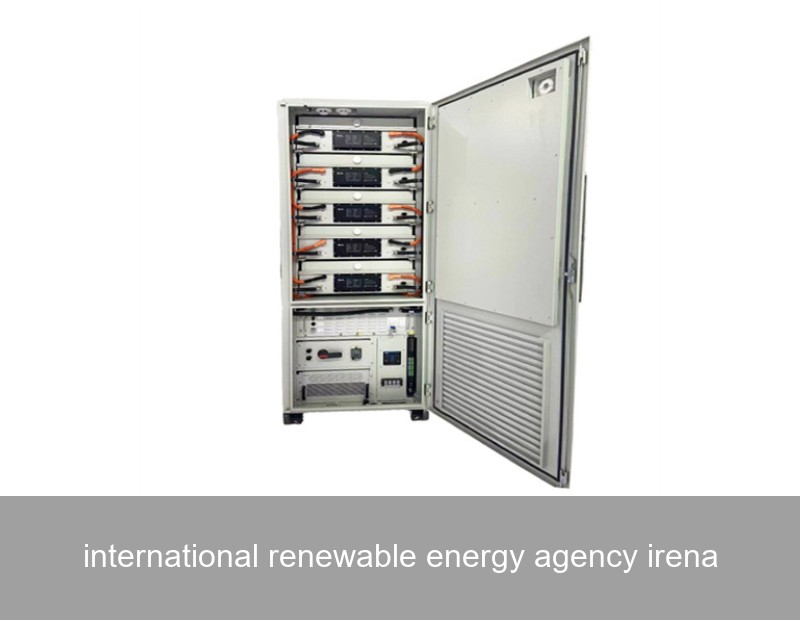
Have you ever wondered who is mapping the global path to a cleaner, more secure energy system? The answer often lies with a pivotal intergovernmental organization: the International Renewable Energy Agency (IRENA). As the world grapples with climate change and energy security, IRENA's data-driven analysis and policy guidance have become indispensable. For businesses and communities, understanding IRENA's insights isn't just academic; it's a practical blueprint for making informed decisions about energy resilience and cost savings. This is where the vision of global agencies meets the reality of on-the-ground implementation by companies like Highjoule, which transforms these macro-trends into reliable, intelligent energy storage solutions for homes, businesses, and grids.
Table of Contents
- The Renewable Energy Renaissance: More Than Just a Trend
- IRENA's Crucial Role: From Data to Actionable Policy
- The Storage Imperative: IRENA's Forecast and the Grid's New Backbone
- From Blueprint to Reality: A German Industrial Case Study
- Highjoule's Role: Bridging IRENA's Vision with Local Energy Independence
- Looking Ahead: Challenges and Opportunities
The Renewable Energy Renaissance: More Than Just a Trend
We're living through a profound energy transformation. Solar panels and wind turbines are no longer niche technologies; they are now the most cost-competitive sources of new electricity generation in much of the world. But this rapid growth presents a familiar challenge: the sun doesn't always shine, and the wind doesn't always blow. This intermittency is the fundamental puzzle that modern energy systems must solve to ensure lights stay on and factories keep running.

This is where the conversation shifts from generation to management. Simply producing clean energy isn't enough. We need to store it intelligently and deploy it precisely when and where it's needed. Think of it as the difference between having a bountiful harvest and having a sophisticated granary system to preserve the yield for year-round sustenance.
IRENA's Crucial Role: From Data to Actionable Policy
The International Renewable Energy Agency (IRENA) acts as the global hub for this transformation. Founded in 2009 and now comprising over 160 member states, IRENA doesn't just advocate for renewables; it provides the hard data, technology outlooks, and policy frameworks that governments and industry rely on. Their annual Renewable Capacity Statistics and flagship World Energy Transitions Outlook reports are considered gospel in the energy sector.
For instance, IRENA consistently highlights that renewables, coupled with energy efficiency and electrification, can achieve over 90% of the necessary carbon emissions reductions by 2050. But their analysis goes further, emphasizing that energy storage is not an optional add-on but a critical enabling technology. They project that to meet climate goals, the world's energy storage capacity needs to grow exponentially, from around 200 GW today to potentially over 4,000 GW by 2050. This isn't a minor adjustment; it's a complete re-architecting of our power infrastructure.
The Storage Imperative: IRENA's Forecast and the Grid's New Backbone
Let's break down what IRENA's storage forecast means on a practical level. This massive required capacity won't come from a single technology. It will be a symphony of solutions:
- Grid-Scale Storage: Massive battery energy storage systems (BESS) that stabilize national grids, store excess wind power, and defer costly grid upgrades.
- Commercial & Industrial (C&I): Systems for factories, data centers, and supermarkets to manage demand charges, ensure power quality, and provide backup during outages.
- Residential Storage: Home battery systems that allow homeowners to maximize their solar self-consumption and gain independence from volatile utility prices.
This multi-layered approach is exactly what guides the product development at Highjoule. For nearly two decades, since our founding in 2005, we've focused on creating intelligent, scalable storage solutions for each of these segments. Our GridMax series for utility and large commercial applications, our PowerHub for C&I sites, and our HomeCell systems for residences are all designed with this integrated future in mind. They are the building blocks IRENA's models predict we will need in the millions.
From Blueprint to Reality: A German Industrial Case Study
Data is compelling, but real-world results are what truly convince. Consider a manufacturing plant in Germany's industrial heartland, facing two major challenges: skyrocketing electricity costs (partly due to the energy market volatility IRENA often analyzes) and a corporate mandate to reduce carbon footprint.
The solution involved a 1.2 MW solar canopy over their parking lot paired with a 2.4 MWh Highjoule PowerHub battery storage system. Here’s what happened:
| Metric | Before Highjoule System | After Highjoule System |
|---|---|---|
| Grid Energy Consumption | 100% | Reduced by 68% |
| Demand Charges (Monthly Peak) | Unmanaged, consistently high | Reduced by 40% |
| Renewable Self-Consumption | Solar exported to grid (low tariff) | Increased from 35% to over 85% |
| CO2 Emissions | Baseline | Reduced by 720 tons annually |
This case mirrors the pathways IRENA promotes: maximizing on-site renewable use, providing grid services, and achieving direct economic and environmental benefits. The battery system doesn't just store energy; its intelligent management software performs peak shaving, arbitrage, and seamless backup, delivering a return on investment in under 5 years.

Highjoule's Role: Bridging IRENA's Vision with Local Energy Independence
So, how does a global agency's report translate to a stable power supply for a hospital in Texas or a microgrid for a community in Spain? It requires technology providers to act as translators and integrators. At Highjoule, our expertise lies in making the high-level imperative for storage a practical, reliable reality.
Our systems are built with the safety, longevity, and intelligence required for the energy transition. For example, our proprietary Adaptive Cycle Management software extends battery life by optimizing charge/discharge cycles based on weather, usage patterns, and grid signals. This directly addresses a key concern IRENA raises about sustainable lifecycle management for storage assets. Whether it's a residential customer seeking resilience against increasing blackouts (a concern in both the U.S. and Europe) or a municipality developing a 100% renewable microgrid, our solutions are designed to be the robust, smart core of that system.
Looking Ahead: Challenges and Opportunities
The path outlined by IRENA is clear, but it's not without hurdles. Supply chains for critical minerals, evolving grid codes, and the need for skilled installers are all real challenges. However, each challenge is also an opportunity for innovation and collaboration. The integration of artificial intelligence for predictive energy management, the development of circular economy models for batteries, and new business models like virtual power plants (VPPs) are all accelerating.
As a technology leader, Highjoule is actively engaged in these areas. Our systems are VPP-ready, allowing aggregators to pool distributed storage resources to create a virtual power plant that can support the grid during times of peak stress—turning thousands of individual batteries into a single, grid-stabilizing force.

IRENA provides the compass, but the journey is undertaken by nations, businesses, and communities. The question is no longer *if* we will transition to a renewables-based system, but *how quickly* and *how smoothly* we can do it.
 Inquiry
 Online Chat