


Understanding the Price of a 100W Solar Panel: A Complete Guide for Homeowners
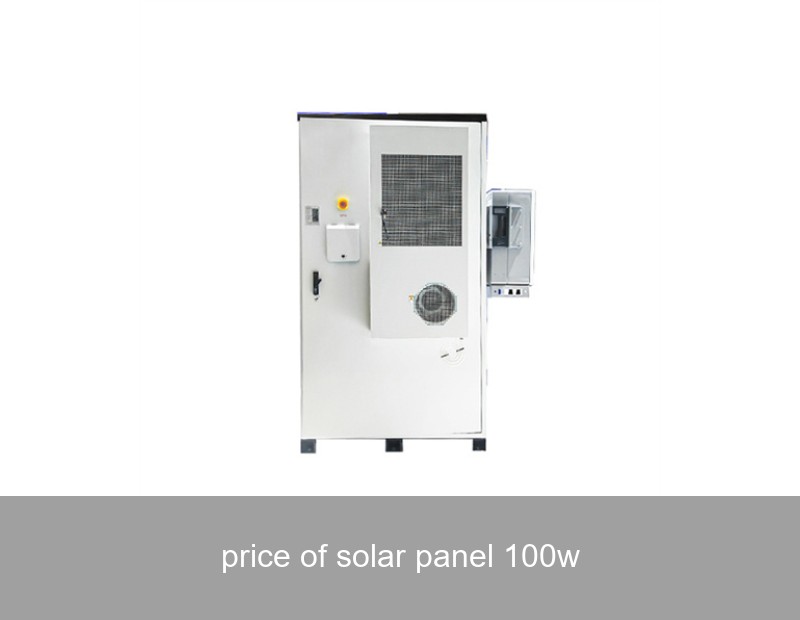
So, you're thinking about going solar, and you've started with a fundamental question: what's the price of a 100W solar panel? It seems like a simple query, but the answer reveals a fascinating story about technology, markets, and the true value of energy independence. While a single 100W panel might cost between $70 and $150 USD, the real conversation isn't just about that upfront sticker price. It's about what that panel represents: a building block for a cleaner, more resilient, and ultimately more intelligent energy system for your home or business. Let's dive deeper.
Table of Contents
The Real Price Breakdown: More Than Just Hardware
When you search for the "price of a solar panel 100w," you're typically quoted the module cost. This is just the beginning. The total cost to get that panel generating useful power involves several components:
- The Panel (Module): The 100W monocrystalline or polycrystalline silicon unit itself. Prices have dropped over 80% in the last decade due to manufacturing scale and efficiency gains.
- Balance of System (BOS): This includes mounting racks, wiring, connectors, and most importantly, the inverter that converts DC solar power to usable AC power.
- Installation & Permitting: Professional labor and local permit fees. This is often a fixed cost, making it a larger proportion of smaller systems.
- Operational Costs: Monitoring, maintenance, and potential repairs over 25+ years.
Therefore, evaluating a 100W panel in isolation is like pricing a car engine without the chassis, wheels, or transmission. For a truly functional setup, you need to think systemically.
The Critical Role of Inverters and Batteries
A panel's DC output is useless to most home appliances. A quality inverter is essential. More importantly, solar panels only produce power when the sun shines. To use that solar energy at night or during a grid outage, you need a battery storage system. This is where the conversation shifts from simple solar generation to comprehensive energy management—the core expertise of companies like Highjoule.
Thinking Beyond the Watt: The System is the Solution
The modern energy consumer isn't just buying panels; they're investing in a personalized power plant. This is where the synergy between solar generation and intelligent storage becomes paramount. A standalone 100W panel offers limited utility, but integrated into a system with a high-performance battery, its value multiplies.
At Highjoule, with nearly two decades of experience since 2005, we design solutions that look beyond the per-watt panel price. Our focus is on delivering intelligent, efficient, and sustainable power solutions. For residential applications, this means integrating premium solar panels with our advanced battery storage systems, like the Highjoule HomePower series. These systems feature sophisticated energy management software that decides when to store solar energy, power your home, or even sell back to the grid based on your usage patterns and electricity rates.

Image: A modern home solar and battery storage installation. (Source: Unsplash)
This intelligence transforms your solar array from a simple generator into a strategic asset, maximizing your return on every solar watt you produce, regardless of the initial panel price.
A Real-World Case: From Panel Price to Power Security
Let's look at a concrete example from California, USA. A homeowner in Sacramento installed a 6.6kW solar array (roughly 20 x 330W panels) in 2021. The initial focus was on offsetting high utility bills, with a simple grid-tied system.
The Challenge: In 2023, the region experienced repeated Public Safety Power Shutoffs (PSPS) due to wildfire risk. The homeowner's solar system would shut down during these grid outages for safety reasons, leaving them without power despite having a roof full of panels.
The Solution: The homeowner retrofitted their system with a Highjoule HomePower 10 battery storage unit. This 10kWh system seamlessly integrates with their existing solar panels.
The Outcome:
| Metric | Before Battery | After Highjoule Battery Installation |
|---|---|---|
| Self-Consumption of Solar | ~40% (excess sold to grid at low rates) | ~85% (excess stored for personal use) |
| Grid Independence During Outages | 0 hours | Critical loads powered for 24+ hours |
| Bill Savings Impact | Reduced by 60% | Reduced by 90% + avoided time-of-use charges |
This case illustrates that the true "price" discussion evolved. The initial investment in panels was only fully unlocked by the subsequent investment in intelligent storage. The value shifted from pure cost-per-watt to value-per-watt-managed—ensuring reliable, usable power on demand.
The Evolving Value Equation: Durability & Intelligence
Panel efficiency and degradation rates also play a huge role in long-term value. A cheaper 100W panel might degrade faster (losing 1% or more of its output per year) compared to a premium panel with a degradation rate of 0.3-0.5% annually. Over 25 years, the premium panel will deliver significantly more total energy, justifying a higher initial price.
Furthermore, the integration of storage and smart management is becoming the new standard. According to the U.S. Department of Energy, pairing storage with solar is key to grid resilience and maximizing renewable energy use. Highjoule's systems are built on this principle, offering not just hardware but a complete energy ecosystem.
For commercial and industrial clients, Highjoule's GridMax series provides large-scale battery energy storage systems (BESS) that manage demand charges, provide backup power, and enable participation in grid services. This turns a capital expenditure into a revenue-generating or cost-avoidance asset, a calculation far more complex and valuable than the price of any single component.

Image: An industrial-scale battery energy storage system (BESS). (Source: Unsplash)
Making the Right Choice for Your Energy Needs
So, how should you, as an informed consumer, approach the "price of a 100W solar panel"?
- Define Your Goal: Is it for a small DIY project (like an RV or boat), or is it the first step in planning a whole-home energy system?
- Think in Systems: For whole-home power, get quotes for complete systems (solar + inverter + storage + management).
- Evaluate Total Lifetime Value: Consider warranty, degradation rates, and the intelligence of the accompanying software. A system that optimizes itself daily can save thousands over its life.
- Choose a Partner, Not Just a Product: Look for providers with deep expertise in system integration and long-term service, like Highjoule, which offers tailored solutions from residential to microgrid scale.
Data from the National Renewable Energy Laboratory (NREL) consistently shows that system-level costs and performance are the most critical metrics, not individual component prices.
Where Highjoule Fits In
Highjoule acts as your energy architect. We help you design a system where the solar panels—whether they're 100W units or 500W units—are perfectly harmonized with high-capacity, safe, and long-lasting battery storage and predictive energy software. This ensures you capture, store, and use every bit of solar energy you produce, transforming the simple price of a panel into a long-term investment in stability and sustainability.
Given that the future of energy is not just generated but intelligently managed, what is the first question you should ask a potential installer to ensure they are thinking about your long-term energy resilience, not just the short-term panel price?
 Inquiry
 Online Chat