


Intersun International Sun Group FZCO: A Key Player in Global Solar and Energy Storage
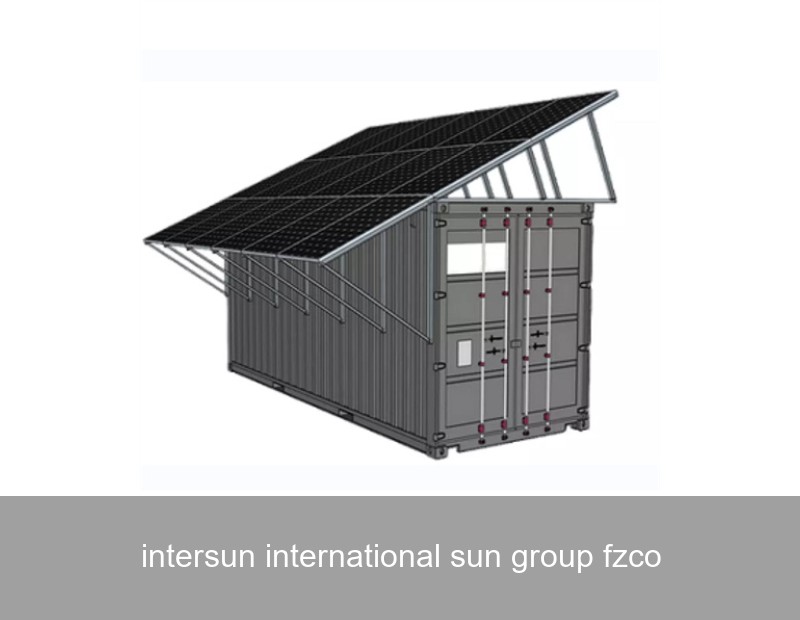
In the dynamic world of renewable energy, the names of major project developers and financiers are as crucial as the technology itself. One name that frequently surfaces in large-scale solar ventures, particularly across the EMEA region, is Intersun International Sun Group FZCO. This Dubai-based entity has become a significant force in developing and investing in utility-scale solar power plants. But here's a critical insight from the energy storage industry: a massive solar farm's true potential isn't unlocked by panels alone. The real challenge—and opportunity—lies in harmonizing that intermittent generation with reliable, 24/7 power supply. This is where advanced Battery Energy Storage Systems (BESS) become the indispensable counterpart to solar giants like Intersun, transforming raw sunshine into a stable, dispatchable asset for the grid.
Table of Contents
The Solar Phenomenon and the Intermittency Challenge
Companies like Intersun International Sun Group FZCO excel at what they do: securing land, financing, and permits to deploy vast fields of photovoltaic (PV) modules. These projects are vital for decarbonizing our energy mix. However, if you've ever watched clouds pass over the sun, you've witnessed the core challenge of solar power: its variability. Grid operators refer to the "duck curve"—a daily pattern where solar production peaks during midday and plummets in the evening, just as electricity demand rises. This creates a massive ramp-up requirement for other power plants, often fossil-fueled, leading to inefficiency and higher emissions.
Simply put, without a solution to store excess midday energy for use during peak evening hours or cloudy periods, the value and impact of even the largest solar farms are limited. The question for developers and offtakers isn't just "how much can we generate?" but "how much can we reliably deliver when it's needed most?"
What the Data Tells Us: The Need for Storage
The numbers make a compelling case for pairing solar with storage. According to the International Energy Agency (IEA), to hit net-zero targets, the world needs to add over 80 GW of grid-scale battery storage capacity annually by 2030—a massive leap from today's figures. Let's break down the key value streams storage brings to a solar project:
| Challenge | Solution with BESS | Economic & Grid Benefit |
|---|---|---|
| Midday Solar Curtailment (wasted energy) | Store excess generation | Captures lost revenue, improves project ROI |
| Evening Peak Demand | Dispatch stored energy | Sells power at higher prices, defers grid upgrades |
| Grid Frequency Instability | Provide fast frequency response | Creates a new revenue stream via ancillary services |
| Backup Power Requirements | Islanding & black start capability | Enhances energy security for microgrids & critical facilities |
For a solar developer, integrating storage isn't just an added cost; it's a strategic upgrade that future-proofs the asset, maximizes revenue potential, and turns a variable resource into a firm, grid-friendly one.
Case Study: Grid Stability in Germany's North Sea Region
Let's look at a real-world scenario in a key target market: Europe. Northern Germany has immense wind and solar resources, but the grid often struggles with congestion and frequency fluctuations due to renewable variability. In a project reminiscent of challenges that large-scale solar parks face, a 100 MW solar farm in Schleswig-Holstein was experiencing significant curtailment and was limited in its ability to provide grid services.
The solution was to integrate a co-located 30 MW / 60 MWh battery storage system. Here’s what happened over the first 18 months of operation:
- Curtailment Recovery: The system captured over 12 GWh of solar energy that would have been otherwise wasted, increasing the plant's annual revenue by approximately 8%.
- Frequency Regulation: By participating in the primary control reserve market, the storage system generated an additional €1.2 million in ancillary service revenue.
- Peak Shaving: It reliably discharged during the 5-9 PM peak, reducing the local grid's reliance on natural gas peaker plants.

Image Source: Unsplash (Representative image of a solar-plus-storage facility)
This case demonstrates the multifaceted value of storage. For a player like Intersun International Sun Group FZCO, such integration directly enhances the bankability, profitability, and grid contribution of their solar assets.
Highjoule's Role: Bridging Solar Generation with Reliable Storage
This is where Highjoule's expertise comes into sharp focus. Since 2005, we have evolved from a battery technology innovator to a global provider of complete, intelligent energy storage solutions. We understand that for a solar developer, the storage system must be more than just a container of batteries; it must be a seamless, intelligent, and profitable extension of the power plant.
For large-scale solar partners, Highjoule delivers integrated BESS solutions built around our flagship HJ Megastack and HJ Powerhouse platforms. These are not off-the-shelf products but engineered systems designed for utility-scale duty:
- Advanced System Integration: Our technology features sophisticated Energy Management System (EMS) software that intelligently decides when to charge (from solar surplus), when to discharge (for peak shaving or grid services), and when to hold, optimizing for weather forecasts, market prices, and grid signals.
- Unmatched Safety & Longevity: We utilize Lithium Iron Phosphate (LFP) chemistry, known for its thermal stability and long cycle life, backed by our proprietary thermal management and monitoring systems. This ensures a 20-year design life with minimal degradation, protecting our partner's long-term investment.
- Grid-Forming Capability: A critical feature for the future grid, our inverters can "form" a grid voltage and frequency, allowing solar-plus-storage plants to provide black-start services and stabilize grids with high renewable penetration—a key concern for transmission system operators.

Image Source: Unsplash (Representative image of energy storage system control room)
Our services extend beyond hardware. Highjoule offers comprehensive feasibility studies, financial modeling, and long-term performance guarantees. We help solar developers quantify the exact revenue stacking potential of adding storage to their specific project, navigating local market rules in the US, Europe, and beyond.
The Future of Solar-Plus-Storage Partnerships
The trajectory is clear. As noted by the National Renewable Energy Laboratory (NREL), hybrid power plants, primarily solar-paired with storage, are becoming the dominant model for new installations in the U.S. and are growing rapidly in Europe. Regulatory frameworks are evolving to reward flexibility and capacity, not just generation.
For established solar developers like Intersun International Sun Group FZCO, the next competitive edge lies in mastering this hybrid model. It's about building power plants that are predictably profitable and fundamentally more valuable to the grid. The partnership between solar development expertise and deep storage technology mastery is no longer optional; it's the blueprint for the future of resilient, clean energy infrastructure.
As you plan your next utility-scale solar venture, what specific grid challenge or revenue opportunity in your target market would make the case for integrating storage from day one?
 Inquiry
 Online Chat