


Skye Renewables Singapore: A Case Study in Urban Energy Innovation
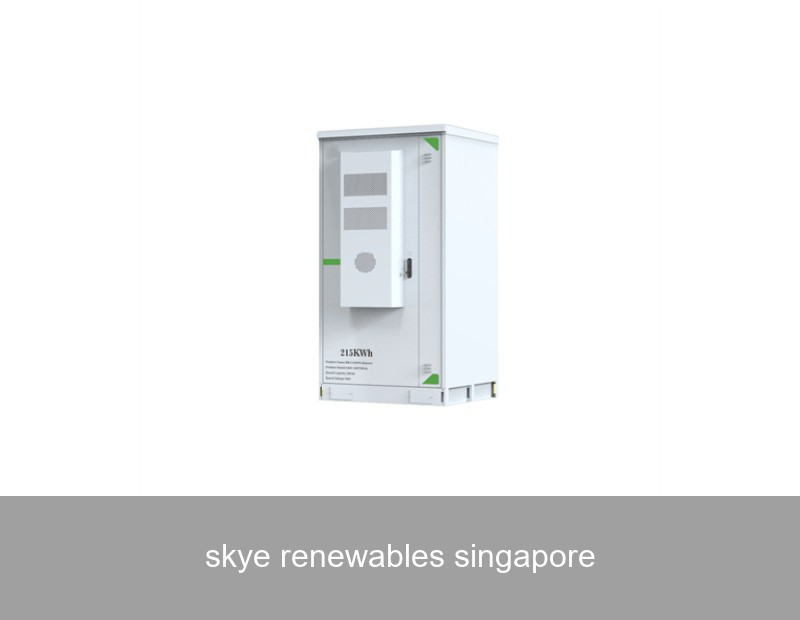
When we picture a renewable energy revolution, we often imagine vast solar farms or towering wind turbines. But the real, gritty work of decarbonization is happening in our cities. Singapore, a global financial hub with limited land and natural resources, presents a unique challenge and a beacon of innovation. Here, companies like Skye Renewables Singapore are pioneering the integration of clean energy into dense urban landscapes. Their success isn't just about generating kilowatt-hours; it's about intelligent management, storage, and optimization of power. This is where advanced energy storage systems (ESS) become the unsung hero, transforming intermittent solar power into a reliable, grid-stabilizing force. For over 18 years, Highjoule has been at the forefront of this very transformation, providing the smart, scalable battery storage solutions that make ambitious urban renewable projects not just possible, but profitable and resilient.
Table of Contents
- The Urban Energy Challenge: Singapore's Paradox
- The Storage Nexus: Beyond Just Backup Power
- Skye Renewables Singapore: A Blueprint for Urban C&I Solar
- The Highjoule Advantage: Intelligence Meets Storage
- Towards a Self-Optimizing Urban Grid

Image Source: Unsplash - Representative image of commercial urban solar installation.
The Urban Energy Challenge: Singapore's Paradox
Singapore's energy dilemma is a fascinating one. The nation has committed to ambitious sustainability goals, aiming to peak emissions around 2030 and achieve net-zero by 2050. However, with high solar irradiance but severe space constraints, large-scale renewable farms are off the table. The solution? Maximizing every available surface—rooftops, reservoirs, and facades—with solar panels. This decentralized approach creates a new phenomenon: a highly distributed, variable energy supply feeding into a dense and demanding urban grid. Without a buffer, this can lead to voltage fluctuations and grid instability, especially during peak generation on sunny afternoons. The question then becomes, how do you capture this precious solar energy and release it precisely when and where it's needed most?
The Storage Nexus: Beyond Just Backup Power
This is the critical role of modern battery energy storage systems (BESS). Think of them as the "shock absorbers" and "time machines" for the electrical grid. They don't just store energy; they provide a suite of essential grid services:
- Solar Self-Consumption Optimization: Storing excess daytime solar for use in the evening, drastically reducing reliance on the grid during expensive peak periods.
- Peak Shaving: Automatically discharging during times of highest grid demand to avoid costly demand charges for commercial and industrial (C&I) users.
- Frequency Regulation: Responding in milliseconds to tiny fluctuations in grid frequency, a service critical for stability, especially with high renewable penetration.
- Deferring Grid Upgrades: By managing local demand and supply, BESS can postpone the need for expensive infrastructure investments.
For a project developer like Skye Renewables, integrating a BESS isn't an add-on; it's a core component that defines the project's financial and operational viability. It transforms a simple solar installation into a smart, revenue-generating asset.
Skye Renewables Singapore: A Blueprint for Urban C&I Solar
Let's examine a concrete example. Skye Renewables Singapore partnered with a large logistics and warehousing facility in Jurong. The goal was to cover a significant portion of the facility's 24/7 energy load with solar, but the nighttime operations and high afternoon cooling loads presented a mismatch with solar generation.
The Project & The Challenge
- Solar Capacity: 1.2 MWp rooftop solar PV system.
- Facility Load: High, consistent base load with significant spikes during afternoon operations.
- Core Issue: Only ~30% of the solar generation could be used directly in real-time. The rest would be exported to the grid at a lower rate, while the facility still drew expensive power at night.
The Integrated Solution & Results
Skye Renewables' design included a seamlessly integrated 500 kWh / 750 kVA battery storage system. This system was programmed with intelligent energy management software to perform peak shaving and energy time-shifting. The results, measured over the first year of operation, were compelling:
| Metric | Result | Impact |
|---|---|---|
| Solar Self-Consumption | Increased from ~30% to over 85% | Maximized use of clean energy, reduced grid purchase |
| Peak Demand Charges | Reduced by 22% | Substantial direct cost savings on utility bills |
| Grid Export During Peak | Minimized to near zero | Reduced grid stress, potential for future revenue from grid services |
| Overall Energy Cost Savings | Exceeded initial projections by 18% | Enhanced project ROI and client satisfaction |
This case, documented in part by the Singapore Energy Market Authority (EMA), highlights the multiplier effect of pairing solar with smart storage. It's a model being replicated across Singapore's C&I sector.

Image Source: Unsplash - Representative image of a commercial battery storage system.
The Highjoule Advantage: Intelligence Meets Storage
Behind successful integrations like the one potentially leveraged by Skye Renewables, lies technology from providers like Highjoule. Our systems are engineered for the precise demands of the C&I and microgrid sector. For a Singaporean context, where space is premium and reliability non-negotiable, our H-Series Modular Commercial ESS offers distinct advantages:
- Ultra-Compact & Scalable Design: High energy density allows for maximum storage capacity in minimal footprint, crucial for space-constrained urban sites. Systems can be scaled from 100 kWh to multi-MWh seamlessly.
- Advanced AI-Driven Energy Management System (EMS): The true brain of the operation. Our EMS doesn't just react; it predicts. Using weather forecasts, load history, and real-time grid data, it optimizes charge/discharge cycles for maximum economic return, whether for savings, revenue, or resilience.
- Grid-Forming Capability: In the event of a grid outage, our systems can form a stable "island" microgrid, keeping critical operations powered by solar and storage—a vital feature for data centers, pharmaceutical cold storage, and manufacturing.
- Unmatched Safety & Longevity: Built with lithium iron phosphate (LFP) chemistry and featuring multi-layer protection (thermal, electrical, structural), our systems are designed for a 20+ year lifespan, ensuring long-term project viability.
When a developer chooses a Highjoule system, they are not just buying batteries; they are acquiring a guaranteed performance outcome, backed by 18 years of global deployment experience from California to Germany.
Beyond the Single Building: The Microgrid Vision
The future that companies like Skye Renewables and Highjoule are building towards extends beyond single buildings. Imagine interconnected clusters of buildings—a business park, a university campus, or a HDB town—each with solar and storage, communicating and transacting energy peer-to-peer. This creates a resilient, self-optimizing local energy network, or a community microgrid. Highjoule's platform is inherently designed for this future, capable of aggregating multiple distributed assets to act as a virtual power plant (VPP), providing grid services at a district or even national level. This vision is actively being explored in Singapore's Energy Story and is already a reality in progressive European and U.S. markets.
Towards a Self-Optimizing Urban Grid
The journey of Skye Renewables Singapore mirrors a global shift. From International Renewable Energy Agency (IRENA) reports to real-world deployments in Berlin and Texas, the message is clear: renewables alone are not enough. The synergy between intelligent generation (like solar) and intelligent storage (like advanced BESS) is what unlocks true sustainability, resilience, and energy independence. It turns passive consumers into active "prosumers," strengthening the grid while cutting costs and carbon.

Image Source: Unsplash - Conceptual image of a smart, energy-efficient city.
So, as you look at the rooftops of your city—be it in Frankfurt, San Francisco, or Singapore—what do you see? Untapped potential or a future-proofed power plant? The technology to transform that vision into reality is here today. What's the first step your organization could take to not just consume energy, but to actively and intelligently manage it?
 Inquiry
 Online Chat