


Unlocking Energy Independence: Your Guide to the 3000 Watt Solar Inverter
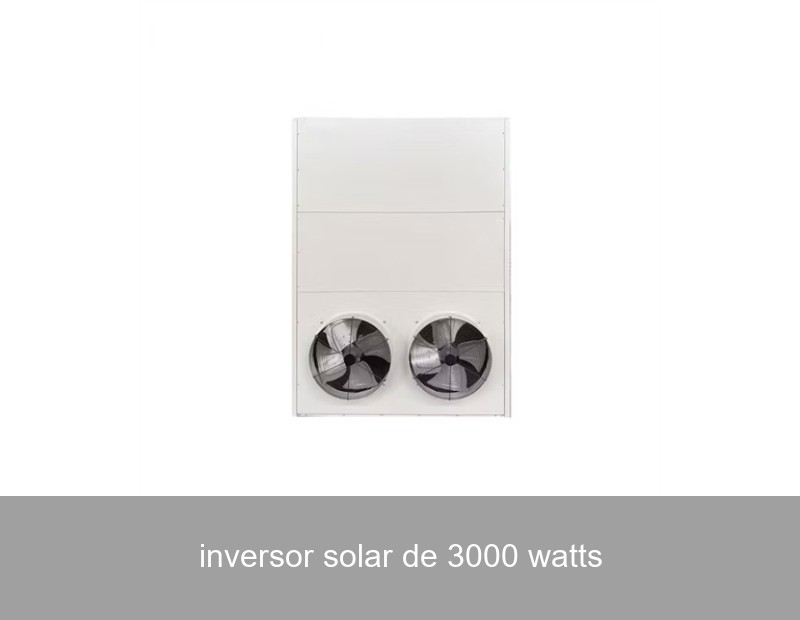
Imagine a world where your home isn't just a consumer of electricity, but a self-sufficient hub of clean power. For homeowners and small business operators across Europe and the US, this vision is increasingly powered by a critical, yet often overlooked, component: the 3000 watt solar inverter. This isn't just another piece of hardware; it's the intelligent heart of a modern solar energy system, transforming raw sunlight into usable, reliable power for your daily life. But with so much information available, how do you know if a 3kW inverter is the right choice for your energy needs? Let's demystify this technology and explore how it can be the cornerstone of a smarter, more resilient energy setup.
Table of Contents
- What is a 3000 Watt Solar Inverter?
- The Sweet Spot: Why Choose a 3kW System?
- From Theory to Practice: A Real-World Case Study
- Beyond the Inverter: The Importance of a Complete System
- Making the Decision: Is a 3000 Watt Inverter Right for You?
What Exactly is a 3000 Watt Solar Inverter?
In simple terms, a solar inverter is the brain and translator of your photovoltaic (PV) system. Your solar panels generate Direct Current (DC) electricity. However, every appliance in your home—from your refrigerator to your laptop—runs on Alternating Current (AC). The inverter's primary job is to convert that DC power into clean, grid-compatible AC power. The "3000 watt" rating, or 3 kilowatts (kW), signifies its continuous output capacity. This means it can power a combined load of up to 3000 watts of AC appliances at any given moment.
Think of it like the engine in a car. A 3kW inverter is a robust, efficient engine suitable for a wide range of "driving conditions"—from powering the essential loads of an average home to supporting critical operations in a small commercial setting. It's a popular size because it strikes an ideal balance between capability, cost, and the typical energy generation profile of a residential rooftop installation.
The Sweet Spot: Why a 3kW System Makes Sense
The popularity of the 3000-watt solar inverter isn't accidental. It aligns perfectly with the energy consumption patterns of many households. Let's look at the data. According to the U.S. Energy Information Administration (EIA), the average annual electricity consumption for a U.S. residential utility customer was about 10,500 kilowatt-hours (kWh) in 2022. A well-designed 3kW solar system, depending on location (like sun-rich California or Spain), can produce approximately 3,600 to 4,800 kWh annually. This can offset a significant 35-45% of an average home's electricity bill, representing substantial savings and carbon reduction.
But its role is evolving. Today, it's not just about offsetting grid consumption. With the right technology, a 3kW inverter becomes the command center for:
- Backup Power: Providing essential electricity during grid outages.
- Battery Integration: Storing excess solar energy for use at night or during peak tariff periods.
- Energy Management: Intelligently directing solar power to where it's needed most, whether to the grid, your home circuits, or your electric vehicle charger.

Image: A modern hybrid inverter, like Highjoule's solutions, is the core of an integrated energy system. (Source: Unsplash)
Key Features to Look For in a Modern 3000W Inverter
Not all 3000-watt inverters are created equal. When selecting one, you're choosing the intelligence layer for your energy future. Here are the non-negotiable features for a system built to last:
| Feature | Why It Matters | Highjoule's Approach |
|---|---|---|
| Hybrid Capability | An inverter that is "battery-ready" or fully hybrid can seamlessly integrate energy storage. This is no longer a luxury but a necessity for true energy resilience and maximizing self-consumption. | Highjoule's H-Energy Hub 3.0 series is natively designed as a hybrid inverter, with built-in Maximum Power Point Tracking (MPPT) charge controllers for both solar and battery, simplifying installation and enhancing efficiency. |
| High Peak Power & Efficiency | Appliances like refrigerators or water pumps have startup surges that can be 2-3 times their running wattage. Your inverter needs a high surge rating (e.g., 6000W+) to handle these without tripping. Look for peak efficiencies above 97%. | Our inverters are engineered with robust components to deliver surge capacities well above their continuous rating, ensuring they start heavy inductive loads reliably, all while maintaining industry-leading conversion efficiency. |
| Advanced Monitoring & Grid Services | Real-time monitoring via a user-friendly app allows you to track production, consumption, and savings. For grid stability, features like voltage/frequency ride-through are becoming mandatory in many regions. | The Highjoule Smart Energy Platform provides intuitive, granular insights into your energy flows. Our inverters are certified for grid support functions, making them future-proof for smart grid requirements in Europe and North America. |
| Robust Warranty & Support | The inverter is a long-term investment. A strong warranty (10+ years) and accessible technical support are critical indicators of manufacturer confidence and product reliability. | Backed by nearly two decades of innovation, Highjoule provides comprehensive warranties and a global network of certified installers and support teams, ensuring peace of mind for the lifespan of your system. |
From Theory to Practice: A Real-World Case Study in Bavaria
Let's move beyond specifications and see the impact. Consider the Müller family home in southern Germany, a region with moderate but sufficient solar irradiation. Their goal was to reduce reliance on the volatile energy grid and charge their new electric vehicle sustainably.
Phenomenon: High daytime solar export at low feed-in tariffs, coupled with high evening consumption and EV charging needs.
Data & Solution: A local Highjoule-certified installer designed a system centered around a Highjoule H-Energy Hub 3.0 (3kW hybrid inverter), paired with 4.2 kWp of solar panels and a 10 kWh Highjoule lithium-ion battery. The system was configured for maximum self-consumption.
- Self-Consumption Rate: Increased from 30% (solar only) to over 85% (with battery).
- Grid Independence: The household now covers 92% of its total annual electricity needs (including overnight loads and 80% of EV charging) from its own solar+storage system.
- Financial Impact: Achieved an estimated 75% reduction in their net electricity bill, with a projected payback period of under 8 years, bolstered by intelligent energy management that avoids peak tariffs.
This case, echoed by many of our customers in similar climates across the US Midwest and Northern Europe, highlights that a correctly specified 3kW inverter, when part of an integrated solution, can deliver performance that far exceeds its nominal rating.
Beyond the Inverter: The Importance of a Complete, Co-Engineered System
Here's a crucial insight: the inverter's performance is inextricably linked to every other component in the chain. A top-tier inverter paired with low-quality batteries or poorly sized cabling will underperform. This is where Highjoule's philosophy as a complete system provider sets us apart.
We don't just sell inverters. We provide co-engineered energy solutions. Our 3000-watt hybrid inverters are designed from the ground up to work in perfect harmony with Highjoule's battery modules, energy management software, and safety systems. This ensures:
- Optimal Communication: Proprietary protocols between inverter and battery enable faster, safer charging/discharging and precise state-of-charge management.
- Scalability: Start with a 3kW inverter and a single battery. As your needs grow—perhaps with an EV or a home expansion—you can easily add more battery capacity without compatibility concerns.
- Safety & Reliability: The entire system is tested as a unit, meeting the highest international safety standards (like UL 9540 in the US and IEC 62477 in Europe), which is a critical consideration for installers and homeowners alike.

Image: A seamlessly integrated storage system, where inverter and batteries are co-engineered for performance and safety. (Source: Unsplash)
Making the Decision: Is a 3000 Watt Solar Inverter Right for You?
So, how do you decide? Ask yourself and your installer these key questions:
- What is my primary goal? Is it bill reduction, backup power, environmental impact, or all three?
- What are my critical loads? List the appliances (e.g., fridge, lights, modem, well pump) you need during an outage. Do they total less than 3000 watts?
- What is my future energy outlook? Are you planning to buy an EV, add an air conditioning unit, or expand your family?
A 3kW system is an excellent starting point for many. However, if your essential loads exceed 3kW or you have significant future plans, discussing a modular or slightly larger system with your installer from the outset is wise. Remember, the right partner will not just sell you an inverter but will conduct a detailed energy assessment to tailor the solution to your unique consumption patterns and aspirations.
Your Next Step Towards Energy Resilience
The journey to energy independence is more accessible than ever. The humble 3000 watt solar inverter has evolved into a sophisticated energy manager, capable of turning your home into a dynamic power station. But its true potential is unlocked only when it's part of a thoughtfully designed, high-quality ecosystem.
What specific energy challenge in your home or business could a smart, integrated 3kW system solve first?
 Inquiry
 Online Chat