


Life Energy Storage Cabinet: The Cornerstone of Modern Energy Independence
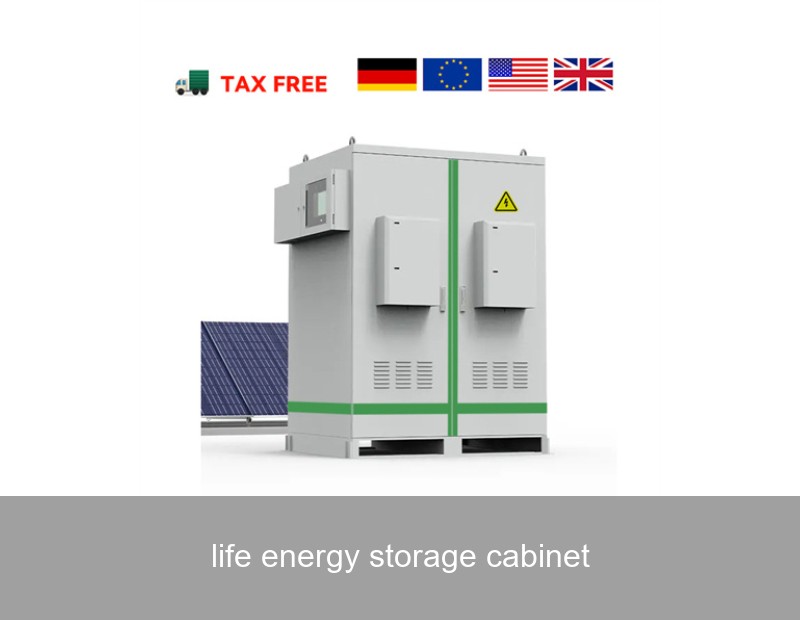
Have you ever glanced at your electricity bill after a season of extreme weather and wondered, "There must be a better way"? You're not alone. Across Europe and the US, homeowners and businesses are facing a dual challenge: rising energy costs and growing concerns about grid reliability. This is where the concept of a life energy storage cabinet transforms from a niche technology to a household essential. It's no longer just about backup power; it's about taking intelligent control of your energy, maximizing self-consumption of solar power, and building resilience against outages. As a leader in advanced energy storage since 2005, Highjoule is at the forefront of designing smart, integrated life energy storage cabinet solutions that make energy independence accessible, efficient, and sustainable for residential and commercial applications.
Table of Contents
- What is a Life Energy Storage Cabinet?
- Why the Surge in Demand? The Data Behind the Shift
- Key Benefits: Beyond Simple Backup Power
- A Real-World Case Study: Resilience in California
- Choosing the Right System: What to Look For
- Highjoule's Integrated Approach to Energy Storage
- The Future of Home and Business Energy
What is a Life Energy Storage Cabinet?
Think of a life energy storage cabinet as the intelligent heart of your personal energy ecosystem. It's a compact, all-in-one unit that typically houses lithium-ion battery modules, a battery management system (BMS), thermal controls, and safety mechanisms. Unlike a simple battery pack, a true "cabinet" is an engineered system designed for seamless integration with your solar panels and your home's electrical panel. Its primary job? To store excess solar energy generated during the day for use at night, during peak rate periods, or when the grid goes down. This transforms your solar array from a daytime-only producer into a 24/7 personal power plant.

Image Source: Unsplash - Representative image of a modern home energy storage installation.
Why the Surge in Demand? The Data Behind the Shift
The move towards personal energy storage isn't just a trend; it's a logical response to clear market and environmental signals. Let's break down the phenomenon:
- Volatile Energy Prices: In Europe, gas price spikes have directly impacted electricity costs. In the US, the Energy Information Administration (EIA) reports average residential electricity prices have risen steadily, with notable spikes during heatwaves and cold snaps.
- Grid Instability: Increasing frequency of extreme weather events—from wildfires in California to severe storms in the Midwest and Europe—has led to more frequent and prolonged power outages. The grid is aging, and the demand on it is growing.
- Solar Adoption Maturity: Millions of homes now have solar panels. The next logical step is to maximize that investment by storing the power, rather than selling it back to the grid at often lower rates (as net metering policies evolve).
- Policy Support: Incentives like the Federal Investment Tax Credit (ITC) in the US, which now includes standalone storage, and various European subsidies make these systems more financially attractive.
Key Benefits: Beyond Simple Backup Power
A high-quality life energy storage cabinet delivers a multi-layered value proposition:
- Energy Bill Savings: Use your stored solar energy during peak evening hours when utility rates are highest (a practice called peak shaving). This can dramatically reduce your demand charges, especially for businesses.
- Uninterrupted Power Supply: Keep essential loads—refrigeration, lights, medical equipment, internet—running during a grid outage. The transition is seamless, often within milliseconds.
- Increased Energy Self-Consumption: Boost the percentage of your own solar energy you use from ~30-50% to 70% or more, making you less dependent on the utility.
- Grid Support & Sustainability: By reducing draw from the grid during peak times, you contribute to community-wide grid stability and lower the need for fossil-fuel "peaker" plants.
A Real-World Case Study: Resilience in California
Let's look at a concrete example. A medium-sized winery in Napa Valley, California, faced recurring threats from Public Safety Power Shutoffs (PSPS) during wildfire season. A day without power during fermentation could ruin an entire vintage. Their solar array was insufficient for nighttime operations and outages.
The Solution: They installed a scalable life energy storage cabinet system, integrated with their existing solar. The system was configured for critical load backup and time-of-use management.
| Metric | Before Installation | After Installation |
|---|---|---|
| Grid Energy Usage During Peak (4-9 PM) | ~80% of nightly load | Less than 10% |
| Self-Consumption of Solar | ~35% | Over 85% |
| Outage Protection | None (Generator only) | Full critical operations for 18+ hours |
| Estimated Annual Savings | N/A | $12,000+ from demand charge reduction & increased solar use |
Choosing the Right System: What to Look For
Not all storage solutions are created equal. When evaluating a life energy storage cabinet, consider these technical and practical aspects:
- Usable Capacity & Power Rating: Capacity (kWh) is how much energy it stores. Power (kW) is how much it can deliver at once. Ensure both match your needs (e.g., running an air conditioner requires high power).
- Depth of Discharge (DoD) & Cycle Life: A battery with a 90% DoD and a 6,000-cycle life offers far more usable energy over its lifetime than one with 80% DoD and 4,000 cycles.
- Scalability: Can you easily add more battery modules later if your needs grow? A modular cabinet design is future-proof.
- Integration & Intelligence: The system's brain (its software) should allow for easy configuration, monitoring via an app, and smart modes that automatically optimize for savings or backup based on weather and tariff forecasts.
- Safety & Warranty: Look for UL 9540 certification (a key safety standard in the US) and a robust, long-term warranty that guarantees performance over time.
Highjoule's Integrated Approach to Energy Storage
At Highjoule, we view the life energy storage cabinet as the central component of a smarter energy flow. Our HyperCell Series of residential and commercial storage cabinets are engineered with the insights gained from over 15 years in the industry. They are built not just as hardware, but as part of our EnergyOS platform—an intelligent software layer that manages energy flow based on real-time data, user preferences, and grid conditions.
For the homeowner, this means the Highjoule system automatically decides when to store solar energy, when to power the home, and when to draw a tiny amount from the grid to keep the batteries optimally charged for an impending storm—all without you lifting a finger. For our commercial and microgrid clients, this intelligence translates into significant operational savings and verified resilience. Our global experience, from German homes to American industrial facilities, ensures our products are designed for diverse climates and electrical standards.

Image Source: Unsplash - Representative image of energy storage system monitoring and control.
The Future of Home and Business Energy
The trajectory is clear. As noted by research from the National Renewable Energy Laboratory (NREL), storage is essential for a resilient, clean grid. The life energy storage cabinet is evolving from an option to a standard component of new solar installations and energy retrofits. We are moving towards a future where neighborhoods form virtual power plants, aggregating distributed storage to support the wider grid—a future Highjoule is actively shaping through partnerships and advanced grid-service ready products.
So, the question isn't just whether you need backup power. It's about what kind of energy consumer you want to be: passive and subject to market volatility, or active, intelligent, and in control? What would you power first to ensure your home's comfort or your business's continuity during the next unexpected outage?
 Inquiry
 Online Chat