


The Solar Inverter: The Intelligent Heart of Your Energy System
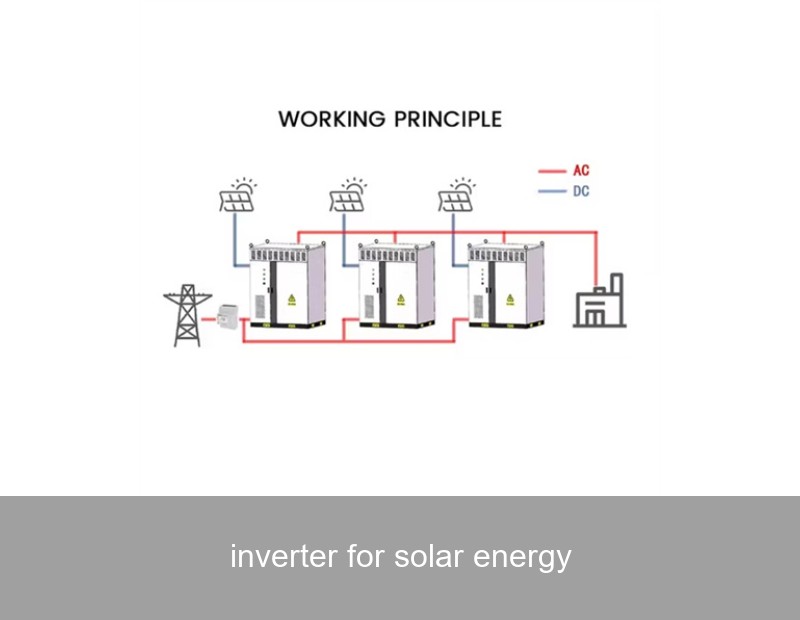
When you think of solar power, the image of sleek panels on a rooftop likely comes to mind. But what transforms the sun's raw DC power into usable AC electricity for your home or business? That critical job belongs to the inverter for solar energy. Often overlooked, this device is the true brain and heart of any photovoltaic (PV) system. Its performance directly dictates how much value you harvest from the sun. As grid stability concerns grow and energy costs soar, understanding this key component is the first step toward true energy independence and efficiency.
Table of Contents
- What is a Solar Inverter and Why is it Crucial?
- Types of Solar Inverters: Choosing the Right Fit
- Beyond the Basics: Advanced Inverter Functions
- Case Study: Maximizing ROI for a German Manufacturing Plant
- Future Trends: Inverters as Grid Guardians
- Choosing Your Inverter: A Guide for the Discerning Buyer
What is a Solar Inverter and Why is it Crucial?
In simple terms, a solar inverter is a power electronic device that converts the direct current (DC) electricity generated by your solar panels into the alternating current (AC) electricity that powers your appliances and feeds into the grid. But that's just its most basic function. Think of it not just as a converter, but as a performance optimizer and system manager.
Here’s the challenge: solar panel output is variable. It depends on irradiance, temperature, shading, and panel orientation. A high-quality inverter continuously tracks the maximum power point (MPPT) of the PV array, squeezing out every possible watt of energy. The difference between a mediocre and an excellent inverter can account for up to 10% or more of your system's annual energy yield. That’s a significant amount of lost savings or unrealized potential over a system's 20+ year lifespan.
Types of Solar Inverters: Choosing the Right Fit
Selecting the right inverter technology is paramount for system efficiency, safety, and scalability. The main types are:
- String Inverters: The most common and cost-effective solution for standard, unshaded roofs. Multiple panels are connected in series (a "string"), and their combined DC output is fed to a single, centralized inverter.
- Microinverters: Small inverters attached to each individual solar panel. They optimize per-panel performance, making them ideal for roofs with complex shading or multiple orientations. They also enhance system monitoring and safety.
- Power Optimizer Systems (DC-DC Optimizers + Inverter): A hybrid approach. A power optimizer is installed at each panel to condition the DC power and perform MPPT, which is then sent to a central string inverter. This offers panel-level optimization and monitoring with some of the cost benefits of a central inverter.
| Inverter Type | Best For | Key Advantage | Consideration |
|---|---|---|---|
| String Inverter | Simple, unshaded roofs; cost-sensitive projects | Lowest cost per watt, proven reliability | Whole string performance limited by weakest panel |
| Microinverter | Complex roofs, partial shading, future expansion | Panel-level optimization, enhanced safety, granular monitoring | Higher initial cost, more components on roof |
| Power Optimizer System | Balancing optimization with cost; retrofit on older systems | Panel-level MPPT with central conversion, safe DC voltage | Slightly more complex than string, requires compatible inverter |
The Smart Inverter Revolution: Beyond Basic Conversion
Modern inverters, especially in the commercial and utility-scale space, are marvels of grid technology. They are now required to provide grid-supporting functions like:
- Voltage and Frequency Regulation: Automatically adjusting output to help stabilize the local grid.
- Ride-Through Capability: Staying online during minor grid disturbances to prevent widespread outages.
- Power Factor Correction: Improving the quality of the electricity fed into the grid.
This is where companies like Highjoule lead the charge. We don't just see an inverter as a standalone component. At Highjoule, we design integrated energy management systems where our advanced bi-directional inverters act as the command center. Our HPS Series Commercial Inverters, for example, are engineered to seamlessly integrate solar generation with battery storage and grid interaction. They enable sophisticated load management, peak shaving, and even black start capabilities for microgrids, turning a simple solar installation into a resilient energy asset.

Image Source: Unsplash - A modern inverter installation is a key part of a professional energy system.
Case Study: Maximizing ROI with the Right Inverter Strategy in Bavaria
Let’s look at a real-world example from our work in Europe. A mid-sized automotive parts manufacturer in Bavaria, Germany, had a 500 kW rooftop solar array installed in 2018 using standard string inverters. While the system performed adequately, the plant manager noticed two issues: energy yield was about 8% below projections, and the facility was still hitting high peak demand charges from the utility.
The Challenge: Analysis by Highjoule's technical team revealed that factory roof vents and seasonal shading from a nearby tree line were causing multiple "power dips" across different string sections. The centralized string inverters couldn't mitigate these localized losses. Furthermore, the system had no ability to shift solar energy to later in the day when consumption peaked.
The Highjoule Solution: We proposed a two-phase upgrade. First, we retrofitted the existing array with Highjoule DC power optimizers on every panel, connecting them to new, high-efficiency string inverters with multiple independent MPPT channels. This immediately mitigated the shading losses. Second, we integrated a 250 kWh Highjoule Lithium-Ion Battery Energy Storage System (BESS), managed by our advanced HES-5000 Energy Management System.
- Energy Yield Increase: The optimizer/inverter combo boosted annual solar production by 9.5%.
- Demand Charge Reduction: The BESS, orchestrated by the smart inverter system, strategically discharged during short peak consumption windows, slashing the facility's peak demand charges by 30%.
- ROI: The combined improvements shortened the payback period for the entire upgrade package to under 5 years, factoring in Germany's energy prices and available incentives for self-consumption optimization.
This case underscores that the choice of inverter technology is not just about upfront cost, but about long-term system adaptability and financial return.
Future Trends: Inverters as Grid Guardians and AI Partners
The future of the solar inverter is intelligent and collaborative. We are moving towards:
- Grid-Forming Inverters: These advanced inverters can create a stable voltage and frequency "grid" from scratch, essential for 100% renewable microgrids and island systems. Highjoule's research and development in this area is pivotal for off-grid and critical backup power applications.
- AI-Driven Energy Forecasting & Dispatch: Inverters will increasingly use on-board AI and cloud connectivity to predict solar generation and load patterns, optimizing battery charge/discharge cycles in real-time for maximum economic benefit. You can read more about the potential of AI in grid management from research institutions like the National Renewable Energy Laboratory (NREL).
- Plug-and-Play Standardization: Efforts are underway to simplify and standardize the integration of inverters with storage and other distributed energy resources (DERs), making system design and installation faster and more reliable.
Image Source: Unsplash - The future of energy management lies in intelligent control and monitoring.
Choosing Your Inverter: A Guide for the Discerning Buyer
So, how do you navigate this complex landscape? Whether you're a homeowner or a facility manager, ask these key questions:
- What are my site conditions? (Shading, roof layout, future expansion plans?)
- What are my primary goals? (Maximize bill savings, ensure backup power, achieve sustainability targets?)
- Does the inverter offer smart integration? Can it easily communicate with and manage battery storage or other systems?
- What is the warranty and service support? A 10+ year warranty and a provider with a strong local service network are crucial.
At Highjoule, with nearly two decades of experience, we believe in designing solutions, not just selling products. Our team works with you to analyze your unique energy profile and goals. From our robust HRS Series residential hybrid inverters to our utility-scale HUS Central Inverters, every product is built with the intelligence and durability needed for the evolving energy landscape. For deeper technical insights on inverter standards and safety, authoritative resources like the International Electrotechnical Commission (IEC) provide valuable context.
Your solar panels capture the sun, but your inverter defines your energy independence. What specific energy challenge—be it unpredictable bills, resilience concerns, or a sustainability goal—could the right intelligent inverter system solve for you?
 Inquiry
 Online Chat