


Inverter Hybrid Off Grid 5k 48v: Your Complete Guide to Energy Independence
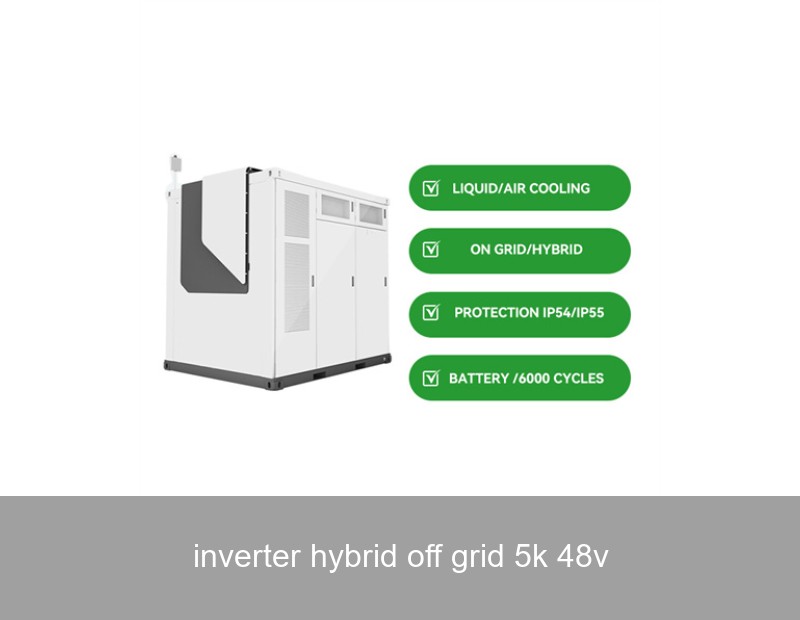
Have you ever watched your electricity bill climb and wondered if there's a better way? Or perhaps you live in an area where the grid is unreliable, and a simple power outage throws your entire home or business into disarray. You're not alone. A growing movement towards energy self-sufficiency is underway, and at the heart of this revolution is a powerful piece of technology: the inverter hybrid off grid 5k 48v system. This isn't just a battery backup; it's an intelligent energy manager that can harness solar power, store it for when you need it most, and keep the lights on completely independent of the utility grid. Let's explore how this technology works and why it might be the cornerstone of your energy future.
Table of Contents
- What is a 5kW 48V Hybrid Off-Grid Inverter?
- Why Choose a 5kVA 48V System? The Data Behind the Decision
- A Real-World Case: Powering a Rural American Homestead
- Key Components of a Robust Off-Grid System
- The Highjoule Solution: Engineered for Reliability and Simplicity
- Making the Right Choice for Your Energy Needs
What is a 5kW 48V Hybrid Off-Grid Inverter?
Let's break down this technical-sounding term. A hybrid off-grid inverter is the brain and brawn of a standalone power system. The "5k" refers to its power rating of 5 kilowatts (or approximately 5kVA), meaning it can continuously deliver up to 5000 watts of AC power to run your appliances. The "48v" indicates the battery bank voltage it's designed to work with, a standard for robust residential systems. Unlike a simple grid-tie inverter, a hybrid model can manage multiple energy sources: primarily solar panels and a battery bank. It intelligently prioritizes solar power to run your loads and charge the batteries, only relying on a backup generator (if you have one) when necessary. It's called "off-grid" because it's designed to operate without any connection to the public electricity network, giving you true energy autonomy.

Credit: A modern hybrid inverter system forms the core of an off-grid setup. (Source: Unsplash)
Why Choose a 5kVA 48V System? The Data Behind the Decision
Why is the 5kW 48V configuration so popular for homes and small businesses? The numbers tell a compelling story. A 5kW output capacity is a significant sweet spot. According to data from the U.S. Energy Information Administration (EIA), the average annual electricity consumption for a U.S. residential utility customer was about 10,500 kWh in 2023. A properly sized 5kW system, coupled with sufficient solar panels and battery storage, can meet a substantial portion, if not all, of a moderately energy-efficient home's needs, powering essentials like refrigeration, lighting, well pumps, computers, and even some heating or cooling.
The 48V battery bank is equally crucial. Compared to lower voltage systems (like 12V or 24V), a 48V architecture offers greater efficiency. It allows for the same power (watts) to be transmitted with lower current (amps), which reduces energy loss as heat in the wiring. This means you can use thinner, less expensive cables and have a system that inherently runs cooler and more reliably. For a 5kW load, the current on the DC side would be over 400 amps at 12V, but only around 100 amps at 48V—a much safer and more manageable scenario.
Typical Loads a 5kW 48V System Can Handle
| Appliance | Estimated Power (Watts) | Runtime Notes on Batteries |
|---|---|---|
| Refrigerator (Energy Star) | 150-400 | Cycles on/off, essential load |
| LED Lighting (Whole Home) | 100-300 | Low consumption, long runtime |
| Laptop & Router | 50-150 | Easily sustained |
| Water Pump | 500-1500 | High surge, manageable runtime |
| Microwave | 800-1500 | Short, intermittent use |
| Space Heater (Small) | 1500 | Major load, requires careful energy budgeting |
A Real-World Case: Powering a Rural American Homestead
Let's look at a concrete example from the mountains of Colorado, USA. The Miller family built a 2,000 sq ft off-grid home. Their primary challenges were harsh winters with reduced sunlight and no access to utility lines. They installed a 5kW 48V hybrid off-grid inverter system paired with 8kW of solar panels and a 20kWh lithium iron phosphate (LiFePO4) battery bank.
- System Configuration: 5kW hybrid inverter, 24 solar panels (330W each), 4x 5kWh 48V LiFePO4 batteries.
- Result: In their first full year, the system generated 11,200 kWh. Their home consumed 9,800 kWh, resulting in a small surplus during summer months stored for winter use.
- Key Insight: During a severe winter storm that left neighboring grid-connected towns without power for 72 hours, the Miller's home maintained full operation. The hybrid inverter seamlessly managed the system, using battery power at night and during cloudy periods, and even triggered a pre-wired backup propane generator automatically on one exceptionally low-sunlight day, ensuring continuous power.
This case highlights the system's resilience. The 5kW inverter provided ample continuous power, while the 48V battery setup ensured efficient storage and discharge. The "hybrid" intelligence was key, optimizing every watt of solar energy and managing the generator as a last resort, not a primary source.
Key Components of a Robust Off-Grid System
A successful inverter hybrid off grid 5k 48v installation is more than just the inverter. It's a carefully balanced ecosystem.
- The Hybrid Inverter: The core component. Look for pure sine wave output (for sensitive electronics), high peak surge capacity (to start motors), and multiple charging sources (solar, generator, grid if available for charging).
- Solar Array: Your primary fuel source. For a 5kW inverter, a 6-8kW solar array is common to account for less-than-ideal sunlight days and fully charge the batteries.
- Battery Bank (48V): Your energy reservoir. Modern LiFePO4 batteries, like those used by Highjoule, are preferred for their longer lifespan (6,000+ cycles), deeper safe discharge, and maintenance-free operation compared to traditional lead-acid.
- Charge Controller (often MPPT): While many hybrid inverters have this built-in, it's the device that optimizes the power harvest from your solar panels to charge the batteries efficiently.
- Backup Generator (Optional but Recommended): A weatherproof fuel source for extended periods of low solar production. A good hybrid inverter can auto-start and stop it.

Credit: A complete off-grid home system includes solar panels, batteries, and intelligent management. (Source: Unsplash)
The Highjoule Solution: Engineered for Reliability and Simplicity
At Highjoule, with nearly two decades of experience since 2005, we understand that an off-grid system isn't a luxury—it's a critical piece of infrastructure for your home or business. That's why we've developed integrated solutions centered around the 5kW 48V hybrid off-grid paradigm. Our HPS-5K-48 hybrid inverter is designed for the demands of North American and European markets, featuring robust surge power for starting pumps and tools, and compliant with strict safety and grid-disconnect standards.
But we go beyond just selling an inverter. We provide a complete power ecosystem. Our systems are often bundled with our high-cycle, UL-certified LiFePO4 battery modules, which seamlessly communicate with the inverter for optimal battery health and longevity. Our proprietary energy management software gives you a clear window into your energy production and consumption via a simple smartphone app, putting you in control. Whether for a remote cabin, a resilient agricultural operation, or a primary residence seeking independence, Highjoule's packaged solutions reduce complexity and ensure all components work in perfect harmony.
Highjoule System Advantages at a Glance
- Plug-and-Play Integration: Pre-configured battery communication and cabling kits save on installation time and cost.
- Scalable Design: Start with a core 5kW system and easily add more battery capacity or solar panels as your needs grow.
- Remote Monitoring & Support: Proactive system diagnostics and remote firmware updates ensure your system is always performing at its best.
- Global Service Network: With support centers in Europe and North America, you have access to expert technical assistance.
Making the Right Choice for Your Energy Needs
Choosing to go off-grid is a significant decision. The first step is understanding your true energy profile. We recommend a detailed energy audit—listing every appliance, its wattage, and its daily usage hours. This will tell you if a 5kW 48V system is sufficient or if you need to consider a larger setup. Consider your location's solar insolation (you can find maps from The Global Solar Atlas) and plan for the worst weather season, not the best.
Partnering with an experienced provider like Highjoule can make this journey smoother. Our experts can help you interpret your energy audit, design a system that matches your budget and resilience goals, and ensure it's installed correctly. The goal is not just to sell you equipment, but to deliver peace of mind for the next 15-20 years.
What's the first appliance you would want to keep running during a power outage, and how does that shape your vision for a truly resilient home energy system?
 Inquiry
 Online Chat