


Hybrid Off-Grid Inverter Philippines: Your Key to Energy Independence in Island Communities
Imagine a powerful storm knocks out the main power lines in your province. For most, this means darkness, halted business, and uncertainty. But for a growing number of households and businesses across the Philippine archipelago, it's a mere blip. The secret? A robust hybrid off-grid inverter Philippines system. This isn't just a backup battery; it's the intelligent brain of a self-sufficient power ecosystem, perfectly suited for a nation of over 7,600 islands where grid reliability can be as unpredictable as the typhoon season. Let's explore how this technology is transforming energy access.
What is a Hybrid Off-Grid Inverter?
At its core, a hybrid off-grid inverter is a multi-talented device. Think of it as a sophisticated energy manager. It combines the functions of a solar inverter (converting DC from panels to AC for your home), a battery charger, and a grid charger into one unit. Its primary goal is to maximize self-consumption of solar energy, store excess in batteries, and provide uninterrupted power, with or without a connection to the main utility grid. Unlike simple grid-tie systems that shut down during outages, a hybrid system keeps your lights on by intelligently switching to battery power.
Key Components of a Hybrid System
- The Hybrid Inverter: The command center.
- Solar Photovoltaic (PV) Array: Your on-site power plant.
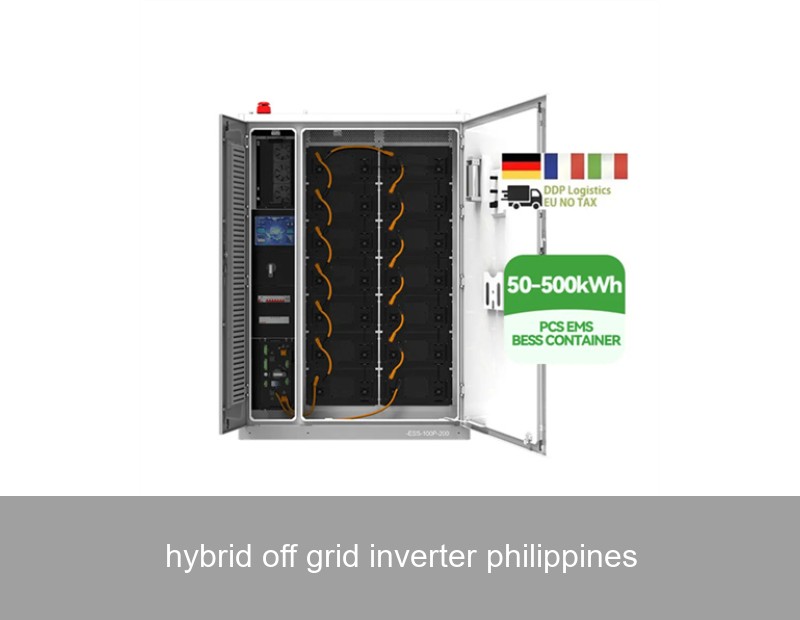
- Battery Energy Storage System (BESS): Your energy savings account, typically using Lithium Iron Phosphate (LiFePO4) chemistry for safety and longevity.
- Backup Generator (Optional): For extended periods of low solar and depleted batteries.
- Load Panel: Distributes power to your critical circuits.

Image Source: Unsplash (Representative diagram of a hybrid solar system)
The Philippine Energy Challenge: A Case for Hybrid Systems
The Philippines faces unique energy hurdles. According to the International Energy Agency (IEA), while electrification rates are high, quality and reliability of supply remain issues, especially in remote areas. Many regions experience frequent brownouts (voltage drops) and blackouts. Furthermore, the country has some of the highest electricity costs in Southeast Asia. This combination of high cost, low reliability, and abundant sunshine creates the perfect environment for hybrid off-grid solutions. They offer a way to lock in energy costs, ensure business continuity, and achieve true energy independence, which is not just a luxury but a necessity for island resorts, remote clinics, and agricultural processing facilities.
How a Hybrid Off-Grid System Works: The Seamless Power Dance
Let's break down the intelligent operation of a hybrid system in a typical Philippine setting:
| Scenario | System Action | Benefit |
|---|---|---|
| Sunny Day | Solar panels power the home/business directly. Excess solar energy charges the batteries. If batteries are full, excess can often be used for non-critical loads (e.g., water heating). | Maximizes free solar energy, reduces grid draw to zero. |
| Nighttime or Cloudy Day | The system seamlessly draws power from the charged batteries. No interruption is felt by the user. | Provides power after sunset, using stored clean energy. |
| Grid Power Outage (Brownout/Blackout) | The hybrid inverter instantly isolates from the grid (islanding) and continues to power critical loads from solar and batteries. The transition is sub-second. | Uninterrupted power supply (UPS) functionality. Essential for refrigeration, medical equipment, and security systems. |
| Extended Bad Weather | If batteries run low, the system can automatically start a backup generator (if configured) or selectively shed non-critical loads to preserve battery for essentials. | Ensures long-term resilience even during typhoons. |
Case Study: Powering Sustainability at a Bohol Island Resort
Consider "Isla Verde Resort," a mid-sized eco-resort on Panglao Island, Bohol. Facing monthly electricity bills exceeding ₱200,000 and daily 2-3 hour brownouts during peak season, their operations and guest experience were suffering.
The Solution: In 2023, they installed a 50kW hybrid off-grid system featuring a bank of high-eacity hybrid inverters and a 120kWh LiFePO4 battery storage system, coupled with a 65kWp solar array on their rooftops and parking shades.
The Data-Driven Results (after 12 months):
- Grid Dependency Reduced by 85%: They now primarily use the grid only as a rare backup.
- Complete Outage Immunity: Guest villas, kitchens, and water pumps operate flawlessly during area blackouts.
- ROI Achieved in Under 5 Years: Drastic bill savings and increased bookings due to their "100% Powered by Sun" marketing.
- Carbon Footprint: Estimated to have avoided over 60 tonnes of CO2 emissions annually.
This real-world example from the Visayas region underscores the transformative impact of a well-designed hybrid off-grid inverter Philippines system for the tourism sector, a critical part of the Philippine economy.

Image Source: Unsplash (Representative image of solar panels on a resort)
Choosing the Right Hybrid System for Your Needs
Not all hybrid inverters are created equal. For the demanding Philippine climate, you need robust, feature-rich equipment. Here’s what to look for:
- High Efficiency (>97%): Every percentage point counts in maximizing solar harvest.
- True Off-Grid Capability: Must be able to form a stable grid (island mode) without utility presence.
- Scalable Design: Can you easily add more batteries or solar panels later?
- Smart Energy Management: Advanced software for prioritizing solar self-consumption and scheduling.
- Robust Cooling and Durability: Must withstand high ambient temperatures and humidity.
- Comprehensive Monitoring: User-friendly app to track energy flows, savings, and system health from your phone.
Highjoule's Tailored Solutions for Resilient Power
At Highjoule, with nearly two decades of experience in advanced energy storage, we understand that a one-size-fits-all approach doesn't work for the diverse landscapes of the Philippines. Our HPS Series Hybrid Power Systems are engineered for resilience. They integrate our high-efficiency, multi-mode hybrid inverters with our proprietary, long-cycle life LiFePO4 batteries into a pre-engineered, easy-to-deploy solution.
What sets a Highjoule system apart is its intelligence. Our EnergyOS™ platform allows for predictive energy management. It can learn your consumption patterns, factor in weather forecasts from sources like PAGASA, and pre-charge batteries before an expected storm or cloudy period. For commercial and industrial clients, we offer microgrid controllers that can manage multiple generation sources, including existing diesel generators, to create a cost-optimized and reliable energy mix. Whether it's a remote barangay health station needing 24/7 refrigeration for vaccines or a manufacturing plant in Laguna seeking to cap its peak demand charges, Highjoule provides the technology and the expertise.

Image Source: Unsplash (Representative image of a modern battery storage installation)
The Future of Energy in the Philippines
The trend is clear. The future is decentralized, digital, and decarbonized. Hybrid off-grid systems are at the forefront of this transition in archipelagic nations. As battery costs continue to decline and software intelligence grows, these systems will become the standard for new constructions in off-grid and weak-grid areas. They represent more than just technology; they represent energy sovereignty for communities and businesses.
So, what's the first step you should take to assess if a hybrid off-grid inverter Philippines system is right for your home, business, or community? Start by analyzing your last 12 months of electricity bills and noting the frequency and impact of power interruptions. How much is instability costing you, not just in pesos, but in opportunity and peace of mind?
 Inquiry
 Online Chat