


Your Inverter Solar Panel System: The Intelligent Heart of a Modern Energy Solution
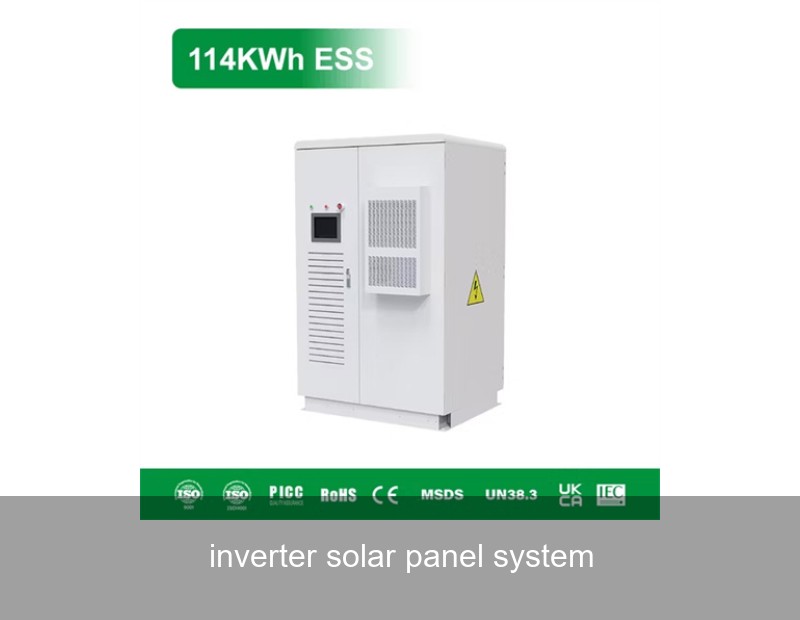
If you're considering solar panels for your home or business, you've likely focused on the panels themselves—those sleek, glass-covered rectangles that capture the sun's power. But what if the real hero of your energy independence story isn't on the roof at all? The inverter solar panel system is the critical, often overlooked brain and powerhouse that determines how much of that abundant sunlight actually becomes usable, reliable electricity for your lights, appliances, and operations. Let's explore why this component is so vital and how choosing the right one can transform your energy experience.
Table of Contents
The Phenomenon: More Than Just a Black Box
You see solar panels working silently on rooftops. The phenomenon is simple: they generate direct current (DC) electricity from sunlight. However, the grid and almost every device in your home or factory run on alternating current (AC). This is where the inverter becomes indispensable. It's not merely a converter; a modern inverter solar panel system is a sophisticated energy manager. It optimizes the power harvest from each panel, ensures synchronization with the utility grid, provides critical safety functions, and, in advanced systems, serves as the command center for integrating battery storage.

Image Source: Unsplash - A modern inverter, the core of an efficient solar panel system.
From String to Micro: The Architectural Shift
The architecture of your inverter solar panel system has evolved dramatically:
- String Inverters: The traditional workhorse, connecting a series of panels. Cost-effective but susceptible to "the weakest link" problem where shading on one panel affects the whole string.
- Power Optimizer Systems: A hybrid approach. Small devices attached to each panel condition the DC power, which is then sent to a central string inverter, mitigating shading issues and allowing panel-level monitoring.
- Microinverters: The ultimate in modular design. A tiny inverter is placed on every single solar panel, converting DC to AC right at the source. This maximizes harvest from each panel independently and simplifies system expansion.
The Data: Efficiency, Intelligence, and Return on Investment
The choice of inverter technology directly impacts your system's financial and energy output. Consider this: according to the National Renewable Energy Laboratory (NREL), system-level losses from mismatch and shading can exceed 10% annually in non-optimal installations. A system with module-level power electronics (like optimizers or microinverters) can recapture the vast majority of these losses.
| Inverter Type | Key Advantage | Typical Efficiency Range | Best For |
|---|---|---|---|
| String Inverter | Lower upfront cost, proven reliability | 97-98% | Large, unshaded roofs with uniform panel orientation |
| System with Power Optimizers | Panel-level optimization & monitoring, enhanced safety | 98-99% (system) | Roofs with partial shading or multiple roof planes |
| Microinverter System | Maximum panel-level harvest, design flexibility, simplified expansion | 96-97% (per module) | Complex roofs, sites with high shading, plans for future expansion |
The data points to a clear trend: intelligence at the panel level is becoming standard for maximizing self-consumption and ROI, especially in the residential and commercial sectors in Europe and the U.S., where roofscapes are often not ideal.
A Real-World Case: The Bavarian Dairy Farm
Let's ground this in reality with a case from our work at Highjoule. A medium-sized dairy farm in Bavaria, Germany, faced steep energy costs for its 24/7 cooling and milking operations. Their existing 50 kW rooftop solar panel system used a standard string inverter. The problem? The long barn roof was shaded at different times by a silo and trees, crippling the output of entire strings for hours each day.
The Solution & Results: Highjoule engineers retrofitted the system with our Hj-PowerTune™ DC power optimizers on every panel, connected to a new, high-efficiency string inverter. This created a panel-level optimized inverter solar panel system. The outcome was transformative:
- Energy Yield Increase: The farm saw an immediate 15% boost in annual energy production by mitigating shading losses.
- Enhanced Monitoring: The farmer could now monitor the performance of each individual panel via the Highjoule energy management platform, instantly identifying any maintenance needs.
- ROI Acceleration: The increased yield shortened the payback period for the upgrade by an estimated 2 years, making the capital expenditure far more attractive.
This case exemplifies that the right inverter technology isn't an afterthought—it's a primary lever for project success. You can read more about the importance of system monitoring in the IEA's Special Report on Solar PV.

Image Source: Unsplash - Commercial solar installation on agricultural buildings.
The Highjoule Insight: Beyond Conversion to Holistic Energy Management
At Highjoule, we view the inverter solar panel system as the nucleus of a broader energy ecosystem. Our approach goes beyond just selecting an inverter type. We provide integrated, intelligent systems where the inverter is the gateway to full energy autonomy.
Our Core Product Philosophy: The Highjoule Hj-EnergyHub™
For residential and commercial clients in Europe and North America, we often recommend solutions built around our Hj-EnergyHub™. This isn't just an inverter; it's a multi-flow energy manager designed for the era of storage and smart grids. It seamlessly integrates:
- Solar Inversion: High-efficiency conversion from your solar panels.
- Battery Management: Intelligent charging and discharging from Highjoule lithium-ion battery systems, like our Hj-CellMax™ series, to store surplus solar for use at night or during outages.
- Grid Interaction: Advanced features for grid support and safe operation.
- User Control: An intuitive app that lets you monitor, control, and optimize your energy flows in real-time.
Why This Integration Matters for You
Imagine a cloudy afternoon. A traditional system might force you to draw expensive power from the grid. A Highjoule Hj-EnergyHub™ system, however, can intelligently decide to draw from your battery reserves, schedule non-essential loads for later, or even (where markets allow) sell a small amount of stored power back to the grid during peak price periods. This turns your inverter solar panel system from a passive generator into an active financial and energy asset.
For larger-scale industrial and microgrid applications, Highjoule's Hj-MatrixGrid™ power conversion systems provide utility-grade control and scalability, ensuring that the inverter technology is never the bottleneck for your renewable ambitions. The U.S. Department of Energy highlights the critical role of advanced inverters in modern microgrids.
The Future of Your Energy: An Open Question
The technology behind the inverter solar panel system is advancing faster than ever. With features like grid-forming capabilities (allowing you to create a stable "island" grid during outages) and advanced grid services becoming standard, the inverter is your ticket to participating in the future energy landscape.
So, as you plan your journey to energy independence, the question is no longer just "how many panels do I need?" The more pivotal question to ask yourself and your provider is: "What is the intelligence level of the inverter system that will manage my energy, and how will it allow my system to evolve with my needs and the grid of tomorrow?"
What energy management goal is most critical for you—maximizing self-consumption, achieving backup power resilience, or participating in future grid service programs?
 Inquiry
 Online Chat