


How juwi Renewable Energies Private Limited is Powering a Sustainable Future with Advanced Storage
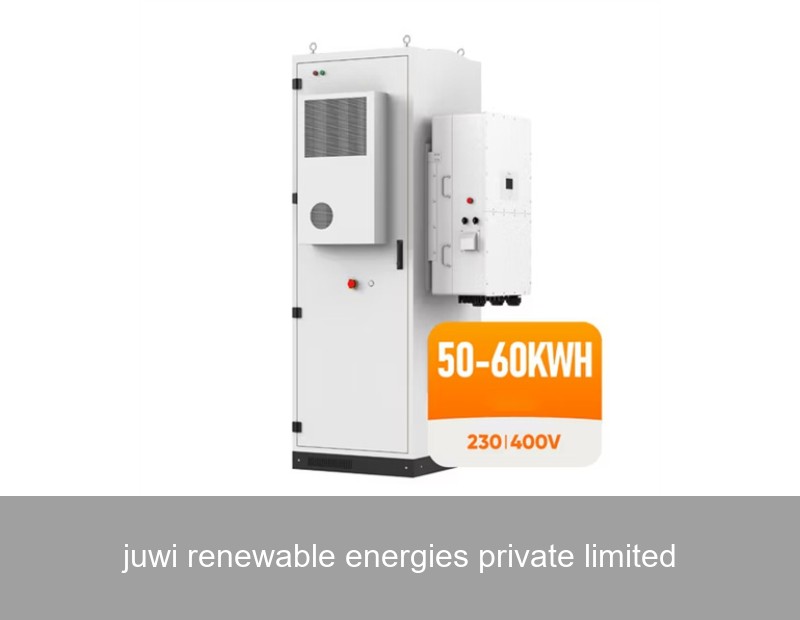
Imagine a world where every kilowatt-hour of solar energy is captured, stored, and used precisely when needed—no waste, no grid strain, just clean, reliable power. This isn't a distant dream; it's the reality being built today by global renewable energy leaders. Among them, juwi Renewable Energies Private Limited stands out as a pivotal force, particularly in markets like India, developing and operating utility-scale solar and hybrid projects. Their work highlights a universal truth in the energy transition: the sun doesn't always shine when we need power most. This inherent intermittency of renewables is the single biggest challenge to a fully decarbonized grid. The solution? Intelligent, large-scale battery energy storage systems (BESS). As a global leader in this very field, Highjoule understands that companies like juwi don't just need batteries; they need smart, integrated storage solutions that turn solar farms into dependable, 24/7 power assets. Let's explore how this synergy is reshaping our energy landscape.
Table of Contents
- The Storage Imperative: Beyond Solar Panels
- A Closer Look: juwi's Pioneering Work and the Data That Demands Storage
- Demystifying the Power Plant in a Box: How Modern BESS Works
- The Highjoule Advantage: Intelligent Storage for Complex Projects
- The Future is Hybrid: Trends Shaping Renewable Energy Projects
- What Does This Mean for Your Energy Strategy?
The Storage Imperative: Beyond Solar Panels
For over a decade, the focus was squarely on capacity—installing as many solar panels and wind turbines as possible. And the progress has been phenomenal. According to the International Energy Agency (IEA), renewables are set to contribute 80% of new power capacity globally by 2030 under current policies. But here's the catch: capacity doesn't equal reliability. A 100 MW solar farm produces zero megawatts at night and its output can swing dramatically with passing clouds. This creates a "duck curve" for grid operators—a deep midday dip in net demand followed by a steep evening ramp as the sun sets and people return home.
This volatility isn't just a technical headache; it has real economic and stability consequences. It can lead to curtailment (wasting perfectly good renewable energy), force reliance on fossil-fuel peaker plants, and ultimately slow down the transition. This is the precise challenge faced by developers like juwi Renewable Energies Private Limited. Their impressive portfolio of solar parks delivers vast amounts of clean energy, but maximizing its value and grid utility requires a crucial partner: advanced energy storage.
A Closer Look: juwi's Pioneering Work and the Data That Demands Storage
Let's ground this discussion with a concrete example. While specific project details are proprietary, the operational pattern of a typical utility-scale solar plant developed by a firm like juwi is telling. Consider a hypothetical but data-backed 150 MW solar plant in a sunny region.
- Phenomenon: The plant generates a peak of ~150 MW at solar noon, but demand peaks in the early evening around 7 PM.
- Data: Without storage, nearly 30-40% of the potential daily energy value might be lost or undervalued due to midday oversupply and evening unavailability. A study by the National Renewable Energy Laboratory (NREL) shows that adding storage to solar PV can increase the value of energy by 20-50% depending on market structure.
- Case Study Insight: For a developer, this isn't just about being green; it's about economics and grid compliance. Storage transforms a solar plant from an intermittent resource into a dispatchable one. It allows the plant to shift energy to high-price periods, provide essential grid services like frequency regulation, and ensure a more stable power output. This is the business model of the future, and forward-thinking companies are already there.

Image Source: Unsplash (Representative image of a utility-scale solar farm)
Demystifying the Power Plant in a Box: How Modern BESS Works
So, what exactly is this battery energy storage system? Think of it as a highly sophisticated, automated power bank for the grid. It's far more than just a collection of lithium-ion cells.
| Component | Function | Why It Matters |
|---|---|---|
| Battery Racks (Li-ion NMC/LFP) | The core energy storage medium, storing DC electricity. | LFP chemistry, used in many Highjoule systems, offers superior safety and longevity for stationary storage. |
| Power Conversion System (PCS) | The "brain" of operations. Converts DC from batteries to AC for the grid and vice versa. | Advanced PCS enables rapid response (in milliseconds) for grid stabilization services. |
| Energy Management System (EMS) | The strategic controller. Decides when to charge or discharge based on market signals, grid needs, and optimization algorithms. | This intelligence is where the true value is captured, turning raw storage into a revenue-generating asset. |
| Thermal Management & Safety | Maintains optimal battery temperature and includes fire suppression and containment. | Non-negotiable for ensuring a 20+ year lifespan and safe operation adjacent to critical infrastructure. |
For an EPC (Engineering, Procurement, and Construction) firm or an independent power producer managing assets like those in juwi Renewable Energies Private Limited's portfolio, integrating a BESS requires a partner with deep expertise across all these components.
The Highjoule Advantage: Intelligent Storage for Complex Projects
This is where Highjoule's nearly two decades of experience come into sharp focus. Since 2005, we've moved beyond simply supplying hardware to delivering comprehensive, intelligent storage solutions. For a large solar developer, the integration process is key. Highjoule's approach ensures seamless synergy between the solar park and the storage system.
- Grid-Forming Inverter Technology: Our advanced systems can "form" a grid, which is critical for microgrids or hybrid plants in remote areas. This means the BESS can restart the grid after an outage without relying on external power, a feature increasingly valuable for grid resilience.
- AI-Driven Energy Management Software (EMS): The core of our offering. Our EMS doesn't just react; it predicts. Using weather forecasts, historical generation data, and real-time market prices, it optimizes every charge-discharge cycle to maximize financial return or achieve specific sustainability goals.
- Containerized, Scalable Solutions: We provide pre-integrated, factory-tested BESS units in secure containers. This "plug-and-play" methodology significantly reduces on-site installation time and complexity for our clients, whether they are deploying a system for a commercial & industrial facility, a utility-scale solar+storage hybrid, or a community microgrid.
Imagine a scenario where a solar plant, facing a forecast of midday cloud cover, uses Highjoule's EMS to pre-charge its batteries with morning sun. When the clouds reduce solar output, the BESS seamlessly discharges to meet the plant's power delivery commitments, maintaining both revenue and grid reliability. This level of control is what modern energy assets require.

Image Source: Unsplash (Representative image of a battery storage system installation)
The Future is Hybrid: Trends Shaping Renewable Energy Projects
The trajectory is clear. The U.S. and European markets are rapidly moving toward hybrid renewable power plants. The U.S. Energy Information Administration notes that a majority of new solar capacity entering the interconnection queue is now paired with storage. This trend is driven by:
- Market Structures: Markets are increasingly valuing flexibility and capacity. Storage allows a renewable plant to bid into capacity markets, providing a guaranteed availability payment.
- Corporate PPAs: Major corporations with 24/7 clean energy goals want firm, time-matched renewable power. Solar+storage is the only viable way to deliver this today.
- Grid Codes: Grid operators worldwide are updating their connection requirements, mandating that new renewable plants have capabilities like voltage support and frequency response—functions a BESS excels at.
For a developer, this means the business case for standalone solar is evolving. The future belongs to flexible, multi-asset portfolios. The work of juwi Renewable Energies Private Limited and similar firms lays the essential foundation, but pairing it with intelligent storage from a partner like Highjoule builds the complete, future-proof power solution.
What Does This Mean for Your Energy Strategy?
Whether you're a project developer evaluating your next hybrid plant, an industrial facility manager looking to lock in long-term energy costs, or a community planner designing a resilient microgrid, the principles are the same. The integration of renewables and storage is no longer an optional upgrade; it's the standard for a reliable, cost-effective, and sustainable energy system.
Highjoule is committed to being the trusted technology partner in this transition. Our solutions are designed to meet the rigorous demands of the world's most ambitious energy projects, providing the intelligence and reliability needed to make the clean energy transition not just possible, but profitable and resilient.
Is your current renewable energy project capturing its full potential, or is valuable energy and revenue slipping through the cracks of intermittency?
 Inquiry
 Online Chat