


Your DIY Solar Panel Mounting Kit: A Guide to Safe and Efficient Installation
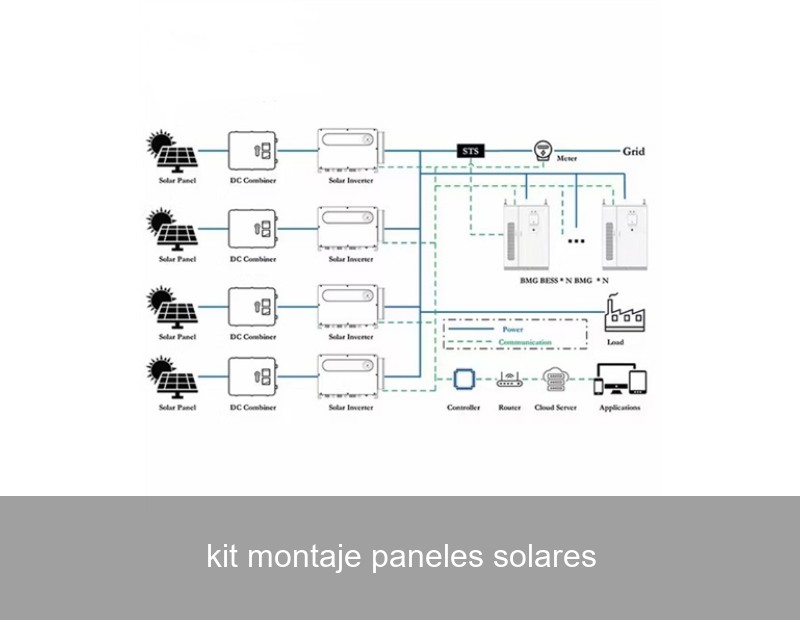
Thinking about taking control of your energy bills and installing solar panels yourself? The idea is empowering, and with the rise of solar panel mounting kits, it's more accessible than ever. But here's the reality many homeowners face: a well-intentioned DIY project can quickly become overwhelming if the foundation—literally, the mounting system—isn't right. A poorly installed racking system can lead to roof leaks, reduced energy production, or even structural damage. This guide will walk you through the critical considerations for your kit montaje paneles solares, blending essential DIY knowledge with insights on when professional, integrated solutions make all the difference.
Table of Contents
The DIY Promise and Pitfall: More Than Just Panels
The appeal of a solar panel mounting kit is clear: potential cost savings and the satisfaction of self-reliance. You source the photovoltaic panels, order the kit, and envision a weekend project that yields decades of free energy. However, the mounting system is the unsung hero of any solar installation. It must withstand decades of harsh weather—from heavy snow loads in the Alps to hurricane-force winds in Florida. The kit isn't just a set of rails and bolts; it's the critical interface between your valuable solar assets and your home's structure. A common mistake is underestimating the need for precise structural analysis and weatherproofing, areas where an incomplete kit or lack of expertise can introduce significant risk.

Image source: Unsplash. A close-up view of professional-grade mounting hardware.
Decoding Your Mounting Kit: Components and Compatibility
A comprehensive kit montaje paneles solares should include more than just the obvious parts. Let's break down what to look for:
- Mounting Rails & Attachments: The longitudinal rails that hold the panels. The attachment method (e.g., flashing-integrated mounts, standoffs) is crucial for roof integrity.
- Clamps (Mid & End): These secure the panels to the rails. Ensure they are compatible with your panel's frame thickness and are made of corrosion-resistant materials like anodized aluminum or stainless steel.
- Flashings & Sealants: Perhaps the most critical component for pitched roofs. These prevent water intrusion. A high-quality kit includes robust, tested flashing systems and appropriate sealants.
- Hardware & Roof Penetrations: All bolts, lag screws, and washers. The kit must specify the correct type and length for your roof material (composite shingle, tile, metal).
Compatibility is key. Your chosen kit must be engineered for your specific roof type, local climate conditions, and the dimensions of your solar panels. A mismatch here can void warranties or compromise safety.
Roof Type Considerations
| Roof Type | Mounting Kit Focus | Key Challenge |
|---|---|---|
| Asphalt Shingle | Flashing-integrated mounts | Water sealing |
| Metal Standing Seam | Clamp-on attachments | No penetrations, preserving roof warranty |
| Clay Tile | Tile replacement hooks or brackets | Fragility of tiles, complex installation |
| Flat Roof | Ballasted or weighted systems | Wind uplift, roof load capacity |
Data-Driven Design: Why Your Roof's Math Matters
This is where DIY meets hard engineering. Installing a solar panel mounting kit isn't just about following instructions; it's about validating the design against your local environment. Two non-negotiable calculations are:
- Snow Load: In regions like Scandinavia or the Northern US, snow accumulation can exert tremendous pressure. Mounting systems must be rated for these loads. For example, building codes in Munich, Germany may require systems to withstand over 1.5 kN/m² of snow load.
- Wind Uplift: Coastal areas in Spain or storm-prone regions in the US Midwest require systems designed to resist wind forces that try to tear the array off the roof. This involves calculating pressure zones on the roof (corners and edges are most vulnerable).
Authorities like the National Renewable Energy Laboratory (NREL) provide critical data maps for these variables. Ignoring this data isn't an option. A proper installation requires pulling local building permits, which will mandate compliance with these structural codes. This step often separates a simple hardware kit from a fully engineered solution.
Case Study: A German Rooftop's Integrated Success
Consider the case of a medium-sized bakery in Freiburg, Germany. The owner, Hans, initially purchased a generic kit montaje paneles solares online. Before installation, he consulted with a local installer who used Highjoule's ResiDyne Mounting System. The installer performed a structural analysis, finding that the bakery's roof, while sound, needed a specific rail spacing and attachment pattern to meet local snow load regulations (1.8 kN/m²) that the generic kit did not account for.
The Highjoule system provided not just code-compliant hardware, but also a detailed engineering packet for permit approval. Furthermore, the installer integrated the mounting system seamlessly with Highjoule's HomePower ESS (Energy Storage System). This meant the mounting rails, panel wiring, and battery inverter were all part of a pre-optimized ecosystem.
The Result: The 15kW system was permitted and installed in 30% less time than a piecemeal approach. In its first year, it generated 14,200 kWh, covering 95% of the bakery's energy needs and saving over €3,200 in energy costs. The integrated monitoring allows Hans to track the performance of every component, including the physical integrity of the array, from his phone. This case highlights that the true value often lies not just in the mounting hardware, but in the engineering support and system integration that comes with it.

Image source: Unsplash. A commercial building with a rooftop solar array.
Beyond the Kit: The Smart System Advantage
For those seeking ultimate reliability and performance, the conversation moves beyond the solar panel mounting kit to a complete energy management system. This is where companies like Highjoule provide transformative value. Our approach is to view the mounting system as the first component of an intelligent energy network.
Highjoule's ResiDyne Mounting System is engineered for universal panel compatibility and swift installation, but its real power is unlocked when paired with our SolarEdge-powered inverters and Highjoule HomePower battery systems. This creates a synergy where:
- Panel-level power electronics optimize the output of each solar module, mitigating shade issues that a simple string inverter cannot.
- The stored energy in the HomePower battery provides backup during outages and allows for intelligent load shifting, using solar power at night.
- A single, intuitive app monitors everything from the power output at each panel to the state of charge of your battery and household consumption patterns.
For commercial and industrial clients, our GridMax Microgrid Controllers can turn a solar installation into a resilient energy asset that participates in grid services. This integrated philosophy ensures that the physical mounting of your panels is just the starting point for decades of optimized, sustainable energy production.
Your Energy Independence Journey: Next Steps
So, where does this leave you, the motivated homeowner or business owner? The path to solar energy is exciting, but it's paved with both opportunity and technical detail. Whether you're meticulously researching every bolt for your DIY kit montaje paneles solares or evaluating full-service providers, the principles remain the same: safety, compliance, and long-term performance are paramount.
Ask yourself this: Is your goal simply to attach panels to your roof, or is it to create a resilient, efficient, and intelligent energy system for your home or business? The answer to that question will guide whether you need just a kit, or a partner like Highjoule that provides the engineering, technology, and peace of mind for a truly future-proof investment.
What's the first local climate data point—snow load, wind speed, or seismic zone—you need to research for your specific address before making a decision?
 Inquiry
 Online Chat