


Understanding the Price of a Home Solar Panel Kit: A Complete Guide
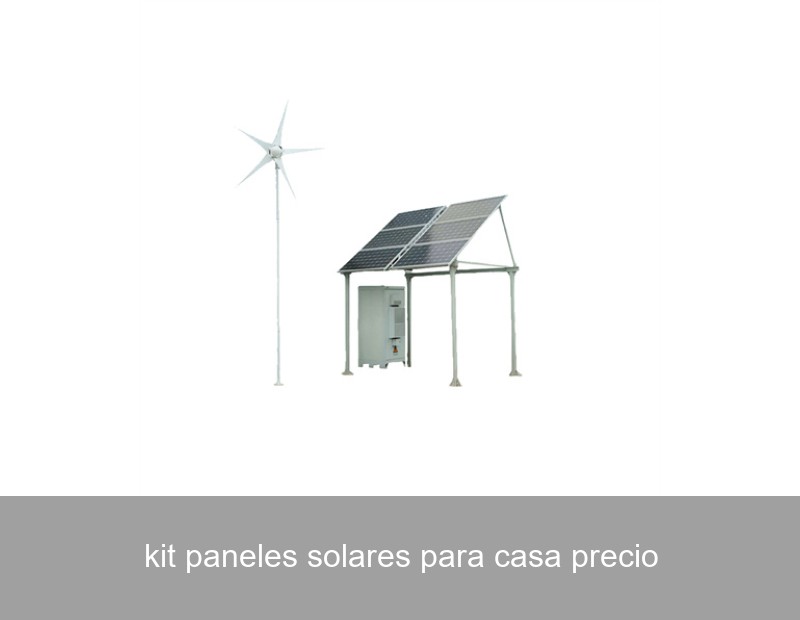
So, you're thinking about harnessing the sun's power for your home. The term "kit paneles solares para casa precio" (home solar panel kit price) is likely at the top of your search list. It's a smart move—both for your wallet and the planet. But that initial search can be overwhelming. Prices vary wildly, specifications are confusing, and it's hard to know what you're truly paying for. Is it just a box of panels, or a complete energy solution? Let's demystify the real cost and value behind a home solar kit, moving beyond the sticker price to understand the long-term investment in energy independence.
Table of Contents
- What's Really Inside the Price Tag?
- Key Factors Influencing Your Solar Kit's Cost
- Beyond Panels: The Critical Role of the Inverter and Battery
- The Highjoule Approach: Integrated Systems, Not Just Kits
- Calculating Total Value: ROI and Energy Security
What's Really Inside the Price Tag?
A "kit paneles solares para casa" is more than just photovoltaic modules. The price typically bundles several core components, each contributing to the final cost. Think of it as buying a high-performance car; you're paying for the engine, transmission, safety systems, and comfort features, not just the chassis.
- Solar Panels (PV Modules): The most visible part, usually 40-50% of the kit cost. Efficiency and warranty grade matter.
- Inverter(s): The brain of the system, converting DC solar power to usable AC power for your home (15-20% of cost).
- Mounting System & Hardware: The skeleton that secures panels to your roof or ground (10-15% of cost).
- Balance of System (BOS): Wiring, connectors, circuit breakers, and monitoring hardware (5-10% of cost).
- Energy Storage (Optional but Increasingly Vital): A battery system to store excess energy for use at night or during outages. This is a significant add-on but transforms the system's capability.
According to data from the U.S. Department of Energy, the average cost per watt for residential solar has dropped dramatically over the past decade, but the system's total value has increased with better technology.
Key Factors Influencing Your Solar Kit's Cost
Why does one 5kW kit cost $8,000 and another $14,000? Several variables are at play:
| Factor | Impact on Price | Why It Matters |
|---|---|---|
| System Size (kW) | Directly proportional | Based on your home's energy consumption, not just roof size. |
| Panel Efficiency & Brand | High-efficiency panels cost more per unit | Generates more power in limited space, often with better long-term degradation rates. |
| Inverter Type | Micro-inverters > String inverters > Hybrid inverters | Affects efficiency per panel, system monitoring granularity, and battery readiness. |
| Battery Integration | Can add 30-50%+ to system cost | Enables true energy independence and backup power, maximizing self-consumption. |
| Installation Complexity | Varies widely | Roof type, pitch, and local permitting/inspection fees add to the "soft costs." |
A Real-World Case: The Johnson Family in California
Let's look at a concrete example. The Johnson family in Sacramento, CA, wanted to offset their 900 kWh monthly usage and gain backup power during Public Safety Power Shutoffs (PSPS).
- Goal: 95% energy self-sufficiency + whole-home backup for essentials.
- System Installed (2023): 8.2 kW solar array + a 13.5 kWh integrated battery system.
- Gross Price (Before Incentives): Approximately $32,000.
- Net Price (After 30% Federal ITC): Approximately $22,400.
- Outcome: Their first-year electricity bills dropped from an average of $220/month to a near-zero monthly minimum charge (~$10). They experienced three grid outages totaling 42 hours, during which their home power continued uninterrupted.

This case highlights that the true "precio" is an investment with a clear return. The Johnsons project a payback period of under 9 years, after which they'll have nearly free electricity for the 15+ year remainder of their warranty.
Beyond Panels: The Critical Role of the Inverter and Battery
Here's a pro insight: the panels capture energy, but the inverter and battery manage it. A hybrid inverter, which can integrate battery storage from day one, is a future-proof choice. Pairing it with a high-cycle life, safe battery chemistry is what turns a simple solar kit into a resilient home energy system.
This is where companies like Highjoule differentiate. While a basic kit provides components, Highjoule provides intelligent, integrated systems. Our HES-Series Home Energy Systems are engineered as a unified whole: high-efficiency panels, a sophisticated hybrid inverter, and our proprietary lithium iron phosphate (LFP) battery modules all communicate seamlessly via our EnergyOS™ platform. This integration maximizes efficiency, extends hardware life, and provides homeowners with simple, app-based control over their energy flow, storage, and consumption.
The Highjoule Approach: Integrated Systems, Not Just Kits
Founded in 2005, Highjoule has evolved from a component provider to a global solutions architect for storage-centric energy independence. For homeowners, this means we think beyond the "kit paneles solares para casa precio" question. We address the "home energy ecosystem value" question.
Our residential solutions, popular in both the European and North American markets, are designed for simplicity and performance:
- Pre-engineered Configurations: We offer scalable system sizes (e.g., 5kW solar + 10kWh storage, 10kW + 20kWh) that take the guesswork out of component compatibility.
- Safety-First LFP Batteries: Our battery systems use stable Lithium Iron Phosphate chemistry, known for its long lifespan and excellent thermal safety—a critical consideration for home installations.
- Smart Energy Management: The EnergyOS™ software learns your habits, automatically optimizing for self-consumption, time-of-use rate arbitrage, or backup preparedness.
- Professional Partner Network: We work with certified, local installers who are trained to deploy our systems efficiently, ensuring you get the full benefit of the technology and qualify for all local incentives.

Calculating Total Value: ROI and Energy Security
Therefore, evaluating the price of a solar kit requires a lifetime value calculation. Ask yourself:
- What is my current and projected cost of grid electricity? (Rates in Europe and the U.S. have consistently risen, as noted by the U.S. Energy Information Administration).
- What is the value of uninterrupted power to my household? (Home office, medical equipment, food security).
- How will an integrated system increase my home's value and sustainability profile?
A slightly higher initial investment in a coherent, storage-ready system from a provider like Highjoule often yields a faster and greater long-term return than a disaggregated kit of components. It's the difference between buying a pile of excellent car parts and buying a luxury, warrantied vehicle that's ready to drive.
So, What's Your Home's Energy Profile?
To move from a generic "precio" to a personalized proposal, the first step is understanding your unique energy footprint. Have you analyzed your utility bill from the past year to identify your baseline consumption and peak demand? How might your energy needs change with an electric vehicle or a heat pump in the next five years? The right solar and storage solution isn't just about today's price—it's about empowering your home's energy future for decades to come.
 Inquiry
 Online Chat