


Kit Panneaux Solaires Autoconsommation: Your Guide to Energy Independence
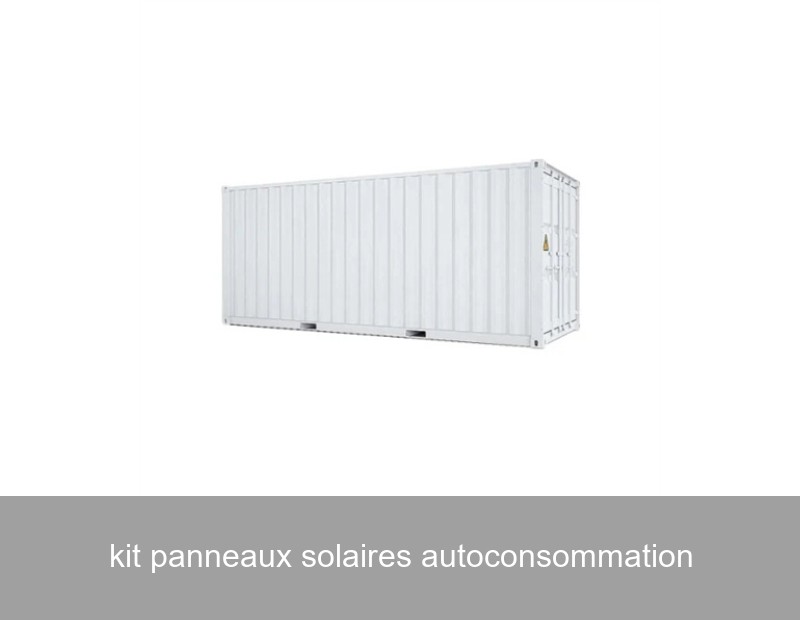
Have you ever watched your electricity meter spin and wondered, "What if I could just use the power from my own roof?" You're not alone. Across Europe and the US, a quiet revolution is happening on rooftops and in backyards, driven by the desire for autoconsommation—self-consumption of solar energy. A kit panneaux solaires autoconsommation is more than just a set of panels; it's a complete system designed to capture, manage, and maximize your personal use of solar power. This shift from simply feeding the grid to actively managing your own energy is empowering homeowners and businesses alike. But how does it truly work, and what does it take to build an efficient system that goes beyond just the panels? Let's explore.
Table of Contents
- The Phenomenon: From Passive Consumer to Active Prosumer
- The Data: Why Self-Consumption is the Smart Financial Choice
- The Core of Your Kit: It's More Than Just Panels
- A Real-World Case: The Bordeaux Winery
- Highjoule's Role: Intelligent Systems for Maximum Autonomy
- Future Trends: Smarter Grids and Home Ecosystems
The Phenomenon: From Passive Consumer to Active Prosumer
For years, solar installations were often about one thing: selling electricity back to the utility company through generous feed-in tariffs. The game has changed. With tariffs decreasing and electricity prices soaring, the economic logic has flipped. The new goal is to consume what you produce, the moment you produce it. This is the heart of autoconsommation. You become a "prosumer"—both a producer and a consumer. This isn't just about saving money (though that's a huge part); it's about taking tangible control of your energy footprint, increasing your resilience during grid outages, and directly contributing to the decarbonization of the local grid.

Image Source: Unsplash - A modern residential solar installation, the foundation of an autoconsommation kit.
The Data: Why Self-Consumption is the Smart Financial Choice
Let's talk numbers. In Germany, the levelized cost of electricity from a small rooftop PV system is now around 8-12 Euro cents per kWh, while household electricity prices regularly exceed 30 cents per kWh. In California, the difference between retail rates and solar compensation can be even starker. According to the International Energy Agency (IEA), solar PV is now the cheapest source of electricity in history for many parts of the world. The financial incentive is clear: every kilowatt-hour you self-consume is one you don't buy at the high retail price. A well-designed kit panneaux solaires autoconsommation can typically achieve a self-consumption rate of 30-50% with panels alone. But what about the other 50-70% that you might export at a lower price? That's where system design gets intelligent.
The Core of Your Kit: It's More Than Just Panels
A basic grid-tied solar kit includes panels and an inverter. An autoconsommation kit, however, is engineered for a different purpose: maximizing on-site usage.
- Solar Panels (Panneaux Solaires): The energy harvesters. Higher efficiency panels are beneficial when roof space is limited.
- Inverter(s): The brain and converter. For autoconsommation, hybrid inverters are key, as they can manage both grid interaction and battery charging.
- The Game-Changer: The Battery Storage System: This is the heart of high self-consumption. It stores excess solar energy produced during the day for use in the evening and night, easily boosting self-consumption rates to 70% or even 90%+.
- Energy Management System (EMS): The intelligent director. It decides when to store energy, when to use it, and when to draw from the grid, optimizing for cost and efficiency.
- Monitoring & Control: A user-friendly app that shows you your production, consumption, and savings in real-time.
| System Component | Role in Basic Solar Kit | Role in Advanced Autoconsommation Kit |
|---|---|---|
| Solar Panels | Generate electricity | Generate electricity |
| Inverter | Convert DC to AC for grid feed-in | Hybrid function: manage PV, battery, and grid (bidirectional) |
| Battery | Not included | Essential: Stores surplus for later self-use |
| Energy Manager | Not included | Essential: Intelligently routes power to maximize self-consumption |
A Real-World Case: The Bordeaux Winery
Consider a family-run winery in Bordeaux, France. Their challenge: high energy costs for refrigeration, lighting, and bottling operations, with peak demand charges. They installed a tailored kit panneaux solaires autoconsommation with a 100 kWp solar array and a 120 kWh Highjoule H2.IntelliStore battery system. The results after one year?
- Self-Consumption Rate: Increased from an estimated 35% (solar only) to 82% with the battery system.
- Grid Import Reduction: Reduced grid electricity purchases by 68%.
- Peak Shaving: The system's intelligent control discharged the battery during utility peak periods, slashing demand charges by over 40%.
- ROI: Projected payback period of under 7 years, with decades of low-cost operation ahead.
This case, mirrored by many commercial sites across Europe, shows that the right storage solution transforms a solar installation from a simple generator into a resilient, cost-optimizing energy asset. Data from the U.S. Department of Energy's Solar Energy Technologies Office underscores the accelerating adoption of such paired systems.
Highjoule's Role: Intelligent Systems for Maximum Autonomy
At Highjoule, we understand that a true kit panneaux solaires autoconsommation is an integrated ecosystem. Since 2005, we've moved beyond just providing components to delivering intelligent, turnkey solutions. Our H2.Residential and H2.Commercial energy storage systems are designed from the ground up to seamlessly integrate with leading solar inverters and panels.
What sets our systems apart is the Highjoule Energy Operating System (HEOS). This advanced software platform uses AI-driven forecasting to learn your consumption patterns and weather data to predict solar production. It doesn't just react; it proactively manages your energy flow. For instance, it might decide to conserve battery capacity if a cloudy afternoon is forecasted, ensuring you have power when you need it most. For businesses, this intelligence is crucial for demand charge management, a factor often more significant than energy consumption itself.

Image Source: Unsplash - A sleek, modern home battery unit, a core component of an advanced autoconsommation system.
Future Trends: Smarter Grids and Home Ecosystems
The future of autoconsommation is dynamic and connected. We're moving towards systems that interact with the grid for stability (virtual power plants), integrate with electric vehicle charging (turning your EV into a battery on wheels), and manage smart home devices like heat pumps and water heaters to align consumption with production. The kit of tomorrow will be a central hub for a fully electrified, efficient, and independent home or business. This aligns with grid modernization efforts documented by entities like the European Network of Transmission System Operators (ENTSO-E).
Is Your Current Solar Setup Just Scratching the Surface?
If you already have solar panels, you've taken a fantastic first step. But ask yourself: are you truly maximizing the value of every sunbeam that hits your roof? Could an intelligent storage system from a provider like Highjoule be the key to unlocking the next level of energy independence and financial savings for your home or business?
 Inquiry
 Online Chat