


Solar Autoconsommation: The Smart Path to Energy Independence and Savings
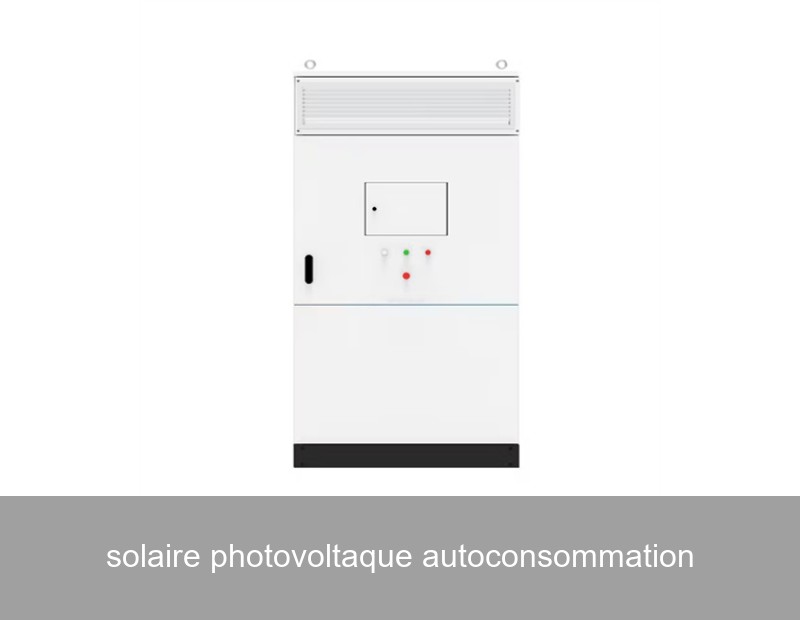
Have you ever glanced at your electricity bill on a sunny day and wondered, "My roof is covered in solar panels, so why am I still paying the grid?" If this sounds familiar, you've encountered the core challenge of modern solar ownership. The solution lies in mastering solaire photovoltaïque autoconsommation—the art of consuming the solar energy you produce, the moment you produce it. It's a shift from simply generating green power to actively and intelligently managing it for maximum economic and environmental benefit. For homeowners and businesses across Europe and the US, moving towards higher self-consumption rates isn't just an ideal; it's becoming a financial imperative as feed-in tariffs evolve. Let's explore how you can transform your solar installation from a passive generator into an active, money-saving asset.
What is Solar Autoconsommation?
At its heart, solaire photovoltaïque autoconsommation (solar photovoltaic self-consumption) is a simple yet powerful concept. It refers to the practice of using the electricity generated by your own solar panels directly in your home or business, rather than exporting all of it to the public grid. Think of it like growing vegetables in your garden: the ultimate efficiency is eating them fresh from the vine, not shipping them all away and then buying different vegetables back from the supermarket at a higher price. A typical system without storage might only achieve a 30-50% self-consumption rate because solar production peaks midday, while energy demand often peaks in the morning and evening. Bridging this production-consumption gap is the key to unlocking true energy independence.
The Grid Dependency Phenomenon
The traditional solar setup creates a curious paradox. Your panels work hardest when you're often not home—during sunny afternoon hours. This surplus power gets sold back to the grid, usually at a rate lower than the retail price you pay for electricity. Then, as the sun sets and your family returns home, switches on lights, appliances, and the oven, your system produces little to nothing. You're forced to buy expensive power back from the utility. This "export low, import high" cycle limits your savings and keeps you tethered to the grid. The phenomenon is clear: without a strategy for autoconsommation, a significant portion of your solar investment and clean energy potential is simply flowing away.
The Data: Power of Self-Consumption
Why is increasing your self-consumption rate so crucial? The numbers speak for themselves. According to the International Energy Agency (IEA), solar PV is now the cheapest source of electricity in history for many regions. However, its value is maximized locally. Studies, including one from the National Renewable Energy Laboratory (NREL), show that pairing solar with storage can increase self-consumption from an average of 30-40% to over 70-80%, dramatically reducing grid imports.
| Scenario | Self-Consumption Rate | Grid Dependency | Estimated Bill Savings* |
|---|---|---|---|
| Solar PV Only (No Battery) | 30-50% | High | 40-60% |
| Solar PV + Basic Battery | 60-75% | Moderate | 70-85% |
| Solar PV + Intelligent ESS (e.g., Highjoule) | 80-95%+ | Very Low | 90%+ (Potential for near-zero bills) |
*Savings are illustrative and depend on local rates, consumption patterns, and system sizing.

Image Source: Unsplash (Photographer: Andreas Gücklhorn)
A Real-World Case Study: A Family Home in Bavaria, Germany
Let's look at a concrete example. The Schmidt family, living in a detached home near Munich, installed a 9.8 kWp solar array in 2020. Initially, with no storage, their self-consumption was just 38%. They exported over 5,200 kWh annually back to the grid at a rate of €0.08/kWh, while buying 4,800 kWh during evenings and winter at €0.32/kWh.
In 2022, they decided to optimize their solaire photovoltaïque autoconsommation by integrating a Highjoule ResiFlow 10 battery storage system (10 kWh usable capacity) with an intelligent energy management system (EMS). The results after one year were transformative:
- Self-Consumption Rate: Jumped from 38% to 89%.
- Grid Imports: Reduced by 82%, from 4,800 kWh to just 864 kWh.
- Annual Electricity Bill: Reduced from an effective net cost of ~€1,200 to under €280.
- Energy Security: The system provides backup power during short grid outages, a valued benefit.
The Highjoule EMS was pivotal. It doesn't just store surplus energy; it learns the family's habits, considers weather forecasts, and intelligently decides when to store energy, when to power the home, and when to perform strategic grid charging during ultra-low tariff periods, maximizing savings further.
The Key to Solar Independence: Intelligent Storage
As the case study shows, the bridge across the solar production gap is a smart battery storage system. But not all storage is created equal. The true enabler of high-rate autoconsommation is the intelligence that manages the energy flow. This is where advanced Energy Management Systems (EMS) come into play. A sophisticated EMS acts as the brain of your solar-plus-storage setup, making real-time decisions to optimize every kilowatt-hour.

Image Source: Unsplash (Photographer: American Public Power Association)
Highjoule: Your Partner in Intelligent Autoconsommation
Since 2005, Highjoule has been at the forefront of this intelligent energy revolution. We understand that achieving 90%+ self-consumption requires more than just a battery; it requires a seamlessly integrated system designed for the purpose. Our solutions are built around this core principle:
- For Homes (ResiFlow Series): Our residential storage systems feature high-density, long-life lithium iron phosphate (LFP) batteries and our proprietary Adaptive Learning EMS. This software continuously analyzes your energy production and consumption patterns, automatically adjusting strategies to prioritize self-consumption, leverage time-of-use rates, and even prepare for forecasted cloudy days.
- For Business & Industry (GridMax Series): Commercial operations have more complex loads and demand charges. Our GridMax systems provide scalable storage solutions that not only boost solar self-consumption but also perform peak shaving—reducing the maximum power draw from the grid to slash demand charges, a significant portion of commercial bills.
- For Microgrids & Utilities (GridSure Series): On a larger scale, our technology enables communities and utilities to create resilient microgrids with a high penetration of renewable generation, fundamentally built on the principle of local autoconsommation and stability.
Our global experience in European and North American markets means our systems are designed to comply with local grid codes and incentives, whether you're in California, Texas, Germany, or France.
Optimizing Your Solar Autoconsommation System
Ready to maximize your solar investment? Here’s a practical ladder to follow:
- Audit & Analyze: Review at least one year of your electricity bills and solar production data. Identify your consumption patterns and your current self-consumption rate.
- Right-Size Your Storage: More battery isn't always better. A qualified installer (like Highjoule's certified partners) can model your home's data to recommend a storage size that optimizes ROI, typically covering evening demand without significant oversizing.
- Choose Intelligence: Prioritize systems with advanced, forecast-aware EMS. This software is what turns hardware into genuine savings.
- Consider Load Management: Pair your system with smart plugs or controllers for water heaters, EV chargers, or pool pumps. Your EMS can direct excess solar to these devices, boosting self-consumption even further.
For the latest technical insights on system integration, resources like the Solar Power World Online industry magazine can be valuable.

Image Source: Unsplash (Photographer: Vivint Solar)
Your solar panels have done the first important job: capturing free energy from the sun. Now, are you ready to take the next critical step and truly own your power? What would achieving 90% energy self-sufficiency mean for your household budget or your business's operational resilience in the next year?
 Inquiry
 Online Chat