


Understanding Solar Panel Components and Their Functions: A Guide to Efficient Solar Power
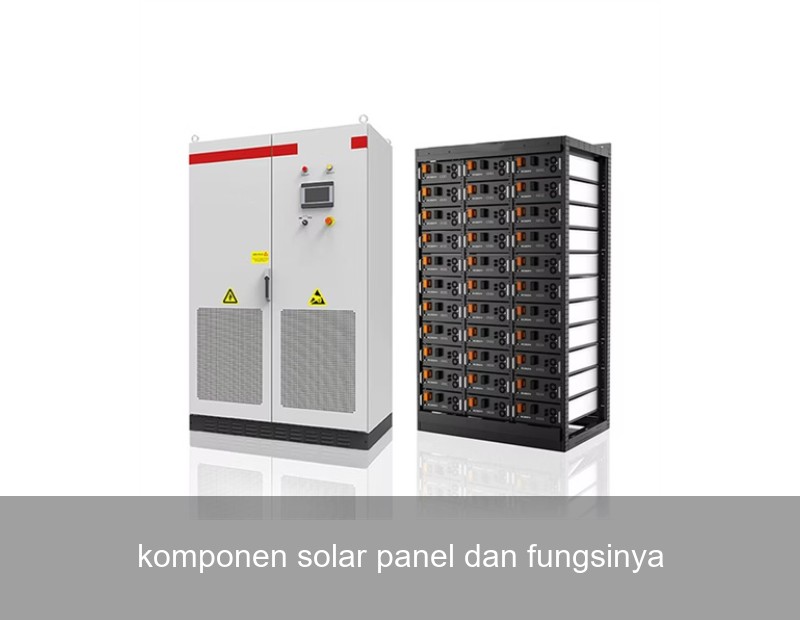
Have you ever looked at the sleek, dark rectangles on a rooftop and wondered how they actually turn sunlight into usable electricity for your home or business? It's a marvel of modern engineering, and it all comes down to understanding the komponen solar panel dan fungsinya – the solar panel components and their functions. While the final product seems simple, each part plays a critical role in capturing, converting, and delivering clean energy. As a global leader in advanced energy storage since 2005, Highjoule knows that a truly efficient and sustainable power system starts with a solid grasp of these fundamentals. Let's demystify the technology and explore how each component works in harmony.
Table of Contents
The Heart of the System: Photovoltaic (PV) Cells
At the absolute core of every solar panel are the photovoltaic cells. These are the components that perform the essential magic of converting sunlight (photo) into electricity (voltaic). Most residential and commercial panels use silicon-based cells, which come in two main types:
- Monocrystalline Silicon Cells: Made from a single, pure crystal structure. They are typically more efficient (often above 20%) and have a uniform black appearance but are generally more expensive.
- Polycrystalline Silicon Cells: Composed of multiple silicon crystals melted together. They are slightly less efficient (around 15-17%) and have a blue, speckled look, but offer a more cost-effective solution.
The function of these cells relies on the photoelectric effect. When photons from sunlight strike the semiconductor material (silicon), they knock electrons loose, creating a flow of direct current (DC) electricity. A single cell only produces about 0.5 volts, so they are wired together in series within a panel to increase the voltage to a usable level, typically 30-40 volts per panel.

Image source: Unsplash - Close-up of solar PV cells.
The Protective Structure: Glass, Frame, and Backsheet
A solar panel faces decades of harsh weather—from scorching sun and hail to heavy snow loads. The internal cells need robust protection, which is provided by several key structural components.
| Component | Primary Function | Material & Characteristics |
|---|---|---|
| Tempered Glass | Front-line protection. Allows maximum light transmission while being highly durable and resistant to impact. | Low-iron tempered glass, typically 3-4mm thick, with anti-reflective coating. |
| Aluminum Frame | Provides structural rigidity, enables secure mounting to racks, and protects the panel edges. | Anodized aluminum alloy, resistant to corrosion, allowing for long-term outdoor use. |
| Backsheet | Insulates and protects the back of the panel from moisture, dirt, and electrical hazards. | Multi-layered polymer (e.g., PVF) providing electrical insulation and UV resistance. |
| Encapsulant (EVA) | Seals and cushions the cells, bonding the glass, cells, and backsheet into a single, waterproof laminate. | Ethylene-Vinyl Acetate, a transparent plastic that remains stable under UV exposure. |
This encapsulation is crucial. Without it, moisture ingress and potential-induced degradation (PID) can drastically reduce the panel's lifespan and output. High-quality manufacturing here separates a panel that lasts 25+ years from one that fails prematurely.
The Nervous System: Wiring, Connectors, and the Junction Box
The electricity generated by the cells needs a path to travel. On the back of the panel, you'll see thin busbars and fingers—metallic lines that collect the DC electricity from the cells. These converge into thicker, insulated cables that exit through a critical component: the junction box.
- Junction Box: This is the command center on the back of the panel. It houses the bypass diodes, which are unsung heroes. If part of the panel is shaded, these diodes allow current to "bypass" the shaded cells, preventing them from becoming power sinks and overheating, which protects the panel and minimizes power loss.
- Connectors (MC4): Standardized, weatherproof plugs (like MC4 connectors) allow for safe, tool-less series and parallel connection of multiple panels into a "string." Their quality is vital for fire safety and system reliability.
The Critical Balance of System (BOS)
While the panel itself is vital, the solar power system is incomplete without the Balance of System components. This is where the DC electricity becomes usable AC power for your home or business, and where intelligent management comes into play.
Inverter: The Brain of the Operation
The inverter's function is to convert the DC electricity from the panels into the alternating current (AC) that powers your appliances and feeds into the grid. Modern string inverters and microinverters also perform maximum power point tracking (MPPT) to constantly optimize the voltage and current for maximum energy harvest, especially under varying light conditions.
Mounting Systems and Monitoring
Racking and mounting systems securely attach panels to roofs or ground mounts, ensuring correct angle and orientation for sun exposure. Furthermore, system monitoring hardware and software provide real-time data on energy production, allowing you to track performance and identify any issues promptly.
Real-World Impact: A Case Study from California
Understanding komponen solar panel dan fungsinya translates directly to real-world performance and savings. Consider a commercial project Highjoule supported in Southern California. A mid-sized manufacturing facility with high daytime energy consumption installed a 250 kW rooftop solar array. The project used high-efficiency monocrystalline panels with robust junction boxes and bypass diodes to handle partial shading from HVAC units.
The critical addition was Highjoule's integrated HES-500 commercial battery energy storage system (BESS). This system doesn't just store excess solar energy; it intelligently manages it. During peak sun hours, the solar panels produce more than the facility can use. Instead of simply exporting all of it, the Highjoule BESS stores that surplus. Then, during the late afternoon and evening peak utility rate periods (when grid electricity is most expensive), the facility draws from the battery, not the grid.
The Data: In its first year, the system generated 385 MWh of solar energy. The Highjoule BESS enabled 78% of that energy to be used directly on-site or stored for later use, drastically reducing reliance on the grid during peak times. The facility's electricity bill was reduced by over 60%, with a projected payback period of under 6 years—a figure supported by NREL research on solar+storage economics. This case shows how quality components paired with intelligent storage create a resilient and cost-effective energy solution.

Image source: Unsplash - Commercial rooftop solar installation.
Maximizing Your Solar Investment: The Storage Imperative
Knowing your panel components ensures you start with a high-quality energy generation source. But to truly maximize its value—especially in markets like Europe and the U.S. with time-of-use rates and increasing grid volatility—pairing solar with storage is no longer a luxury; it's a strategic upgrade.
This is Highjoule's expertise. Our Residential ESS (Energy Storage System) and scalable Commercial & Industrial BESS solutions are designed to seamlessly integrate with your solar array. They don't just store energy; they provide:
- Energy Independence: Use more of your self-generated solar power, day and night.
- Bill Management: Automatically avoid peak charges by discharging stored energy during expensive grid periods.
- Backup Power: Maintain essential power during grid outages, a feature becoming increasingly important.
- Grid Services: For larger installations, systems can provide grid stability services, creating potential revenue streams.
Think of it this way: a solar panel system is an excellent engine, but a battery like Highjoule's is the intelligent fuel tank and energy manager that ensures no drop of your self-produced "fuel" goes to waste.
Looking Forward: The Integrated Energy System
The conversation around solar is evolving from just panels on the roof to integrated, smart energy ecosystems. The next step is connecting these systems to microgrids and virtual power plants (VPPs), where communities or networks of buildings can share and trade energy. Highjoule's technology is at the forefront of this transition, providing the control and intelligence needed for these advanced applications. For a deeper dive into the technology standards behind safe and reliable systems, organizations like the Solar Energy Industries Association (SEIA) provide valuable resources.
Now that you understand the key komponen solar panel dan fungsinya and the transformative role of storage, what is the first question you would ask when evaluating a solar-plus-storage system for your own energy independence journey?
 Inquiry
 Online Chat