


Kontenerowe Magazyny Energii: The Mobile Power Hub Revolutionizing Energy Security
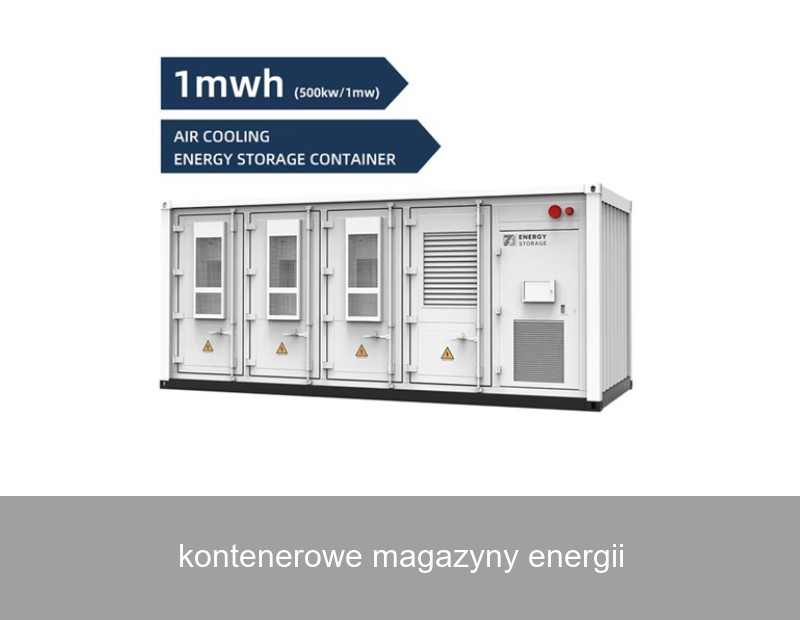
Imagine a powerful, self-contained battery system, pre-assembled in a standard shipping container, arriving on-site and being ready to provide megawatts of power within weeks. This is the reality of kontenerowe magazyny energii, or containerized energy storage systems. For businesses, utilities, and communities across Europe and the US grappling with volatile energy prices and the need for grid resilience, these mobile power hubs are no longer a futuristic concept—they are a critical, deployable asset today.
The energy landscape is undergoing a seismic shift. The rapid integration of intermittent renewable sources like solar and wind, coupled with aging grid infrastructure and increasing frequency of extreme weather events, has created an urgent need for flexible, fast-responding energy buffers. This is where the scalable, plug-and-play nature of containerized Battery Energy Storage Systems (BESS) shines. They represent a paradigm shift from fixed, monolithic infrastructure to agile, modular power solutions that can be deployed exactly where and when they are needed most.
Why the Demand for Kontenerowe Magazyny Energii is Surging
The phenomenon is clear: the global market for battery energy storage is exploding. But what's driving the specific surge in containerized solutions? Let's look at the data and underlying trends.
First, economics and policy are powerful catalysts. In the US, the Inflation Reduction Act (IRA) provides substantial investment tax credits for standalone storage, making projects more financially viable [1]. In Europe, the REPowerEU plan aggressively targets energy independence and renewables integration, directly creating demand for storage [2]. Financially, the levelized cost of storage (LCOS) for lithium-ion batteries has fallen dramatically, by over 70% in the last decade, turning storage from a niche technology into a mainstream grid asset.
Second, we face a triad of grid challenges:
- Intermittency of Renewables: The sun doesn't always shine, and the wind doesn't always blow. Storage acts as a "time-shifting" device, absorbing excess solar generation at noon and releasing it during the evening peak.
- Grid Congestion: Upgrading transmission lines is slow and costly. A kontenerowy magazyn energii can be strategically placed at congested nodes, deferring or eliminating the need for expensive infrastructure upgrades.
- Frequency Regulation: Modern grids require precise frequency control. Battery storage can respond to frequency deviations in milliseconds, a service far faster than traditional fossil-fuel plants.

Image Source: Unsplash - Representative image of a containerized energy storage system deployment.
Key Components of a Modern Containerized BESS
So, what's inside these powerful containers? It's a sophisticated integration of core technologies, all housed within a robust, weatherproof enclosure. Understanding these components is key to appreciating their value.
| Component | Function | Highjoule's Approach |
|---|---|---|
| Battery Racks & Modules | The core energy storage medium, typically using Lithium Iron Phosphate (LFP) chemistry for safety and longevity. | We use UL-certified, cell-to-pack LFP batteries with advanced thermal management for superior cycle life and safety. |
| Power Conversion System (PCS) | The "brain" of the operation; converts DC battery power to AC grid power and vice versa. | Our bi-directional inverters feature >98.5% efficiency and are designed for seamless grid interaction and black-start capabilities. |
| Energy Management System (EMS) | Intelligent software that controls charging/discharging based on market signals, grid needs, or owner preferences. | The Highjoule HEMS AI Platform optimizes for multiple value streams simultaneously (e.g., arbitrage, frequency response, backup). |
| Thermal Management | Critical for safety and performance; maintains optimal battery temperature in all climates. | Our patented liquid cooling system ensures even temperature distribution, extending battery life by up to 20% compared to air-cooled systems. |
| Safety & Enclosure | Includes fire suppression, gas detection, and a ISO-standard container built for harsh environments. | Multi-layer protection with early warning detection systems and a IP54-rated, corrosion-resistant enclosure. |
Real-World Case Study: Grid Stability and Renewable Integration in Poland
Let's move from theory to practice. A compelling example of kontenerowe magazyny energii in action comes from Poland, a market actively modernizing its grid and increasing its share of renewables.
The Challenge: A regional distribution system operator (DSO) in Western Poland was facing voltage instability and congestion on a 110kV line due to a growing number of connected wind farms. The intermittent power flows were causing headaches for grid operators and limiting the ability to connect more renewable capacity.
The Solution: The DSO partnered with Highjoule to deploy a 4 MW / 8 MWh containerized BESS at a key substation. The system consisted of two 40-foot Highjoule PowerCube MAX units. These pre-integrated containers were delivered to the site, connected to the medium-voltage grid, and commissioned in under 10 weeks.
- Grid Congestion Relief: The system automatically injected or absorbed power to smooth the line load, reducing congestion events by over 95%.
- Frequency Regulation (FCR): The BESS provides primary frequency regulation services to the Polish transmission grid operator (PSE), generating a continuous revenue stream for the asset owner.
- Renewable Capacity Unlocked: By stabilizing the grid, the DSO approved the connection of an additional 15 MW of planned wind capacity in the area, directly accelerating the energy transition.
- Financials: The project achieved a simple payback period of under 6 years, combining grid service payments with avoided infrastructure upgrade costs.

Image Source: Unsplash - Wind farms require grid support like BESS for stable integration.
Highjoule's Tailored Solutions for C&I and Utilities
At Highjoule, with nearly two decades of experience since 2005, we've moved beyond offering just hardware. We provide turnkey, intelligent energy storage solutions built around our core PowerCube containerized platform. Our systems are designed to address the specific pain points of different market segments.
For Commercial & Industrial (C&I) clients, such as manufacturing plants or data centers, our systems focus on:
- Peak Shaving: Automatically discharge the battery during expensive peak tariff hours, slashing demand charges—often the largest portion of an electricity bill.
- Backup Power: Provide seamless, instantaneous power during grid outages, ensuring business continuity without the emissions and noise of diesel generators.
- PV Self-Consumption Optimization: Store excess solar energy generated during the day for use at night, maximizing the return on solar investment.
For Utilities and Independent Power Producers (IPPs), the Highjoule UtilityMAX solution is engineered for grid-scale impact:
- Ancillary Services: Reliable provision of frequency regulation, voltage support, and synthetic inertia.
- Grid Deferral: Temporary or permanent placement to postpone costly transformer or line upgrades.
- Renewable Firming: "Smoothing" the output of a solar or wind farm to make it more predictable and dispatchable, akin to a traditional power plant.
The Future Outlook for Mobile Energy Storage
The evolution of kontenerowe magazyny energii is far from over. We are looking at a future where these systems become even more intelligent and multifunctional. The integration of second-life EV batteries into storage systems is gaining traction, promoting a circular economy. Furthermore, advanced grid-forming inverter technology will allow future storage systems to not just support the grid but to actively "form" and stabilize it independently, a crucial capability for microgrids and islands.
The question is no longer if containerized energy storage is a viable solution, but how and where to deploy it most effectively. The flexibility, speed, and proven economics make it an indispensable tool for navigating the energy transition.
Is your business or community evaluating how a mobile energy storage asset could address specific challenges like rising energy costs, grid reliability concerns, or ambitious sustainability goals? What would be the primary driver for you to consider deploying a kontenerowy magazyn energii on your site?
 Inquiry
 Online Chat