


Unlocking Grid Resilience: Your Guide to Choosing a Supplier of M/H Power Solutions
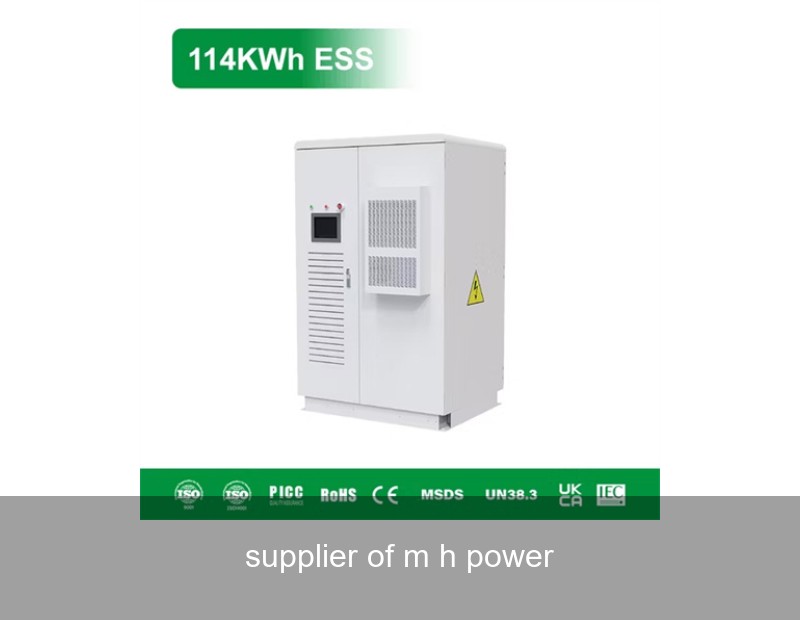
Imagine a massive battery, not for your phone, but for an entire community, factory, or even a segment of the national grid. We're talking about systems that store and discharge energy on a scale of Megawatt-hours (MWh). As our world pivots decisively towards wind and solar, a critical question emerges: what happens when the sun doesn't shine, or the wind doesn't blow? The answer increasingly lies in massive, sophisticated battery energy storage systems (BESS). For utilities, large industrials, and developers, finding the right supplier of M/H power solutions isn't just a procurement task—it's a strategic decision for energy independence, cost control, and sustainability. This article will guide you through the essentials of M/H-scale storage and what to look for in a technology partner.
The Modern Grid Challenge: Why We Need M/H-Scale Solutions
The energy transition is creating a paradox. We're adding more variable renewable generation than ever, but our grids were built for the steady, predictable output of fossil fuel plants. This mismatch causes instability. In California (CAISO), for example, the famous "duck curve" illustrates the steep ramp-up required from other sources as solar power plunges at sunset. Similarly, in Europe, periods of low wind (dunkelflaute) can strain continental power supplies.
This is where M/H power systems come in. They act as a giant shock absorber and time-shifting tool for the grid. A single installation can:
- Provide Frequency Regulation: Instantly inject or absorb power to keep the grid's frequency stable (a 50 Hz in Europe, 60 Hz in the US).
- Shift Renewable Energy: Store excess solar power from midday and release it during the evening peak, flattening the "duck curve."
- Defer Grid Upgrades: Act as "non-wires alternatives," providing localized power during peak times and postponing costly transformer and line upgrades.
- Ensure Backup Power: For critical facilities like hospitals, data centers, and manufacturing plants, M/H-scale storage provides crucial bridging power during outages.

Image: Utility-scale renewable projects increasingly integrate M/H-scale storage to mitigate intermittency. (Source: Unsplash, Photographer: American Public Power Association)
The Anatomy of an M/H Power System: Key Components from a Trusted Supplier
An M/H-scale BESS is far more than a collection of battery cells. It's a finely tuned ecosystem. A leading supplier of M/H power solutions must master and integrate all these components:
| Component | Function | Why It Matters |
|---|---|---|
| Battery Racks & Modules | The core energy storage unit, typically using Lithium-Ion (LFP chemistry is now dominant for safety and longevity). | Determines the total energy capacity (MWh) and fundamental cycle life. |
| Power Conversion System (PCS) | The inverter that converts DC battery power to AC grid power and vice versa. | Its speed and accuracy enable grid services like frequency regulation. Efficiency here directly impacts ROI. |
| Energy Management System (EMS) | The "brain" of the operation. It controls charging/discharging based on market signals, grid needs, or owner strategy. | This software intelligence is where the real value is optimized, turning stored energy into revenue or savings. |
| Thermal Management | Cooling/heating system to keep batteries at optimal temperature. | Critical for safety, performance, and maximizing battery lifespan (often 15-20 years). |
| Grid Integration & Controls | Hardware and software ensuring safe, compliant connection to the medium-voltage grid. | Ensures the asset can reliably provide grid services and meet local utility interconnection standards. |
Highjoule's Role as Your Strategic M/H Power Supplier
Since 2005, Highjoule has evolved from a pioneer in battery technology to a global supplier of M/H power systems for the most demanding applications. We don't just sell hardware; we deliver integrated, intelligent storage solutions. Our approach is built on three pillars:
- Proven, Containerized Solutions: Our flagship H-Joule GridStack series are pre-engineered, containerized M/H power systems ranging from 1 MWh to 10+ MWh per unit. They are factory-tested for rapid, scalable deployment on any site, reducing complexity and timeline for our clients.
- AI-Driven Energy Management: The true differentiator is our Neuron EMS platform. It doesn't just operate the system; it continuously analyzes weather data, grid conditions, and market prices (in deregulated markets like the US or Germany) to autonomously maximize financial return or operational resilience.
- Full Lifecycle Partnership: From initial feasibility and financial modeling to long-term performance guarantees and remote monitoring, we partner with clients for the entire 20+ year journey. Our service network in Europe and North America ensures local support.
For a commercial & industrial client, this might mean a 4 MWh Highjoule system that cuts peak demand charges by 40%. For a utility, it could be a 50 MWh portfolio of GridStack units providing fast-frequency response to balance regional wind generation.
Case Study: A 4.8 MWh BESS Stabilizes a Regional Grid in Vermont, USA
Let's look at a real-world application. A regional electric cooperative in Vermont faced a dual challenge: integrating a new community solar farm and managing capacity constraints on a key feeder line during winter peaks. Building new infrastructure was prohibitively expensive and time-consuming.
The Solution: The cooperative partnered with Highjoule as their supplier of M/H power technology. We deployed a 4.8 MWh GridStack system at a strategic substation. This system was configured for multiple value streams:
- Solar Smoothing: Storing excess solar generation during the day.
- Peak Shaving: Automatically discharging during the 4-7 PM peak, deferring a $1.2M feeder upgrade by at least 7 years.
- Grid Services: Providing frequency regulation services to the ISO-NE market when not used for local needs.
The Data-Driven Outcome: In its first year of operation, the system achieved:
- A 92% reduction in peak load on the constrained feeder.
- Over $180,000 in annual revenue from grid services, improving the project's payback period.
- Enhanced reliability for over 2,000 connected customers.
This case exemplifies the multi-faceted value a sophisticated M/H power system can deliver, turning a grid challenge into a revenue-generating asset.
How to Choose the Right Supplier of M/H Power Solutions
Selecting a partner for such a critical capital project requires careful due diligence. Beyond basic specifications, consider these factors:
- Depth of Integration: Do they provide a truly seamless, warranty-backed integration of all components (battery, PCS, EMS), or are they piecing together third-party parts?
- Software Intelligence: The EMS is key. Can it adapt to changing market rules and optimize for multiple, stacked value streams simultaneously?
- Safety Pedigree: Request detailed safety protocols, cell chemistry choice (LFP is now the standard for grid-scale), and certifications (UL, IEC, etc.). Review their track record.
- Financial Modeling Support: A good supplier will help you model the project's economics, considering local incentives, tariff structures, and potential revenue. For example, understanding the ancillary services markets in the US or the Balancing Mechanism in the UK is crucial.
- Long-Term Viability: You need a partner that will be there for the asset's life. Assess their financial health, service organization, and technology roadmap.
The Future Landscape of Grid-Scale Energy
The trajectory is clear. The International Energy Agency (IEA) notes that grid-scale storage is set for exponential growth, essential to achieving net-zero goals. We're moving beyond single-function batteries to adaptive grid assets that provide stability, enable renewables, and create new market efficiencies. The role of a supplier of M/H power is evolving into that of a grid resilience partner.

Image: Advanced control systems are vital for managing the complex operation of M/H-scale assets. (Source: Unsplash, Photographer: ThisisEngineering)
What specific challenge on your grid or in your operations—be it rising demand charges, renewable curtailment, or the need for backup power—could be transformed into an opportunity with a strategically placed M/H-scale storage solution?
 Inquiry
 Online Chat