


Large Capacity Lithium Battery: The Backbone of the Modern Energy Revolution
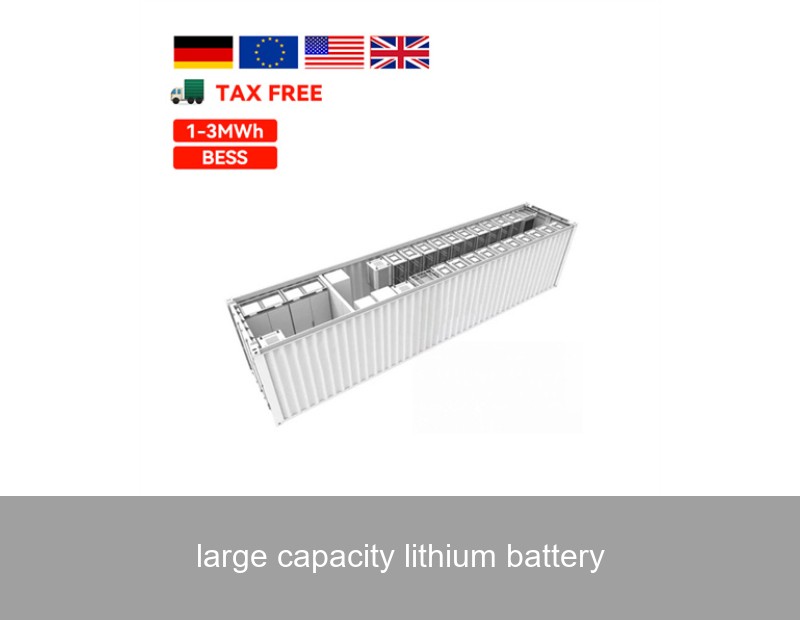
Imagine a world where a factory runs entirely on solar power, even after sunset. Or a remote community that enjoys grid-like reliability without a single mile of transmission line. This isn't a distant future—it's happening today, and at the heart of this transformation lies the large capacity lithium battery. These aren't the batteries in your phone or laptop; we're talking about energy storage systems (ESS) with capacities ranging from hundreds of kilowatt-hours (kWh) to multi-megawatt-hour (MWh) scales. They are the silent, intelligent workhorses enabling the shift from fossil fuels to renewable energy, and for businesses and communities, they are becoming a critical tool for energy independence and financial resilience. As a leader in this space since 2005, Highjoule has been at the forefront, designing and deploying intelligent, large-scale battery storage solutions that make this resilient, sustainable future a practical reality.
Table of Contents
- The Phenomenon: Why We Can't Just Rely on Sunshine and Wind
- The Data: Scale, Growth, and Economic Sense
- Case Study: A U.S. Manufacturing Plant's Journey to Resilience
- Key Insights: What to Look for in a Large-Scale Battery System
- Highjoule's Approach: Beyond the Battery Cell
- Your Energy Future: A Question of Control
The Phenomenon: Why We Can't Just Rely on Sunshine and Wind
Renewable energy sources like solar PV and wind are fantastic—clean, abundant, and increasingly cost-effective. But they have an inherent trait: intermittency. The sun sets, the wind calms. This creates a fundamental mismatch between when energy is generated and when it's needed most. Traditionally, peaker plants (often fossil-fueled) would ramp up to meet this demand. The modern solution? Store the excess renewable energy when it's plentiful and discharge it when it's not. This is the essential role of the large capacity lithium battery. It acts as a buffer, smoothing out the peaks and valleys of both generation and consumption. For a commercial or industrial facility, this isn't just about being green; it's about operational continuity, protecting against rising energy costs, and participating in grid services that generate revenue.

Image Source: Unsplash - Representative image of a containerized battery storage system.
The Data: Scale, Growth, and Economic Sense
The numbers behind this shift are staggering. According to the U.S. Energy Information Administration (EIA), the utility-scale battery storage capacity in the United States is projected to nearly double in 2024 alone. In Europe, driven by the REPowerEU plan and energy security concerns, the market is on a similar explosive trajectory. But let's break down what "large capacity" really means in practical terms:
| Application Scale | Typical Capacity Range | Primary Use Cases |
|---|---|---|
| Commercial & Industrial (C&I) | 100 kWh - 2 MWh+ | Peak shaving, backup power, time-of-use optimization |
| Utility-Scale / Microgrids | 10 MWh - 100+ MWh | Grid frequency regulation, renewable firming, community resilience |
| Large Residential / Community | 20 kWh - 100 kWh | Self-consumption maximization, virtual power plants (VPPs) |
The economics are now compelling. The levelized cost of storage (LCOS) for lithium-ion batteries has fallen dramatically, making projects with payback periods of 5-7 years increasingly common. When you factor in not just energy bill savings but also revenue from grid-balancing services (like Frequency Response in the UK or ancillary services in the ERCOT market in Texas), the financial argument becomes solid.
Case Study: A U.S. Manufacturing Plant's Journey to Resilience
Let's make this concrete with a real-world example. A mid-sized automotive parts manufacturer in Ohio faced a triple challenge: volatile energy prices cutting into margins, a high "demand charge" based on its peak 15-minute power draw each month, and concerns about grid reliability affecting just-in-time production.
The Solution: They partnered with Highjoule to design and install a turnkey 1.2 MWh large capacity lithium battery system, integrated with their existing rooftop solar. The Highjoule HEC-1000 (Hybrid Energy Controller) intelligently manages the entire energy asset.
- Demand Charge Reduction: The system predicts peak load periods and seamlessly discharges the battery to "shave" the peak, reducing demand charges by 28% annually.
- Solar Self-Consumption: Increased the use of their own solar generation from 40% to over 80%, storing afternoon excess for use in the evening.
- Backup Power: The system provides 4 hours of critical process load backup, preventing costly production halts during grid outages.
- ROI: The combined savings and incentives created a projected payback period of 6.2 years.
This case isn't unique; it's a blueprint for energy-intensive businesses across Europe and North America. The system isn't just a cost center; it's a strategic asset.
Key Insights: What to Look for in a Large-Scale Battery System
Choosing a large capacity lithium battery system is more than just buying cells. It's about selecting a holistic, intelligent energy solution. Here are the critical components often overlooked:
1. The Battery Management System (BMS) is the Brain
A superior BMS does more than prevent overcharge. It ensures each cell operates within its ideal window, maximizing lifespan (which can be 15+ years) and safety. Highjoule's proprietary BMS includes advanced thermal runaway detection and prevention algorithms, a non-negotiable for large-scale deployments.
2. System Integration and Grid Intelligence
The true value is unlocked by software. Can the system communicate with your solar inverters, the local grid, and your energy management system? Highjoule's platform uses AI-driven forecasting to optimize charging and discharging based on weather, usage patterns, and real-time electricity prices.
3. Safety and Compliance as a Foundation
Safety standards like UL 9540 (USA) and IEC 62619 (International) are paramount. A reputable provider will design with these from the ground up, incorporating fire suppression, dedicated containment, and proper ventilation. As the NFPA 855 standard outlines, proper installation and spacing are critical for fire safety.

Image Source: Unsplash - Representative image of an energy management system interface.
Highjoule's Approach: Beyond the Battery Cell
At Highjoule, our 18+ years of experience have taught us that delivering a reliable large capacity lithium battery system is about the entire ecosystem. Our product suite is designed to provide flexibility and intelligence:
- H-Series C&I Solutions: Scalable, containerized systems from 250 kWh to 4 MWh, pre-integrated with our HEC controller for seamless solar+storage operation.
- M-Grid Microgrid Controllers: The software brain that can orchestrate solar, storage, and backup generators into a resilient, independent microgrid—perfect for remote communities or critical infrastructure.
- Lifecycle Services: From initial feasibility and financial modeling to 24/7 remote monitoring and performance guarantees, we ensure your system delivers value for its entire lifespan.
We don't just sell hardware; we deliver a guaranteed energy outcome—whether it's a specific percentage of demand charge reduction, a level of backup resilience, or a target for renewable self-consumption.
Your Energy Future: A Question of Control
The transition to a decentralized, renewable-powered grid is inevitable. The question for business leaders, facility managers, and community planners is no longer *if* large capacity lithium battery storage will play a role, but *when* and *how*. Will you be reactive, responding to ever-higher utility rates and grid instability? Or will you be proactive, taking control of your energy destiny, locking in costs, and building operational resilience?
What is the single biggest energy cost or risk factor keeping you up at night, and have you evaluated what a customized storage solution could do to address it?
 Inquiry
 Online Chat