


Your Home's Power Revolution: Why a Battery for House Electricity is the Smart Choice Now
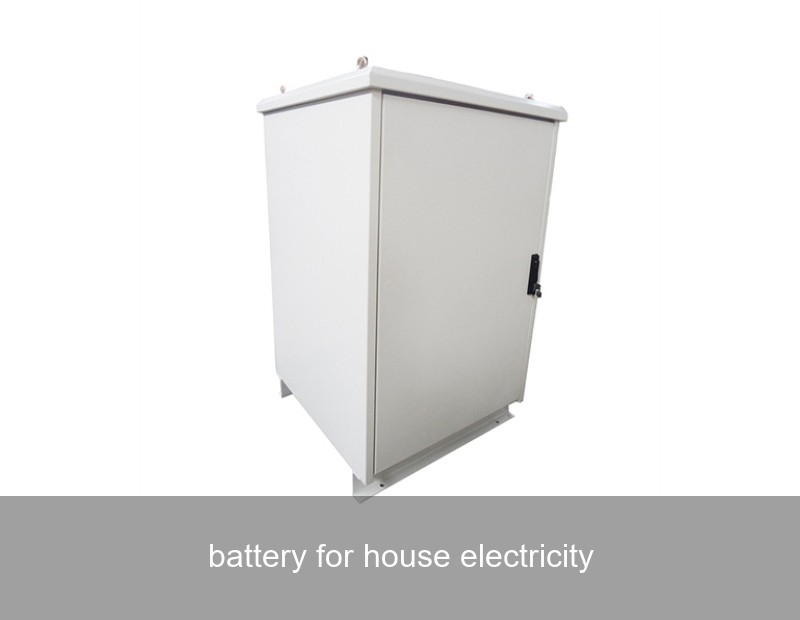
Imagine this: your electricity bill arrives, and instead of a familiar sense of dread, you feel a quiet confidence. The reason? A sleek unit quietly humming in your garage or basement—a home battery system. For homeowners in Europe and the US, the conversation about energy independence is rapidly shifting from "what if" to "how soon." Driven by volatile energy prices, increasing grid instability, and a genuine desire for sustainable living, the residential battery is no longer a futuristic concept. It's a present-day powerhouse, transforming how we generate, store, and use electricity. As a leader in advanced energy storage since 2005, Highjoule has been at the forefront of this revolution, engineering intelligent battery systems that empower homeowners to take control.
Table of Contents
- The Rising Need: More Than Just Backup Power
- How a Home Battery System Works: Your Personal Energy Hub
- By the Numbers: The Tangible Benefits of Home Energy Storage
- A Real-World Case: The Schmidt Family in Bavaria
- Choosing the Right Battery for Your Home: Key Considerations
- Highjoule's Solution: Engineered for Intelligent Home Energy Management
- The Future is Modular and Smart
The Rising Need: More Than Just Backup Power
For years, the primary driver for a battery for house electricity was simple: backup during an outage. While that remains a critical function, the narrative has dramatically expanded. Homeowners are now grappling with a triple challenge. First, energy prices are on a rollercoaster. In Europe, geopolitical tensions have caused unprecedented price spikes, while in the US, extreme weather events strain infrastructure, leading to higher costs. Second, the climate crisis has made renewable adoption urgent. Solar panels are a fantastic start, but without storage, excess solar energy is often sold back to the grid at low rates, missing the opportunity for full self-consumption. Third, aging electrical grids are becoming less reliable, with public safety power shutoffs (in wildfire-prone areas) and increased storm-related outages becoming more common.
The modern home battery addresses all three. It's a financial tool, a sustainability engine, and an insurance policy, all in one.
How a Home Battery System Works: Your Personal Energy Hub
Think of your home battery system as the intelligent core of your personal energy ecosystem. It sits between your energy sources (like solar panels or the grid) and your home's electrical panel. Here's a typical daily cycle:
- Daytime (Solar Production): Solar panels generate electricity. This power first meets your home's immediate needs. Any surplus, instead of flowing back to the grid, is directed to charge your battery.
- Evening (Peak Demand): As the sun sets and grid electricity prices often peak, your home seamlessly switches to drawing power from the charged battery. Your lights stay on, your appliances run, and you avoid buying expensive grid power.
- Night/Overage (Backup & Optimization): Once the battery is depleted to a preset reserve (say, for backup), your home draws from the grid at lower off-peak rates. If the grid fails, the system automatically islandes your home, providing power from the battery and solar.

Image Source: Unsplash (Representative image of a home with solar and storage)
By the Numbers: The Tangible Benefits of Home Energy Storage
Let's move beyond theory. The value proposition of a residential battery is grounded in hard data. According to the U.S. Department of Energy, when paired with solar, storage can increase a homeowner's consumption of self-generated electricity by up to 50% or more. Financially, this translates directly to bill savings. In markets with Time-of-Use (TOU) rates, like California or parts of the EU, the difference between peak and off-peak pricing can be substantial. A battery allows you to virtually "avoid" buying at peak rates.
| Benefit | Impact | Typical Outcome |
|---|---|---|
| Energy Bill Savings | Reduces grid consumption during high-price periods | 20-60% reduction in electricity costs (with solar) |
| Energy Independence | Increases self-consumption of solar power | Up to 80%+ of home's energy from self-generation |
| Backup Power | Provides electricity during grid outages | Essential circuits powered for 8-24+ hours |
| Grid Support & Incentives | Some utilities offer rebates for enrolling in VPPs | Additional annual revenue or bill credits |
A Real-World Case: The Schmidt Family in Bavaria
Let's look at a concrete example from our European market. The Schmidt family, living in a detached house in Bavaria, Germany, installed a 10 kW solar array in 2020. While it cut their bills, they were still importing 65% of their power at night. In early 2023, they integrated a Highjoule H2 Residential Stack system with a usable capacity of 15 kWh.
- Grid Independence: Their self-consumption rate jumped from 35% to 92%.
- Financial Savings: Their annual electricity expense dropped from €1,850 to €310—an 83% reduction.
- Peace of Mind: During two regional grid disturbances, their home's power didn't flicker. The system automatically provided backup, keeping their heating system, refrigeration, and lights operational.
"For us, it was about predictability," Mr. Schmidt noted. "We're insulated from price shocks, and we know our energy is clean and under our control. The Highjoule system's app makes it simple to track everything in real-time." This case exemplifies the multi-faceted payoff of a well-sized and intelligently managed battery for house electricity.
Choosing the Right Battery for Your Home: Key Considerations
Not all home batteries are created equal. When evaluating options, homeowners should focus on these core specifications:
- Usable Capacity (kWh): The actual amount of energy you can store and use. Size this based on your nightly consumption and backup needs.
- Power Rating (kW): How much power the battery can deliver at once. A higher rating can run more high-power appliances simultaneously during an outage.
- Depth of Discharge (DoD): The percentage of the battery's total capacity that is safely usable. A higher DoD (like 95% for Highjoule's LFP chemistry) means you get more value from your investment.
- Round-Trip Efficiency: The percentage of energy put into storage that you can later use. High efficiency (often 95%+) means less energy is lost as heat.
- Scalability & Warranty: Can you add more modules later? Does the warranty guarantee capacity retention over a long period (e.g., 10 years)?
Highjoule's Solution: Engineered for Intelligent Home Energy Management
At Highjoule, we've spent nearly two decades refining our approach. Our H2 Residential Stack series is built with the homeowner's long-term needs in mind. We utilize Lithium Iron Phosphate (LFP) chemistry, renowned for its exceptional safety, longevity, and stability. Each modular unit provides 5 kWh of usable capacity and can be stacked to create systems from 5 kWh to 30 kWh, ensuring a perfect fit for your home.
What truly sets our system apart is the Highjoule EnergyOS platform. This intelligent software doesn't just store and release energy. It learns your consumption patterns, integrates with local weather forecasts, and can be configured to respond to real-time utility pricing signals (where available). It automatically optimizes your energy flow to maximize savings and comfort. Whether you're in sunny Spain or in a region of the US with variable weather, the system ensures your battery for house electricity works as hard as possible for you. Our systems are designed for seamless integration with both new and existing solar installations, and our certified installer network across Europe and North America ensures professional setup and support.

Image Source: Unsplash (Representative image of a modern home battery unit)
The Future is Modular and Smart
The evolution of home energy storage is moving towards even greater intelligence and community integration. Concepts like Virtual Power Plants (VPPs), where thousands of home batteries are aggregated to support the grid during peak demand, are becoming reality, as highlighted by research from the National Renewable Energy Laboratory (NREL). Homeowners may soon earn additional revenue by allowing their battery to provide these grid services. Furthermore, the integration with electric vehicles (EVs)—turning your EV into a backup power source for your home (vehicle-to-home or V2H)—is the next frontier. Highjoule's architecture is being developed with these future capabilities in mind, ensuring your investment is future-proof.
The journey to energy resilience starts with a single question: What would it mean for your family to have reliable, clean, and affordable power, every hour of every day? The technology to make that a reality is here, tested, and ready to be installed in your home. What's the first appliance you'd want to keep running during an outage, and how would it feel to know your home is actively lowering both your carbon footprint and your monthly bills?
 Inquiry
 Online Chat