


Understanding LCOS: Why the Lithium Ion Battery is the Cornerstone of Modern Energy Storage
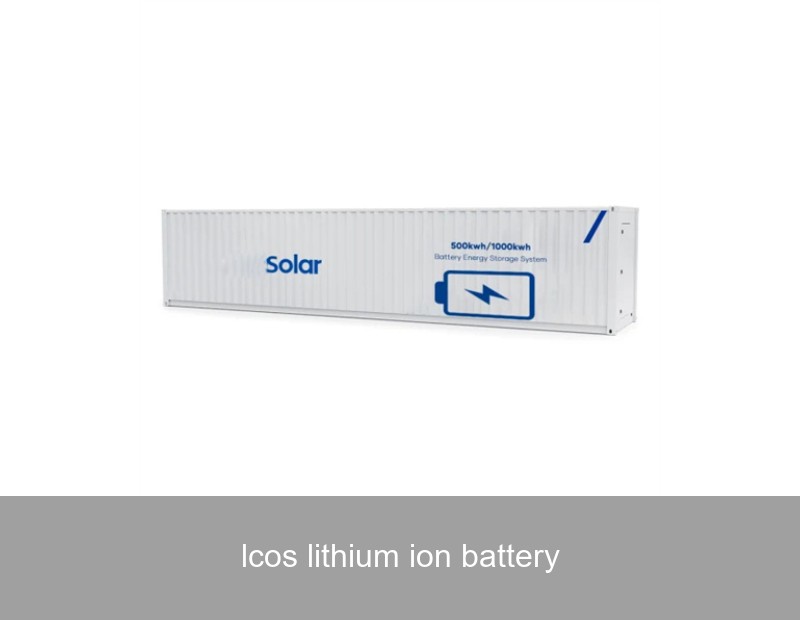
If you're exploring energy storage solutions for your business, home, or community project, you've likely encountered a sea of technical terms. Among them, one acronym stands out as the ultimate measure of value: LCOS, or Levelized Cost of Storage. And when we talk about LCOS in today's market, the conversation is inseparable from the lithium ion battery. But what exactly is LCOS, and why has this particular battery technology become the dominant force in enabling a renewable-powered future? Let's demystify these concepts and explore how they translate into real-world savings and reliability.
Table of Contents
- What is LCOS? Beyond the Sticker Price
- The Lithium Ion Battery Advantage: A Perfect Match for Low LCOS
- Calculating the True Cost: Key Factors in Your LCOS Equation
- A Real-World Case: Commercial Solar + Storage in Southern Europe
- The Future of LCOS: Innovations on the Horizon
- Choosing the Right System for Your LCOS Goals
What is LCOS? Beyond the Sticker Price
Think of LCOS as the "cost per mile" for your energy storage system. You wouldn't buy a car based solely on the showroom price; you'd consider fuel efficiency, maintenance, and how long it will last. LCOS does the same for batteries. It represents the total net present cost of owning and operating a storage asset over its lifetime, divided by the total useful energy output (typically in MWh).
This metric includes everything:
- Capital Expenditure (CAPEX): The initial purchase and installation cost.
- Operational Expenditure (OPEX): Ongoing maintenance, software licenses, and insurance.
- Degradation & Lifetime: How much capacity the battery loses over time and how many cycles it can deliver.
- Efficiency & Performance: How much energy is lost during charging and discharging.
- End-of-Life Costs: Decommissioning or recycling expenses.
A low LCOS means you're getting more usable, affordable energy over the system's lifespan. This is where the engineering and chemistry of the lithium ion battery truly shines, making it the benchmark for most applications today.
The Lithium Ion Battery Advantage: A Perfect Match for Low LCOS
Lithium-ion technology isn't just popular because of your smartphone. Its properties directly attack the variables that drive LCOS down. Let's break it down:
| Feature | Impact on LCOS | Why Lithium-Ion Excels |
|---|---|---|
| High Energy Density | Reduces physical space and balance-of-system costs (CAPEX). | Packs more power into a smaller footprint, ideal for space-constrained sites. |
| High Round-Trip Efficiency | Increases useful energy output, lowering cost per delivered kWh. | Modern systems achieve >95% efficiency, meaning minimal energy is wasted as heat. |
| Long Cycle Life & Slow Degradation | Spreads capital cost over more energy throughput, the single biggest LCOS driver. | Advanced Li-ion chemistries (like LFP) can deliver 6,000+ cycles while retaining 80% capacity. |
| Fast Response & Scalability | Enables multiple revenue/stacking streams (like grid services), improving economics. | Responds in milliseconds and systems can be modularly expanded. |
At Highjoule, we've built our HPS (Highjoule PowerStack) commercial and industrial series around these principles. By integrating advanced lithium iron phosphate (LFP) cells with our proprietary thermal management and AI-driven energy management system (EMS), we directly optimize for the lowest possible LCOS. Our systems are designed not just to store energy, but to do so in the most economically intelligent way over a 15-20 year lifespan.

Image Source: Unsplash - Professional lithium-ion battery installations require precise engineering for optimal LCOS.
Calculating the True Cost: Key Factors in Your LCOS Equation
While lithium-ion is the leader, not all systems are created equal. Your specific LCOS depends on several interacting factors:
- Duty Cycle: Are you cycling the battery daily (for solar self-consumption) or only a few times a month (for backup power)? Daily cycling favors technologies with exceptional cycle life.
- Local Energy Markets: In regions like California or Germany with high time-of-use rate differentials or frequency regulation markets, the value of each cycle increases, dramatically improving LCOS economics.
- Climate & Installation: Extreme temperatures increase degradation. A superior thermal management system, like the liquid cooling in Highjoule's HRS (Home Resilience System), maintains optimal cell temperature, preserving cycle life and safety, thus protecting your LCOS.
- Intelligence: A "dumb" battery is a costly battery. An intelligent EMS can decide when to charge, discharge, or hold based on weather, prices, and grid needs, maximizing the utility and revenue of every cycle.
A Real-World Case: Commercial Solar + Storage in Southern Europe
Let's move from theory to practice. Consider a mid-sized winery in Italy, facing rising grid electricity costs and seeking to maximize its large rooftop solar PV installation.
The Challenge: The solar panels produced excess energy during midday, which was sold to the grid at a low feed-in tariff. The winery's energy-intensive cooling and bottling processes ran later in the afternoon and evening, when they had to buy expensive grid power. Their solar self-consumption rate was only 35%.
The Solution: Installation of a 100 kW / 250 kWh Highjoule HPS lithium-ion (LFP) battery storage system, coupled with an upgrade to their solar inverter and our GridSynergy EMS.
The Data-Driven Outcome (after 12 months):
- Self-Consumption Rate: Increased from 35% to over 80%. Bill Savings: Reduced grid energy purchases by 65%, yielding annual savings of €28,000.
- Additional Revenue: The EMS allowed the system to participate in a local grid flexibility program, earning an average of €1500 per year.
- Projected LCOS: Based on the total system cost, lifetime cycles, and combined savings/revenue, the calculated LCOS for this application fell below €0.12 per kWh, significantly lower than the average €0.22 per kWh they were paying for grid power during peak times.
This case shows how the right lithium ion battery system, when applied to a specific use case, doesn't just store energy—it transforms the economic model of a business's energy use. The low LCOS delivered a compelling return on investment while increasing energy independence.
The Future of LCOS: Innovations on the Horizon
The quest for lower LCOS continues. While lithium-ion will dominate for the next decade, research is active on solid-state batteries, which promise even higher energy density and safety. Furthermore, innovations in system-level integration are equally important. At Highjoule, our focus is on software and services that push the LCOS boundary further. Our Microgrid Controller Platform allows clusters of batteries, solar, and other assets to operate as a virtual power plant (VPP), accessing higher-value grid service markets that individual systems cannot, thereby improving the aggregate LCOS for all participants.
For a deeper dive into storage cost methodologies, the U.S. Department of Energy's National Renewable Energy Laboratory (NREL) publishes excellent, peer-reviewed analysis on their website.

Image Source: Unsplash - The future of low-LCOS energy integrates generation, storage, and intelligent management.
Choosing the Right System for Your LCOS Goals
So, how do you ensure you're selecting a storage solution that delivers the best LCOS for your needs? It starts with asking the right questions:
- What is my primary use case? (Bill savings, backup, grid services, sustainability?)
- What is my expected daily energy throughput (kWh)?
- Does the provider offer a comprehensive performance guarantee that covers degradation and output over 10+ years?
- Is the EMS vendor-agnostic and capable of adapting to future market changes?
- Can the provider model my projected LCOS based on local data before I commit?
This is where partnering with an experienced provider like Highjoule makes the difference. We don't just sell battery racks; we provide long-term energy performance partnerships. Our analysis begins with a detailed assessment of your load profile, energy tariffs, and goals. We then model the expected LCOS and financial return for our tailored solutions, whether it's our compact HRS for residential needs or our containerized MGS (MicroGrid Solution) for industrial campuses.
To understand how battery costs have evolved, BloombergNEF's annual battery price survey is an authoritative global benchmark.
Ready to Discover Your Optimal LCOS?
The journey to energy resilience and cost savings is unique for every home and business. The lithium ion battery, evaluated through the lens of LCOS, provides a clear framework for making an informed investment. What would a 50% reduction in your peak energy costs do for your operational budget this year?
 Inquiry
 Online Chat