


Solar and Wind Power Systems: Your Guide to a Cleaner, More Resilient Energy Future
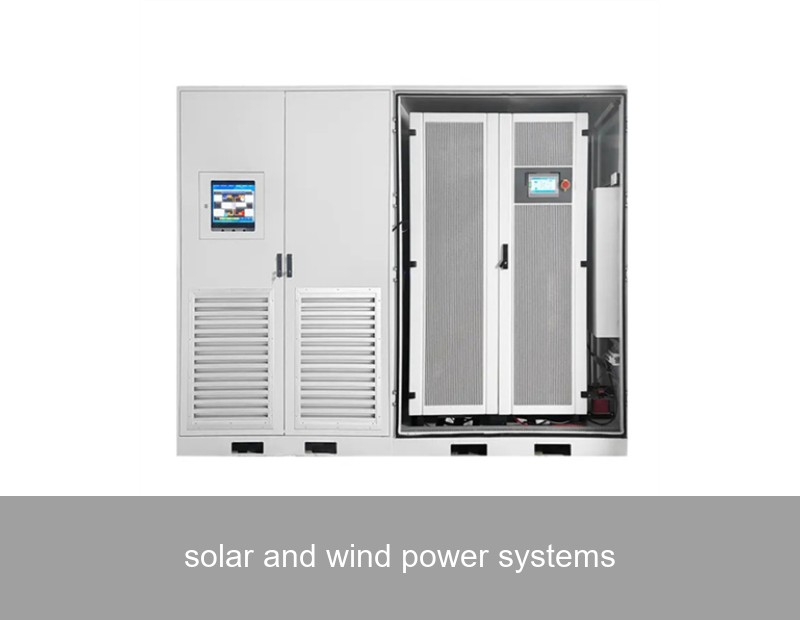
Imagine a world where your home or business is powered by the sun and the wind, independent of volatile energy prices and grid outages. This isn't a distant dream; it's the reality being built today with modern solar and wind power systems. For nearly two decades, Highjoule has been at the forefront of this transformation, designing intelligent energy storage solutions that make these renewable sources more reliable, efficient, and accessible than ever before. Let's explore how combining solar, wind, and advanced storage is reshaping our energy landscape.
Table of Contents
- The Intermittency Challenge: Sun Doesn't Always Shine, Wind Doesn't Always Blow
- The Storage Solution: Making Renewable Power Dispatchable
- System Architecture: How Solar, Wind, and Storage Work in Harmony
- Real-World Case Study: Powering a German Dairy Farm
- Highjoule's Role: Intelligent Integration for Maximum Value
- Future Horizons and Your Next Step
The Intermittency Challenge: Sun Doesn't Always Shine, Wind Doesn't Always Blow
The promise of solar and wind power is immense: clean, abundant, and increasingly cheap electricity. However, their inherent variability—what the energy industry calls "intermittency"—presents a fundamental challenge. Solar panels peak at midday, while wind turbines generate power on their own schedule. This often creates a mismatch between when energy is produced and when it's needed most.
This isn't just a theoretical problem. In California's now-famous "duck curve," the rapid influx of midday solar power can lead to over-generation, requiring traditional power plants to ramp down quickly, only to ramp up drastically as the sun sets and demand spikes. The U.S. Energy Information Administration (EIA) notes that addressing this variability is key to higher renewable penetration.

For a business or homeowner, this translates to two issues: you might still rely on the grid (and pay high rates) at night or on calm days, and you could be wasting excess clean energy you generate. This is where the story evolves from simple generation to intelligent solar and wind power systems.
The Storage Solution: Making Renewable Power Dispatchable
The game-changer is energy storage, specifically advanced battery energy storage systems (BESS). Think of storage as a rechargeable buffer or a "energy time machine." It captures surplus electricity from your solar panels on a bright afternoon or from your wind turbine during a gusty night, stores it, and releases it precisely when you need it.
This transforms intermittent sources into a dispatchable, reliable power asset. The benefits are clear and quantifiable:
- Energy Independence: Drastically reduce grid dependence, sometimes by up to 80-95% for well-designed systems.
- Bill Savings: Avoid peak-time electricity charges by using stored power during expensive evening hours.
- Backup Power: Provide seamless backup during grid outages, keeping critical loads running.
- Grid Support: For larger installations, systems can provide services that stabilize the wider community grid.
System Architecture: How Solar, Wind, and Storage Work in Harmony
A modern hybrid renewable system is an integrated technological symphony. It's more than just connecting panels, turbines, and batteries. It requires a brain: an intelligent energy management system (EMS).
Here’s a simplified breakdown of the key components:
| Component | Primary Role | Integration Key |
|---|---|---|
| Solar PV Array | Converts sunlight into DC electricity. | Inverter converts DC to AC for use or storage. |
| Wind Turbine | Converts kinetic wind energy into AC electricity. | Often requires a dedicated controller to match grid/storage frequency. |
| Battery Storage (BESS) | Stores excess energy for later use. | Bi-directional inverter manages charge/discharge cycles. |
| Energy Management System | The system's "brain." | Uses weather forecasts, usage patterns, and tariff data to optimize flow. |
| Grid Connection | Optional backup and export path. | Smart inverter allows for safe islanding and grid feedback. |
The magic happens in the EMS. A sophisticated system, like the one embedded in every Highjoule unit, can predict solar yield and wind availability, learn your consumption habits, and even factor in real-time electricity prices. It then makes millisecond-by-millisecond decisions: Should I charge the batteries now? Should I power the facility directly or sell back to the grid? This maximizes self-consumption and financial return.
Real-World Case Study: Powering a German Dairy Farm
Let's move from theory to practice with a concrete example from Bavaria, Germany. The Schmidt family runs a medium-sized dairy farm with high, around-the-clock energy needs for cooling, milking machines, and ventilation.
The Challenge: High energy costs and a desire for sustainability. Their existing 50 kW rooftop solar system covered only about 30% of their total consumption because much of the generation happened during daytime lulls in farm activity. At night, they paid full grid rates.
The Solution: In 2022, they installed a 15 kW wind turbine and, crucially, a Highjoule H2 Commercial battery storage system with a capacity of 120 kWh, integrated via Highjoule's proprietary EMS. The system was designed to prioritize using renewable energy directly, then store any surplus, and only use the grid as a last resort.
The Data-Driven Outcome (after 12 months):
- Renewable Self-Consumption: Increased from 30% to 88%.
- Grid Energy Purchased: Reduced by 76%.
- Annual Energy Cost Savings: €12,400.
- ROI Period: Estimated at under 7 years, factoring in German subsidy programs.
- Resilience: The farm now operates through brief grid outages without disrupting the sensitive cooling processes.

This case exemplifies the synergy of solar and wind power systems coupled with smart storage. The wind often complements solar by generating more at night and in winter, while the battery smooths out all fluctuations. As the International Renewable Energy Agency (IRENA) highlights, such hybrid systems are crucial for the decarbonisation of sectors like agriculture.
Highjoule's Role: Intelligent Integration for Maximum Value
At Highjoule, we don't just sell batteries; we provide the intelligence that unlocks the full potential of your solar and wind investments. Our expertise, honed since 2005, lies in seamless integration. For the Schmidt farm, our H2 Commercial system was the perfect fit, but our portfolio spans from residential to utility-scale.
Our core offering includes:
- Adaptive Storage Solutions: Scalable battery systems (like our H1 Residential and H2/H3 Commercial & Industrial lines) using high-cycle life LiFePO4 cells for safety and longevity.
- Highjoule Energy OS: Our proprietary operating system is the EMS brain. It uses machine learning to adapt to your energy profile and local weather patterns, ensuring optimal efficiency.
- Hybrid Inverter Technology: Designed to seamlessly interface with both solar and wind inputs, managing diverse voltage and frequency ranges.
- Professional Services: From initial feasibility analysis and system design to commissioning and remote monitoring, we ensure your hybrid system performs as promised for decades.
Whether it's a remote microgrid in the American Midwest combining wind and solar for a community, or an Italian factory using our C&I systems for peak shaving and backup, Highjoule's technology ensures that 1+1+1 (solar + wind + storage) equals more than 3 in terms of value and reliability.
Future Horizons and Your Next Step
The integration of solar and wind power systems with advanced storage is accelerating, driven by climate goals, energy security concerns, and compelling economics. Innovations in battery chemistry, like the ones Highjoule's R&D team is actively monitoring, promise even greater density and lower costs. Furthermore, the rise of virtual power plants (VPPs)—where networks of distributed systems like yours can collectively support the grid—opens new revenue streams.
So, where does this leave you? If you're considering solar, is it wise to think about storage from day one? If you have an existing solar array, could adding a wind source and a Highjoule battery system be your next step towards true energy autonomy? The energy landscape is shifting from a one-way street to an interactive, resilient network. What role will your home or business play in it?
 Inquiry
 Online Chat