


Why the LFP Battery Energy Storage Cabinet is Redefining Safety and Longevity in Modern Power Systems
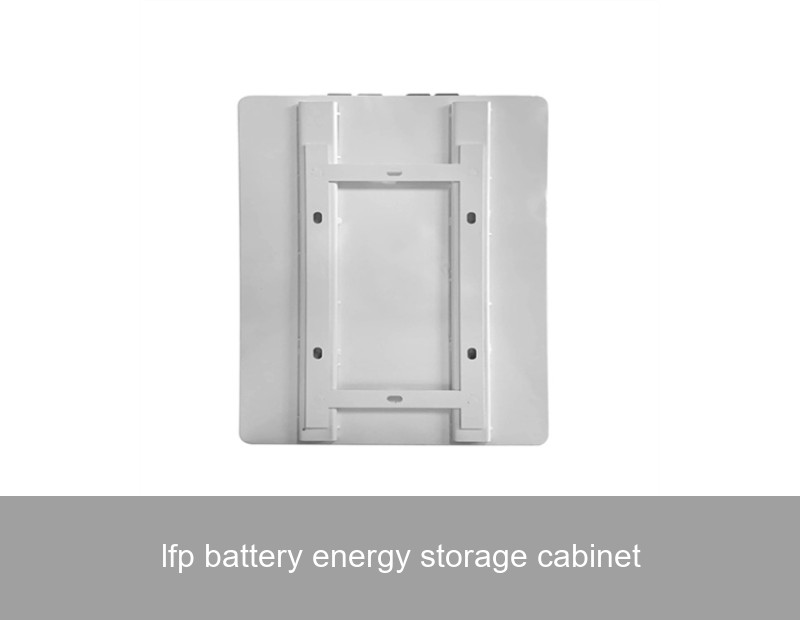
Have you ever wondered what's powering the quiet revolution in energy storage, from backup power for hospitals to smoothing out solar energy for factories? More often than not, the answer lies within a robust, unassuming unit: the LFP battery energy storage cabinet. As the global push for decarbonization intensifies, a critical challenge emerges: how do we store renewable energy not just efficiently, but also safely and reliably for decades? This is where Lithium Iron Phosphate (LFP) chemistry, housed in intelligent, modular cabinets, is becoming the cornerstone of resilient energy strategies. For businesses and communities, it's no longer just about having a battery; it's about investing in a long-term, stable, and inherently safer power asset.
Table of Contents
The Safety Imperative: Why Chemistry Matters
Let's address the elephant in the room first: safety. News headlines about thermal runaway and battery fires have rightly made potential users cautious. Traditional lithium-ion chemistries, like NMC (Nickel Manganese Cobalt), offer high energy density but have a more reactive chemical structure. The LFP (LiFePO4) battery, however, is fundamentally different. Its olivine crystal structure is exceptionally stable, requiring much higher temperatures to break down and not releasing oxygen during decomposition. This translates to a dramatically lower risk of thermal runaway.
Think of it this way: an LFP battery is like a steadfast, predictable partner, while other chemistries can be more volatile under stress. For commercial, industrial, and residential applications—where batteries are installed near valuable assets, critical infrastructure, or even homes—this inherent stability isn't just a feature; it's a non-negotiable requirement. This is why industry leaders like Highjoule have built their advanced energy storage solutions around LFP technology. Their GridShieldTM Commercial Cabinet Series integrates top-tier LFP cells within a cabinet designed with multi-layer protection, including advanced Battery Management Systems (BMS) that monitor each cell for voltage, temperature, and current, ensuring operation within the safest possible window.

Image Source: Unsplash (Representative image of industrial energy storage)
Longevity & Economics: The LFP Advantage
Beyond safety, the economic argument for LFP is compelling. It boils down to two metrics: cycle life and Levelized Cost of Storage (LCOS).
- Exceptional Cycle Life: A high-quality LFP battery can typically deliver 6,000 to 10,000 charge/discharge cycles while retaining 80% of its original capacity. In contrast, many NMC batteries are rated for 3,000-5,000 cycles. This means an LFP battery energy storage cabinet can last potentially twice as long in daily cycling applications.
- Lower Levelized Cost of Storage (LCOS): LCOS accounts for the total cost of owning and operating the storage system over its lifetime. While the upfront cost of LFP may be comparable or slightly higher, its extended lifespan and minimal degradation mean the cost per megawatt-hour stored over 15-20 years is significantly lower. You're buying decades of reliable service.
This longevity is precisely what Highjoule engineers for. Their systems are designed not just to meet specifications on day one, but to consistently perform for over 20 years. This long-term reliability transforms the storage cabinet from a capital expense into a durable infrastructure asset, providing predictable energy costs and ROI for decades.
Beyond the Cell: The Intelligence of the Modern Storage Cabinet
An LFP battery energy storage cabinet is far more than a box of cells. It's an integrated power ecosystem. The true value is unlocked by the intelligence that manages it.
| Cabinet Component | Function & Benefit |
|---|---|
| Advanced BMS (Battery Management System) | Ensures cell-level balance, monitors health, prevents overcharge/discharge, and maximizes lifespan. |
| Integrated Power Conversion System (PCS) | Intelligently converts DC battery power to AC for the grid/building and manages charge/discharge rates. |
| Thermal Management System | Maintains optimal temperature range (heating/cooling) for safety, performance, and longevity. |
| Grid-Forming Inverter Capability | In advanced systems like Highjoule's, can create a stable microgrid, providing backup power during outages. |
| Cloud-Connected Energy Management Software | Enables remote monitoring, performance analytics, and optimization for energy arbitrage or demand charge reduction. |
For instance, Highjoule's EnergyOSTM platform turns their storage cabinets into smart, grid-interactive assets. A business can program the system to automatically store solar energy during the day and dispatch it during peak evening hours when electricity rates are highest, delivering immediate savings. This software intelligence, wrapped around the robust LFP hardware, creates a complete solution.
Case Study: Powering Sustainability and Savings in German Manufacturing
Let's look at a real-world application. A mid-sized automotive parts manufacturer in Bavaria, Germany, faced two problems: volatile energy prices cutting into profit margins and corporate sustainability targets to meet. Their solution was a 500 kWh / 1000 kWh LFP battery energy storage cabinet system integrated with a 800 kW rooftop solar array.
- Challenge: High demand charges from grid peaks and inability to use all self-generated solar power during weekend shutdowns.
- Solution: Installation of a Highjoule GridShieldTM Industrial Cabinet with EnergyOSTM software.
- Implementation: The system was configured for peak shaving and solar self-consumption optimization.
- Results (12-month data):
- 42% reduction in monthly demand charges by discharging the battery during short-term power peaks.
- Increase in solar self-consumption from ~55% to over 90%, drastically reducing grid purchases.
- Projected payback period of under 7 years on the storage investment, with decades of operation remaining.
- An estimated reduction of 380 tons of CO2 annually.
This case exemplifies the tangible multi-benefit impact. The LFP cabinet provided the durable, cycle-resistant backbone needed for daily charge/discharge operations, while the intelligent controls delivered the financial and environmental returns. You can explore more on the importance of storage for renewables integration from the International Energy Agency (IEA).

Image Source: Unsplash (Representative image of industrial solar)
The Future Energy Landscape with LFP
The trajectory is clear. As renewable penetration grows, the need for firm, dispatchable storage becomes paramount. LFP technology, with its safety and longevity, is poised to be the workhorse of this transition, particularly for stationary storage applications. Innovations continue, focusing on further reducing costs, improving energy density, and enhancing recycling processes to create a truly circular economy for batteries. The U.S. Department of Energy highlights ongoing research into next-generation battery technologies, including advancements in lithium-based systems (DOE Vehicle Technologies Office).
For organizations today, the decision is strategic. Choosing an LFP battery energy storage cabinet system from a provider like Highjoule means partnering with a technology built for the long haul. It's about securing energy resilience, locking in long-term cost savings, and making a future-proof investment in infrastructure that aligns with both economic and sustainability goals. Highjoule's global experience since 2005 in deploying tailored solutions for commercial, industrial, and microgrid applications ensures that their systems are not just products, but integrated power solutions designed for real-world challenges.
Ready to Assess Your Energy Resilience?
Given the proven safety and long-term value of LFP-based storage, what would a 20-year energy resilience plan look like for your facility, and which of your operational energy challenges—peak demand charges, renewable integration, or backup power needs—would you want to solve first?
 Inquiry
 Online Chat