


Energy Saving Projects in Industry: Unlocking Your Facility's Hidden Power Plant
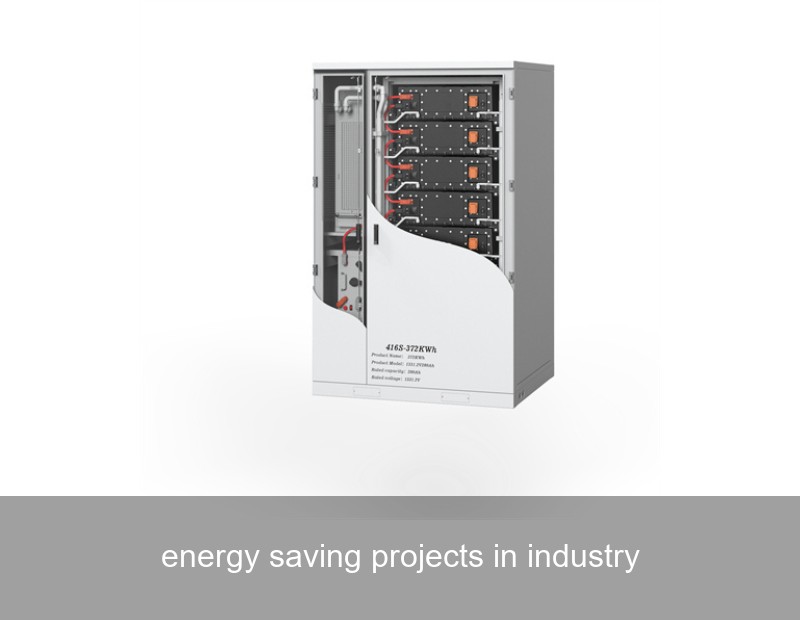
Let's be frank. For most industrial managers, "energy saving projects" conjure images of LED light retrofits and reminding staff to shut down computers. While important, these measures are just the first step on the staircase. The real transformative savings—the kind that slash six-figure utility bills, insulate you from volatile energy markets, and future-proof your operations—lie in a more sophisticated approach. Today's most effective industrial energy saving projects treat your facility not just as a consumer, but as a potential producer and intelligent manager of power. This is where operational efficiency meets financial resilience.
Why Industry Pays the Price for Grid Inefficiency
The industrial sector is the backbone of the economy, but it's also a primary target for utility cost structures designed to manage grid stress. You're not just paying for the energy you use (kWh), but also for the maximum rate at which you draw it (kW), known as demand charges. These charges can account for 30-50% of a commercial or industrial electricity bill. Furthermore, grid power isn't always clean or stable; price spikes during peak hours and intermittent outages can disrupt production and evaporate profit margins. The traditional response—running diesel generators—is costly, polluting, and increasingly socially untenable. The modern solution is to create a flexible, on-site energy ecosystem.

Image Source: Unsplash - Representative image of industrial energy infrastructure.
Beyond Switching Off Lights: The Modern Energy Saving Arsenal
True industrial energy saving is a multi-layered strategy. It integrates hardware, software, and data analytics to optimize every electron that enters your site.
1. Smart Battery Energy Storage Systems (BESS): Your Financial Shock Absorber
This is the cornerstone of modern industrial energy strategy. A large-scale Battery Energy Storage System acts like a strategic energy reservoir. It charges when grid electricity is cheap and abundant (often at night), and discharges to power your operations when prices are high. This simple "arbitrage" maneuver is the most direct attack on demand charges and time-of-use rates. For instance, by discharging during the 4-7 PM peak window, a facility can avoid drawing expensive grid power, flattening its demand profile and resulting in dramatic savings. Companies like Highjoule specialize in deploying containerized or modular BESS solutions specifically engineered for C&I applications, featuring robust lithium-iron-phosphate (LFP) battery chemistry for safety and longevity.
2. Solar + Storage for Maximum Self-Consumption
Pairing on-site solar PV with a BESS transforms the equation. Solar panels generate free power during the day, but often not perfectly aligned with a factory's consumption curve. Excess solar energy, instead of being sold back to the grid at a low rate, is stored in the batteries. It can then be used in the evening, overnight, or during cloudy periods, maximizing the use of your self-generated renewable energy. This drastically reduces your reliance on purchased grid power and hedges against future price increases. Highjoule's integrated energy management systems are designed to seamlessly orchestrate this dance between solar generation, battery storage, and facility load, ensuring not a watt is wasted.
3. Peak Shaving & Demand Charge Management
This is the "killer app" for BESS in industry. Intelligent software monitors your facility's power draw in real-time. When it detects a surge that would create a new, costly demand peak, it instantly commands the battery system to discharge, "shaving" the peak off your consumption profile. The result? A consistently lower demand charge month after month. The table below illustrates a simplified impact:
| Scenario | Monthly Peak Demand | Demand Charge Rate | Monthly Demand Cost |
|---|---|---|---|
| Without BESS | 2,500 kW | $15/kW | $37,500 |
| With BESS (Peak Shaving) | 1,800 kW | $15/kW | $27,000 |
| Monthly Savings | $10,500 | ||
4. The Brains: Intelligent Energy Management Software
Hardware is powerful, but software makes it intelligent. An Energy Management System (EMS) is the central nervous system of your energy saving project. Platforms like Highjoule's GridSynergy Platform use AI and machine learning to forecast energy usage, optimize battery charge/discharge cycles based on weather, tariff structures, and production schedules, and provide actionable insights. It turns raw data into a strategic asset, allowing you to participate in grid services like frequency response in some markets, creating an additional revenue stream.
Case Study: An Automotive Supplier's Road to Resilience
Consider the real-world example of a mid-sized automotive parts manufacturer in Bavaria, Germany. Facing rising electricity costs and pressure to decarbonize, they embarked on a comprehensive energy saving project in 2022.
- Challenge: High demand charges, volatile spot prices, and a goal to utilize their extensive rooftop solar more effectively.
- Solution: Highjoule deployed a 1.2 MWh containerized BESS alongside an upgrade to their existing solar PV, all controlled by the GridSynergy Platform.
- Results (12-month period):
- 30% reduction in overall electricity costs from the grid.
- 45% reduction in monthly demand charges through precise peak shaving.
- Increased on-site consumption of solar power from 55% to over 85%.
- Provision of grid-balancing services, generating approximately €15,000 in annual ancillary revenue.
- The project achieved a return on investment (ROI) in under 5 years, with a system lifespan of 15+ years.
This case demonstrates that industrial energy saving projects are not just cost centers but investments with clear, quantifiable financial returns and risk mitigation benefits.

Image Source: Unsplash - Representative image of a technician inspecting a commercial battery storage unit.
The Highjoule Difference: Engineering Your Industrial Energy Independence
Since 2005, Highjoule has been at the forefront of the energy transition, moving beyond simple hardware supply to become a partner in energy resilience. Our approach to industrial energy saving projects is holistic. We begin with a deep energy audit and feasibility analysis, modeling your load profiles and local tariffs. We then design a system—whether it's a standalone BESS, a solar-plus-storage hybrid, or a complex microgrid—using our proprietary, UL-certified battery packs and inverters known for their reliability and safety.
Our GridSynergy Platform ensures the system operates at peak financial performance, and our service team provides 24/7 monitoring and support. We understand that industrial operations cannot afford downtime; our solutions are built for rigorous, continuous use. From a food processing plant in California looking to manage refrigeration loads to a textile mill in Italy aiming for sustainability certifications, Highjoule provides the technology and expertise to turn energy from a variable cost into a managed asset.
What's the First Step for Your Operation?
The journey to significant energy savings and resilience starts with visibility. Do you know your facility's precise load profile? Have you analyzed which fraction of your bill is energy vs. demand charges? Understanding your current consumption patterns, as detailed in guides from authorities like the U.S. Department of Energy, is the essential foundation. The next step is to ask: What would a 30% reduction in your energy costs do for your competitive edge and operational stability? What is the true cost of a one-hour power interruption on your production line?
We invite you to consider not just what you can save, but what you can gain. Is your facility ready to become its own power plant?
 Inquiry
 Online Chat