


Understanding the Li-Ion Battery ESS Price: A Smart Investment for Energy Independence
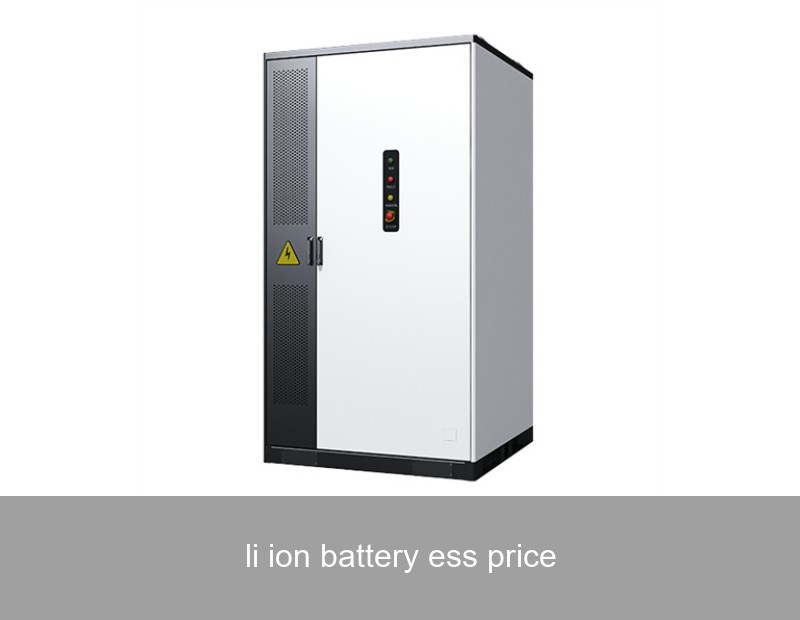
If you're exploring energy storage for your home or business, you've likely encountered a central question: "What drives the li ion battery ess price?" While the upfront cost is a key factor, the true story is about long-term value. The price of a Lithium-Ion Battery Energy Storage System (ESS) is more than just a number on a quote; it's the gateway to energy security, resilience, and significant savings over time. In this article, we'll demystify the cost components, showcase the tangible returns, and explain why partnering with an experienced provider like Highjoule makes this investment a strategic move towards a sustainable and cost-effective energy future.
Table of Contents
- The Price Puzzle: More Than Just Battery Cells
- A Detailed Cost Breakdown of a Modern ESS
- Case Study: Real Savings in Action
- The Highjoule Value: Engineering Beyond the Price Tag
- Future Trends: Where Are Li-Ion Battery ESS Prices Heading?
- Making Your Decision: Key Questions to Ask
The Price Puzzle: More Than Just Battery Cells
Many people focus solely on the cost per kilowatt-hour (kWh) of the battery cells themselves. However, a functional, safe, and intelligent ESS is an integrated ecosystem. The total li ion battery ess price encompasses the battery modules, the sophisticated power conversion system (inverter/charger), the critical thermal management system, the system enclosure, and the brain of the operation—the energy management software (EMS). Furthermore, soft costs like system design, professional installation, permitting, and warranty add significant value and safety. Choosing a system based on the lowest cell price alone can be like buying a car engine without the chassis, brakes, or steering wheel.
A Detailed Cost Breakdown of a Modern ESS
To understand value, let's look at where your investment goes in a high-quality system.
| Cost Component | Percentage of Total Cost (Approx.) | What It Delivers |
|---|---|---|
| Battery Cells & Modules | 30-40% | The core energy storage medium. Quality here dictates lifespan, safety, and cycle life. |
| Power Conversion System (PCS) | 15-25% | Converts DC battery power to AC for your home. Efficiency and reliability are paramount. |
| System Integration & Balance of Plant | 20-30% | Includes enclosure, cooling, safety disconnects, wiring, and system assembly. |
| Energy Management Software & Controls | 10-15% | The intelligence that optimizes charging/discharging, maximizes self-consumption, and enables grid services. |
| Installation & Soft Costs | 15-25% | Professional installation, permits, grid interconnection fees, and system commissioning. |
As you can see, the battery cells are just one part. A reputable provider like Highjoule invests heavily in the other 60-70%—the engineering, integration, and intelligence that transform raw cells into a reliable, high-performing asset for your property.
The Role of Software in Maximizing ROI
This is a critical point often missed. Advanced software can dramatically improve the return on your ESS investment. Think of it this way: a basic system just stores energy. A smart system, like those from Highjoule, actively manages it. It learns your consumption patterns, forecasts solar production, and can respond to time-of-use electricity rates or even participate in grid flexibility programs (where available). This intelligent optimization can add hundreds or thousands of dollars in value over the system's life, effectively lowering the total cost of ownership and justifying a potentially higher initial li ion battery ess price.
Case Study: Real Savings in Action
Let's move from theory to practice. Consider a medium-sized commercial bakery in Bavaria, Germany, facing high electricity demand charges and volatile energy prices. Their primary goal was to reduce operational costs and ensure production continuity.
- Challenge: High peak demand tariffs and reliance on an unstable grid.
- Solution: A Highjoule C&I ESS with 200 kWh capacity and intelligent peak shaving software.
- Implementation: The system was charged during off-peak hours and via their rooftop solar. During peak operational hours (early morning), the ESS seamlessly supplied power, preventing the site's demand from spiking.
- Result: Within the first year, the bakery achieved a 28% reduction in their monthly demand charges and increased their on-site solar consumption from 35% to over 70%. The system's payback period was calculated at under 6 years, thanks to these direct savings and available regional incentives for commercial storage. The owner also now enjoys peace of mind during grid outages, protecting perishable inventory.

Image Source: Unsplash (Representative image of a commercial bakery)
The Highjoule Value: Engineering Beyond the Price Tag
Since 2005, Highjoule has been at the forefront of advanced energy storage. We understand that the true li ion battery ess price is measured in performance, safety, and lifetime value, not just initial outlay. Our systems are engineered with this philosophy.
Our flagship Highjoule H-Series for residential and commercial applications features industry-leading LiFePO4 (LFP) chemistry, known for its exceptional safety and long cycle life. Paired with our proprietary Adaptive Core™ BMS (Battery Management System), it ensures every cell operates optimally, extending system longevity. For larger-scale needs, our Microgrid Containerized Solutions provide turnkey, scalable power for remote communities or critical industrial facilities.
What truly sets us apart is the Highjoule Neuron™ Platform. This cloud-connected software doesn't just monitor; it autonomously optimizes your system's operation for your specific financial and resilience goals. Whether it's maximizing solar self-consumption, navigating complex utility tariffs, or preparing for a storm, the system works intelligently in the background. This holistic approach—superior hardware integrated with intelligent software—delivers a lower total cost of ownership, making the initial investment a wise financial decision.
Future Trends: Where Are Li-Ion Battery ESS Prices Heading?
According to analysis from authorities like the International Energy Agency (IEA), global battery demand is soaring, driving continued innovation and cost reduction. While supply chain fluctuations can cause short-term price variations, the long-term trend for li ion battery ess price is downward. However, this reduction is increasingly concentrated in the cell manufacturing scale. The value of integration, safety engineering, and smart software will remain—and even increase—as systems become more sophisticated.
Furthermore, government policies and incentives, such as the U.S. Investment Tax Credit (ITC) for standalone storage or various EU Green Deal initiatives, can significantly offset the net cost for end-users. It's crucial to factor these into your financial analysis, as they can improve your return on investment substantially.
Making Your Decision: Key Questions to Ask
When evaluating quotes and the stated li ion battery ess price, look beyond the bottom line. Ask potential providers:
- What is the expected cycle life and degradation profile of your system?
- How does the software actively optimize for savings, not just monitoring?
- What safety certifications (UL, IEC, etc.) does the complete system hold?
- Can you provide a detailed proforma showing my projected savings and ROI?
- What does the warranty cover, and what is the support model after installation?

Image Source: Unsplash (Representative image of a modern solar home)
Ready to move from analyzing price to realizing value? What specific energy challenge—be it rising bills, unreliable power, or a desire to go greener—could a smart Highjoule ESS solve for you? Contact our energy solutions team today for a personalized assessment.
 Inquiry
 Online Chat