


Powering Your Home Independently: The Complete Guide to Li-Ion Battery for House
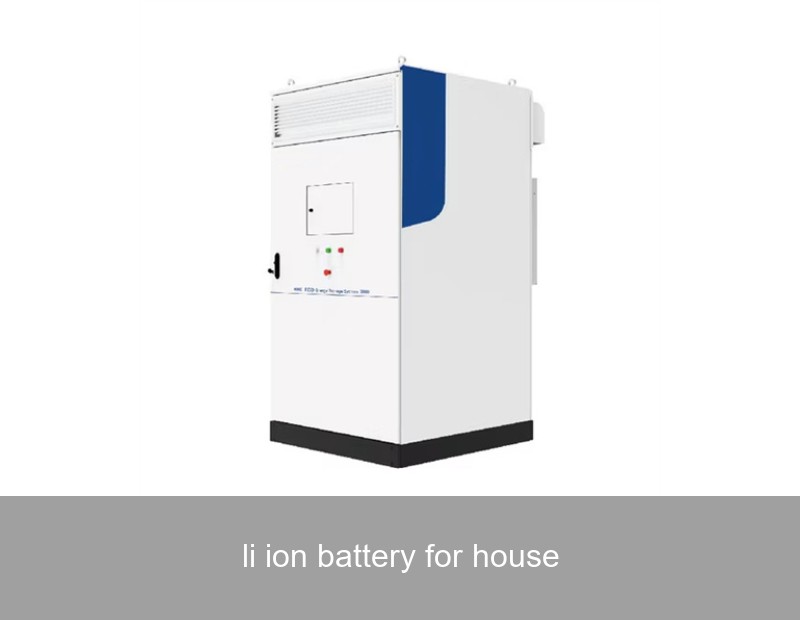
Imagine a storm knocks out the neighborhood grid, but your lights stay on, your fridge hums quietly, and your home office remains fully operational. This isn't just a dream of resilience; it's the daily reality for a growing number of homeowners across Europe and the U.S. who have integrated a li-ion battery for house into their energy system. Lithium-ion (Li-ion) technology has moved from powering our phones to fundamentally reshaping how we generate, store, and consume electricity at home. This guide will demystify home Li-ion batteries, explore their transformative potential, and show how they are the cornerstone of a modern, intelligent, and sustainable home energy setup.
Table of Contents
- What is a Home Li-Ion Battery System?
- Why Consider a Li-Ion Battery for Your House Now?
- Key Benefits: Beyond Just Backup Power
- Choosing the Right System: Technology and Integration
- A Real-World Case Study: The Smith Family's Journey
- The Highjoule Solution: Engineered for Performance and Simplicity
- Your Home's Energy Future: What's the Next Step?
What is a Home Li-Ion Battery System?
At its core, a residential lithium-ion battery system is a sophisticated energy storage device that stores electricity for later use in your home. It's typically paired with a renewable energy source like solar panels, but can also charge from the grid during off-peak, low-cost hours. Think of it as a giant, high-tech rechargeable battery for your entire house. Unlike older lead-acid batteries, Li-ion batteries offer higher energy density, longer lifespan, deeper discharge cycles, and require minimal maintenance. A complete system includes the battery modules themselves, a sophisticated battery management system (BMS) for safety and longevity, and an inverter that converts stored DC power to the AC power your home appliances use.
Why Consider a Li-Ion Battery for Your House Now? The Perfect Storm of Drivers
The surge in home battery adoption isn't accidental. It's driven by a powerful convergence of factors affecting homeowners on both sides of the Atlantic.
- Rising Electricity Costs: In Europe, energy prices have been volatile due to geopolitical factors. In the U.S., average retail electricity rates have steadily climbed. A battery allows you to use more of your self-generated solar power instead of buying expensive grid power at night.
- Grid Reliability Concerns: From wildfires and heatwaves in California to intense winter storms in Texas and ageing infrastructure in parts of Europe, power outages are a growing concern. A home battery provides seamless backup power, keeping essential circuits running.
- Solar Synergy & Maximization: For homes with solar panels, adding a battery is a game-changer. Instead of exporting surplus solar energy to the grid for a low feed-in tariff, you store it for personal use. This dramatically increases your self-consumption rate, sometimes from 30% to 70% or more.
- Policy and Incentives: Governments are actively encouraging storage. The U.S. federal Investment Tax Credit (ITC) now applies to standalone storage, and many states have additional rebates. Similarly, countries like Germany, Italy, and the UK have various grants and subsidy programs for home battery storage, making the investment more attractive than ever.

Source: Unsplash - A modern home equipped for energy independence.
Key Benefits: Beyond Just Backup Power
While backup power is a major draw, the true value of a li-ion battery for house applications is multifaceted:
- Energy Bill Savings: Leverage "time-of-use" arbitrage: charge your battery when grid rates are cheap (overnight) and use that stored energy during expensive peak periods (evening).
- Increased Energy Independence: Reduce reliance on the utility grid, insulating yourself from price hikes and supply fluctuations.
- Enhanced Sustainability: Maximize the use of your clean solar energy, reducing your carbon footprint further by avoiding peak grid power, which often comes from fossil fuels.
- Grid Support & Future-Proofing: Advanced systems can participate in virtual power plants (VPPs), where aggregated home batteries provide services to stabilize the grid, potentially earning you revenue.
Choosing the Right System: Technology and Seamless Integration
Not all home battery systems are created equal. Key considerations include:
| Feature | What to Look For | Why It Matters |
|---|---|---|
| Power & Capacity | Measured in kW (power output) and kWh (usable energy storage). | Ensures the system can run your essential loads (power) for the desired duration (capacity). |
| Depth of Discharge (DoD) | The percentage of the battery's capacity that can be safely used. | Li-ion batteries often allow 90-100% DoD, meaning you can use almost all the stored energy without harming the battery. |
| Round-Trip Efficiency | The percentage of energy put in that you can get back out. | High-efficiency systems (like 95%+) waste less energy as heat, delivering more value from every solar panel or grid charge. |
| Integration & Smart Management | Seamless compatibility with existing solar and home energy management software. | An intelligent system automatically optimizes charging and discharging based on weather, usage patterns, and tariff rates for maximum savings. |
This is where partnering with an experienced provider makes all the difference. A system that is complex to manage or poorly integrated fails to deliver on its full promise.
A Real-World Case Study: The Smith Family in Hamburg, Germany
Let's look at concrete data. The Smith family (name changed for privacy) in Hamburg installed a 8.2 kWp solar array in 2020. While they reduced their grid imports, they were still exporting over 60% of their summer production and buying power at night. In early 2023, they decided to install a 10 kWh li-ion battery for house storage.
- Pre-Battery (2022): Annual self-consumption: 32%. Annual electricity bill: €1,150.
- Post-Battery (2023-24): Annual self-consumption: 78%. Annual electricity bill: €310.
- Result: An annual saving of €840, drastically increasing their energy independence. During a regional grid fault in December 2023, their system provided uninterrupted power for 22 hours, keeping heating, lighting, and communications online. Their projected payback period, considering the German subsidy (Bundesförderung für effiziente Gebäude - BEG), is under 7 years.
This case highlights the dual benefit: substantial financial return coupled with invaluable resilience. For more on Germany's energy transition and storage incentives, you can refer to the Clean Energy Wire fact sheets.
The Highjoule Solution: Engineered for Performance and Simplicity
At Highjoule, with nearly two decades of expertise since 2005, we've designed our residential battery systems to directly address the challenges and aspirations of modern homeowners. We believe a li-ion battery for house should be powerful, reliable, and effortlessly intelligent.
Our HomePower Stack series is built with premium Li-ion NMC cells, offering exceptional energy density and cycle life. Each module features a multi-layer Battery Management System (BMS) that continuously monitors cell voltage, temperature, and current, ensuring safety and maximizing longevity. What truly sets our system apart is the Highjoule Energy Hub – an integrated inverter and smart energy manager.
The Energy Hub doesn't just move electricity; it makes intelligent decisions. It connects to local weather forecasts, knows your utility's time-of-use rates (a critical feature in markets like California or Italy), and learns your household's energy patterns. It automatically decides the optimal time to charge from solar or the grid, when to discharge to power your home, and when to hold reserves for a potential outage. This seamless automation means you save money without having to constantly monitor or adjust settings.
Furthermore, our systems are designed for scalability. You can start with a single 5 kWh battery stack and easily add more modules later as your needs evolve, protecting your initial investment. Our professional network of certified installers across Europe and North America ensures a smooth, compliant, and worry-free installation process, from initial consultation to system commissioning and ongoing support.

Source: Unsplash - A sleek, wall-mounted home battery unit.
Your Home's Energy Future: What's the Next Step?
The transition to a smarter, more resilient home energy system is no longer a futuristic concept. It's a practical, financially sound decision available today. A high-quality li-ion battery for house is the enabling technology that unlocks the full value of solar investment, provides peace of mind against outages, and puts you in control of your energy costs.
We invite you to reflect on your current energy situation: Are you maximizing the return from your solar panels? How would a multi-hour power outage affect your family? What does energy independence mean to you? We encourage you to explore the latest U.S. Department of Energy resources on battery storage or the International Energy Agency's reports on storage to deepen your understanding.
Ready to explore what a tailored Highjoule HomePower Stack system could do for your home's energy profile and resilience?
 Inquiry
 Online Chat