


Unlocking Maximum Efficiency: The Power of the 400W PERC Solar Panel
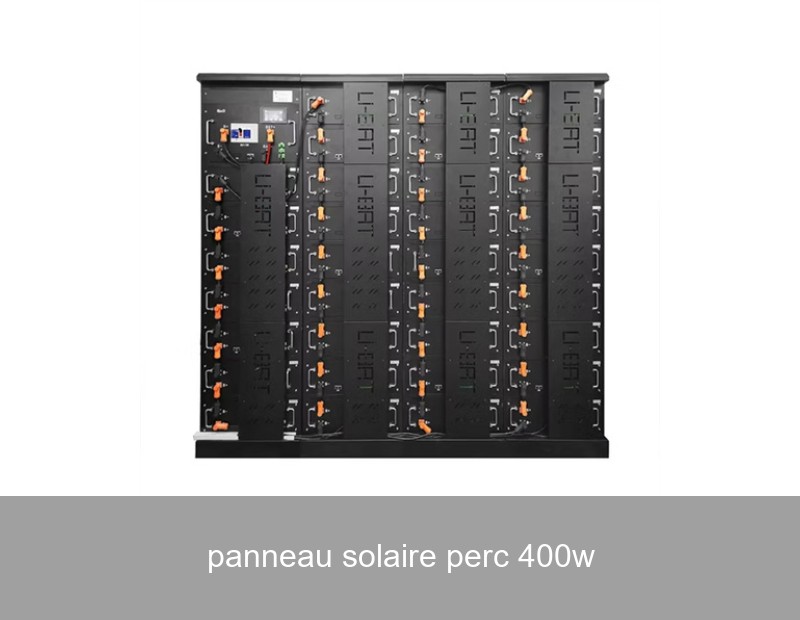
Have you ever looked at your roof and wondered if you're truly getting the most out of the sun? In the world of solar energy, not all panels are created equal. Today, a new standard is emerging for residential and commercial installations: the high-efficiency panneau solaire perc 400w. This isn't just an incremental upgrade; it represents a significant leap in how we capture and convert sunlight into usable power. For homeowners and businesses across Europe and the U.S., understanding this technology is key to maximizing energy independence and accelerating return on investment. But the true magic happens when these advanced panels are paired with intelligent energy management. Let's dive into why the 400W PERC module is a game-changer and how integrating it with a complete system unlocks its full potential.
What is a PERC Solar Cell? A Simple Explanation
PERC stands for Passivated Emitter and Rear Cell. While that sounds complex, the principle is beautifully simple. Traditional solar cells have a reflective back layer that bounces some light away. A PERC cell adds a special passivation layer to the rear. This layer does two brilliant things: first, it reflects unabsorbed light back into the silicon for a second chance at energy conversion; second, it minimizes electron recombination, a process that wastes energy as heat.
Think of it like upgrading from a standard net to a finely woven one for catching sunlight. The result? PERC technology typically boosts panel efficiency by 1% to over 2% absolute compared to standard panels. This efficiency gain is the engine behind the powerful 400w perc solar panel, allowing manufacturers to pack more wattage into the same familiar panel dimensions.
Why the 400W Rating is a Sweet Spot for Modern Installations
The shift from 300W-350W panels to 400W-class modules is a pivotal moment. For a typical residential roof with limited space, higher wattage per panel means you can achieve your desired system size with fewer panels. This reduces hardware, racking, and labor costs. A 6 kW system, for example, drops from needing about 20 x 300W panels to just 15 x 400W panels.
- Space Efficiency: Perfect for urban homes or roofs with complex layouts.
- Reduced Balance of System (BOS) Costs: Fewer panels mean less wiring, fewer mounting points, and potentially faster installation.
- Improved Aesthetics: A cleaner, less cluttered rooftop appearance.
- Better Performance in Low Light: PERC cells often exhibit superior performance during dawn, dusk, and in cloudy conditions.
The Tangible Advantages: More Power in Less Space
Let's put this into perspective with some concrete data. According to the National Renewable Energy Laboratory (NREL), average module efficiencies have climbed steadily, with PERC being a major driver. A standard 60-cell format panel that produced 270W a decade ago now reliably delivers 400W.
| Panel Type (60-cell) | Typical Power Output (2015) | Typical Power Output (Today) | Efficiency Gain |
|---|---|---|---|
| Standard Polycrystalline | ~250W - 270W | ~300W - 330W | ~20% |
| Mono PERC (400W Class) | ~280W - 300W | **390W - 410W** | **~35%+** |
This increase isn't just a number on a spec sheet. It translates directly to higher annual energy yield (kWh) from the same rooftop footprint, making your investment work harder from day one.

Image Source: Unsplash (Representative image of a modern solar installation)
Real-World Impact: A Case Study from Southern France
The theory is compelling, but real-world data seals the deal. Consider a project we analyzed in Provence, France. A vineyard owner aimed to offset their high energy consumption for irrigation and cooling systems. Their roof space on the main farm building was limited.
- Challenge: Maximize energy production on a constrained south-facing roof area of 80 m².
- Old-School Solution: Using 330W panels, they could fit 24 units for a 7.92 kW system.
- Modern Solution: Using high-efficiency panneaux solaires perc 400w, they installed 22 panels for a total of 8.8 kW—a **11% increase in system capacity** using the same physical space.
- Result: The system now generates an estimated 12,500 kWh annually, compared to the ~11,200 kWh the older design would have produced. This extra 1,300 kWh per year significantly accelerates their payback period and enhances energy resilience.
Beyond the Panel: Why Your Inverter and Battery Matter Just as Much
Here's a crucial insight many miss: a top-tier 400W PERC solar panel can be hamstrung by a mediocre system design. The inverter must be precisely matched to handle the higher power output and voltage characteristics of modern panels. More importantly, to truly capitalize on the abundant energy you're generating, a sophisticated battery storage system is non-negotiable.
Without storage, excess solar energy produced in the midday sun is exported to the grid at often low rates. An advanced battery allows you to store that premium, self-generated power for use in the evening when grid prices are high and the sun isn't shining. This is where holistic system integration becomes critical.
Highjoule's Integrated Approach: Optimizing Your 400W PERC Array
At Highjoule, we view the solar panel as the first link in a high-performance energy chain. Since 2005, we've specialized in creating intelligent storage solutions that ensure no watt of your valuable solar production goes to waste. Our systems are designed to be the perfect partner for high-capacity solar arrays like 400W PERC installations.
For instance, our HES Series Hybrid Energy Storage system features advanced string inverters with high DC input voltages and multiple MPPT trackers, ensuring each string of your 400W panels operates at its absolute peak efficiency, even if parts of your roof are shaded at different times. More importantly, its integrated battery management seamlessly stores surplus energy.
For residential applications, our HomePower Stack is a modular lithium-ion battery system that can be scaled to match your specific production from a robust solar array. Its AI-driven energy management software learns your consumption patterns and automatically optimizes when to store solar energy, power your home, or sell back to the grid, maximizing the financial return from every one of those 400 watts on your roof.

Image Source: Unsplash (Representative image of a home battery installation)
Looking Ahead: The Future of Residential Solar Technology
The panneau solaire perc 400w is today's benchmark, but innovation continues. Technologies like bifacial PERC (capturing light from both sides) and half-cut cells that reduce resistive losses are already entering the mainstream. The core principle remains: increasing energy density and reliability.
As panel outputs rise, the role of smart storage and grid interaction becomes even more central. The future home energy system isn't just a collection of parts; it's a unified, self-optimizing ecosystem. This aligns perfectly with Highjoule's mission to provide not just hardware, but complete, intelligent, and sustainable power solutions for homes and businesses worldwide.
Your roof is a valuable asset. With the right combination of cutting-edge 400W PERC solar panels and an intelligent Highjoule storage system, it transforms into a personal, resilient, and cost-effective power plant. Are you ready to calculate how much more energy your specific roof could produce with a modern, fully integrated system?
 Inquiry
 Online Chat