


Understanding Li-ion Energy Storage Cabinet Battery Price: A Smart Investment Guide
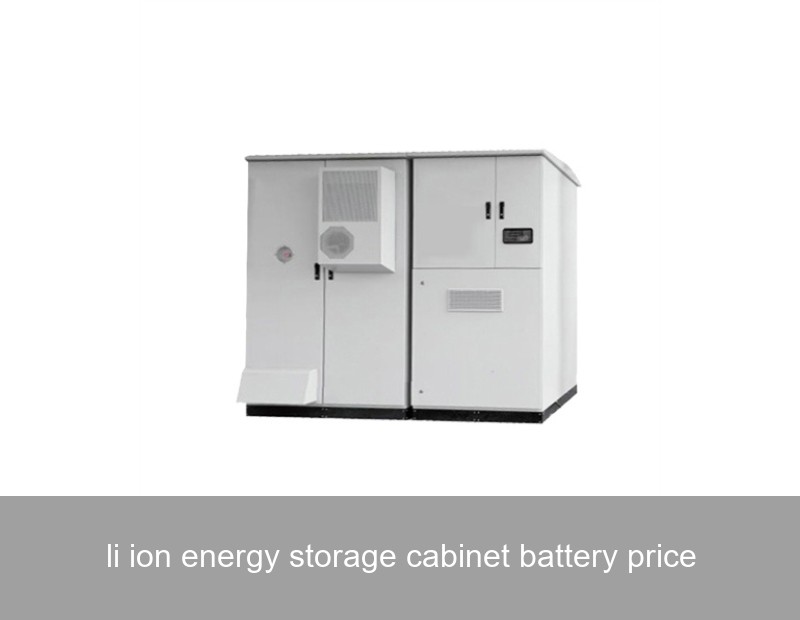
If you're exploring energy storage for your business or home, you've likely encountered the term "Li-ion energy storage cabinet battery price." It's more than just a number on a quote; it's a gateway to energy independence, resilience, and significant cost savings. But with a wide range of prices in the market, what truly determines the cost, and how can you ensure you're making a value-driven investment? This article will demystify the factors behind lithium-ion cabinet pricing, using real-world data and insights to guide your decision. As a global leader since 2005, Highjoule designs intelligent storage solutions that turn this upfront consideration into long-term strategic advantage.
Table of Contents
- The Price Puzzle: More Than Just a Battery
- Key Factors Influencing Li-ion Energy Storage Cabinet Battery Price
- The True Measure: Total Cost of Ownership (TCO)
- Case Study: A German Manufacturing Plant's Success
- The Highjoule Approach: Engineering Value Beyond the Price Tag
- Making Your Decision: The Right Questions to Ask
The Price Puzzle: More Than Just a Battery
You might ask, "Why is there such a variation in quotes?" The initial sticker price of a lithium-ion energy storage cabinet is a composite figure. Think of it not as buying a simple commodity, but as investing in a sophisticated, integrated power system. The cabinet houses not only the battery cells but also the critical Balance of System (BOS) components: the battery management system (BMS), thermal management, safety systems, power conversion (inverters), and control software. The quality, integration, and intelligence of these components are major price drivers. A lower upfront cost might mean compromises in these areas, potentially leading to higher costs over the system's lifespan.
Key Factors Influencing Li-ion Energy Storage Cabinet Battery Price
Let's break down the core elements that shape the investment.
1. Core Technology & Cell Chemistry
Not all lithium-ion is created equal. The most common chemistries for stationary storage are Lithium Iron Phosphate (LFP) and Nickel Manganese Cobalt (NMC). LFP chemistry, known for its exceptional safety, long cycle life, and stability, is often the preferred choice for commercial and industrial applications. While sometimes carrying a slightly higher initial cost per kWh, its longevity and lower degradation rate make it incredibly cost-effective over time. Highjoule's cabinets predominantly utilize premium-grade LFP cells, prioritizing safety and lifetime value for our clients.
2. System Capacity & Power Rating
This is the most straightforward factor. The energy capacity (measured in kilowatt-hours, kWh) determines how much electricity you can store, and the power rating (kilowatts, kW) dictates how much you can discharge at once. Larger systems for industrial load-shaving or microgrids will naturally have a higher price than a smaller residential system. A modular design, like that in Highjoule's H-Cube Commercial Series, allows you to scale capacity cost-effectively as your needs grow.
3. Intelligence & Software
This is where value truly diverges. A "dumb" battery simply stores energy. A smart storage system, like those from Highjoule, actively optimizes your energy costs. Our EnergyOS™ platform uses AI and real-time market data (in deregulated markets) to decide when to charge, store, discharge, or even sell back to the grid. This intelligence can dramatically impact your payback period, making the initial li-ion energy storage cabinet battery price a stepping stone to greater returns.
| Factor | Impact on Upfront Price | Impact on Long-Term Value |
|---|---|---|
| Cell Chemistry (LFP vs. NMC) | Medium | High (Safety, Lifespan) |
| System Capacity (kWh) | High | High |
| Advanced BMS & Software | Medium | Very High (ROI Optimization) |
| Certifications & Safety Standards | Low-Medium | Very High (Risk Mitigation) |
The True Measure: Total Cost of Ownership (TCO)
Smart buyers look beyond the purchase price. TCO includes installation, maintenance, expected degradation, and eventual replacement. A high-quality system with a 10+ year design life and minimal degradation will offer a far lower cost per cycle than a cheaper, less robust alternative. According to a 2021 NREL report, ongoing software and service capabilities are increasingly critical to maximizing storage economics. Highjoule's predictive maintenance and remote monitoring services are designed to minimize downtime and extend system life, directly improving your TCO.

Image: A modern, containerized battery storage installation. Source: Unsplash (Representative image)
Case Study: A German Manufacturing Plant's Success
Let's ground this in reality. A mid-sized automotive parts manufacturer in Bavaria faced volatile time-of-use electricity rates and sought to stabilize costs and increase sustainability. They installed a 500 kWh / 250 kW Highjoule H-Cube storage cabinet integrated with their existing solar PV array.
- Challenge: High peak demand charges and expensive grid power during evening shifts.
- Solution: The Highjoule system was programmed to charge from excess solar during the day and discharge during expensive peak periods (4 PM - 9 PM).
- Data & Results (Annual): By actively managing their load profile, the plant reduced its peak demand from the grid by 22%. Combined with solar self-consumption optimization, they achieved a 31% reduction in overall electricity costs. The system's intelligent software automatically responds to price signals, ensuring the cheapest possible energy use. The project's payback period was under 5 years, turning the initial li-ion energy storage cabinet battery price into a compelling financial asset.
The Highjoule Approach: Engineering Value Beyond the Price Tag
At Highjoule, we believe the right price reflects lifelong performance and peace of mind. Our products, from the compact HomeVault for residences to the massive MegaCube for utility-scale projects, are built on three pillars:
- Uncompromising Safety: Our multi-layer protection system includes cell-level fusing, active thermal management, and AI-driven anomaly detection, all compliant with the strictest international standards (UL, IEC).
- Adaptive Intelligence: EnergyOS™ doesn't just store; it learns and adapts to your consumption patterns and local utility rates, automatically maximizing your economic benefit every single day.
- Seamless Integration: We provide turnkey solutions, handling design, grid connection approval, installation, and commissioning. Our systems are built to integrate seamlessly with new or existing solar PV, generators, and the grid.
This holistic approach means when you receive a quote from Highjoule, it represents a guaranteed performance partner, not just hardware.

Image: Advanced monitoring and control are key to storage value. Source: Unsplash (Representative image)
Making Your Decision: The Right Questions to Ask
When evaluating li-ion energy storage cabinet battery price, equip yourself with these questions for any provider:
- What is the expected cycle life and warranty degradation (e.g., 80% capacity after 6,000 cycles)?
- How does the software actively optimize for my specific financial goals (demand charge reduction, self-consumption, backup)?
- What are the projected installation and long-term maintenance costs?
- Can you provide references or case studies from a similar project in my region?
- What safety certifications does the system and its components hold?
By focusing on these aspects, you shift the conversation from mere cost to tangible value and return on investment.
The Future-Proof Investment
With the global push for decarbonization and the volatility of fossil fuel markets, as noted by agencies like the International Energy Agency, investing in smart storage is a strategic move. It future-proofs your operations against rising energy costs and provides resilience against grid instability.
Ready to see how the specific li-ion energy storage cabinet battery price for your project translates into a decade of savings and stability? What would a 25% reduction in your next energy bill enable you to do?
 Inquiry
 Online Chat