


Big Size Energy Storage Cabinet: The Cornerstone of Modern Power Resilience
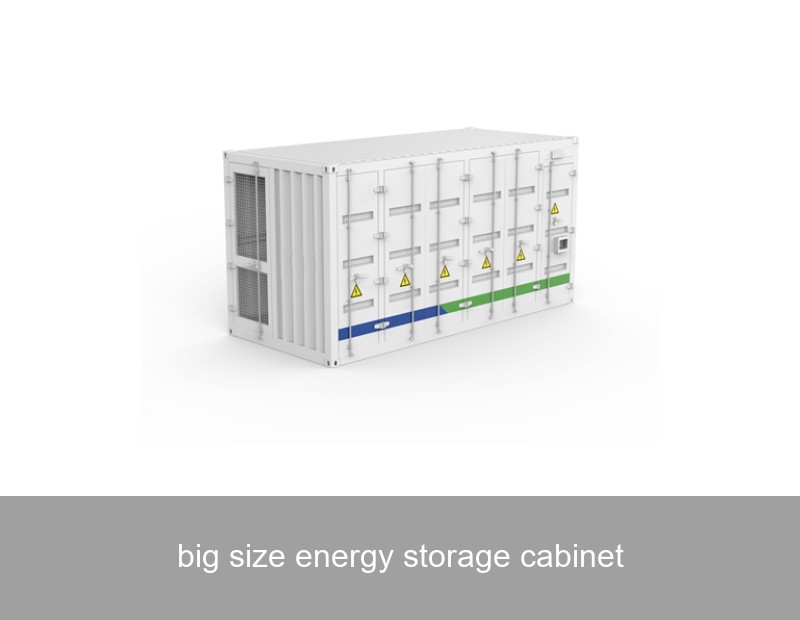
Imagine a power grid strained by a heatwave, or a factory facing unpredictable energy costs. Now, imagine a solution: a robust, self-contained unit quietly managing vast amounts of electricity, ensuring stability and savings. This is the reality enabled by the big size energy storage cabinet. These systems are far more than just large batteries; they are intelligent energy hubs revolutionizing how businesses and communities interact with power. For over 18 years, Highjoule has been at the forefront of this revolution, engineering advanced storage solutions that turn energy challenges into strategic advantages.
Table of Contents
- What is a Big Size Energy Storage Cabinet?
- The Driving Forces: Why Large-Scale Storage is Essential Now
- Inside the Cabinet: Key Components and Technology
- A Real-World Case Study: Stability for a German Industrial Park
- The Highjoule Approach: Intelligence Meets Durability
- Future Trends and Considerations
What is a Big Size Energy Storage Cabinet?
At its core, a big size energy storage cabinet is a modular, containerized system designed to store electrical energy on a significant scale, typically from hundreds of kilowatt-hours (kWh) to multiple megawatt-hours (MWh). Think of it as a massive, high-tech power bank for buildings, factories, or even segments of the grid. Unlike a simple battery, these cabinets integrate battery modules, a sophisticated thermal management system, power conversion systems (PCS), and a dedicated battery management system (BMS) into a single, safe, and weather-resistant enclosure.
Their primary functions are multifaceted: peak shaving (reducing grid draw during expensive high-demand periods), backup power, renewable energy integration (storing solar or wind for use anytime), and providing grid services like frequency regulation. Highjoule's H-Cube Industrial Series exemplifies this, offering scalable, all-in-one cabinet solutions that seamlessly integrate into commercial and industrial settings, providing both financial and operational resilience.
The Driving Forces: Why Large-Scale Storage is Essential Now
The surge in demand for these systems isn't accidental. It's a direct response to several converging global phenomena.
Phenomenon: Our energy landscape is undergoing a dramatic shift. Renewable sources like solar and wind are intermittent, while grid infrastructure in many regions is aging. Meanwhile, electricity demand and price volatility are rising.
Data: The numbers tell a compelling story. According to the U.S. Energy Information Administration (EIA), battery storage capacity in the U.S. is set to skyrocket, with plans to add 14.3 GW of new capacity in just the 2024-2025 period. In Europe, the European Association for Storage of Energy (EASE) highlights that large-scale storage is critical for achieving the EU's 2030 renewable energy targets, with a need for significant flexibility in the grid.
Insight: This data reveals a clear trend: the future grid is decentralized and variable. Big size energy storage cabinets provide the essential buffer and control layer. They smooth out the fluctuations of renewables, defer costly grid upgrades, and allow energy consumers to become active managers of their power usage and costs.

Image Source: Unsplash - A solar farm paired with large-scale battery storage cabinets.
Inside the Cabinet: Key Components and Technology
Understanding the sophistication of a big size energy storage cabinet requires a peek inside. It's a symphony of coordinated technology:
- Battery Cells & Modules: Typically using high-cycle life lithium-ion chemistry (like LFP for enhanced safety), these are the core energy storage units.
- Battery Management System (BMS): The "brain" of the cabinet. It monitors cell voltage, temperature, and state of charge, ensuring safety, longevity, and performance. Highjoule's proprietary Adaptive BMS goes further, using AI-driven algorithms to optimize cycle life based on usage patterns.
- Power Conversion System (PCS): The "translator." It converts stored DC power from the batteries to AC power for the facility or grid, and vice-versa for charging.
- Thermal Management System: Crucial for safety and efficiency. A liquid or advanced air-cooling system maintains the batteries within their ideal temperature range, preventing degradation and thermal runaway.
- Energy Management System (EMS): The "orchestra conductor." This software platform controls when to charge, discharge, or hold, based on energy prices, grid signals, or on-site generation.
| Component | Primary Function | Highjoule's Enhancement |
|---|---|---|
| Battery (LFP) | Energy Storage Core | Cell-level fusing & UL9540A certified safety |
| Adaptive BMS | Safety & Health Monitoring | AI-based lifespan prediction & optimization |
| Hybrid Cooling System | Temperature Control | Dynamic cooling that reduces auxiliary energy use by up to 25% |
A Real-World Case Study: Stability for a German Industrial Park
Let's move from theory to practice. A concrete example from our work in Europe illustrates the transformative impact.
Challenge: A mid-sized automotive parts manufacturing park in Bavaria, Germany, faced two major issues: steep demand charges (costs based on peak power draw) and concerns over grid reliability affecting sensitive CNC machinery. Their existing rooftop solar PV system often generated excess power during midday that was sold back to the grid at low rates.
Solution: Highjoule deployed a turnkey system featuring two of our H-Cube 500 big size energy storage cabinets, with a total capacity of 1 MWh. Integrated with their solar inverters and a custom EMS, the system was programmed for peak shaving and solar self-consumption maximization.
Results & Data (12-month period):
- Demand Charge Reduction: Peak grid power draw was reduced by 40%, leading to a direct €28,000 annual savings on power costs.
- Solar Self-Consumption: Increased from 35% to over 80%, dramatically improving the ROI of their solar asset.
- Reliability: The system provides seamless backup power for critical loads for up to 4 hours, preventing an estimated €150,000+ in potential production losses from micro-outages.
This case demonstrates that a big size energy storage cabinet is not just an expense but a strategic investment with a clear, quantifiable return.

Image Source: Unsplash - Technician monitoring an industrial energy management system.
The Highjoule Approach: Intelligence Meets Durability
At Highjoule, we believe a big size energy storage cabinet must be more than just reliable hardware; it must be an intelligent partner. Our systems are built on three pillars:
- Uncompromising Safety: Our cabinets are designed with multi-level protection—from cell-level fusing to cabinet-level isolation and fire suppression—often exceeding local and international standards like UL, IEC, and CE.
- Adaptive Intelligence: Our cloud-connected Highjoule Nexus™ Platform allows for remote monitoring, performance analytics, and over-the-air updates. The system learns your energy patterns and can automatically adjust its strategy for maximum savings or carbon reduction.
- Full-Spectrum Services: We provide more than hardware. From initial feasibility studies and system design to installation, commissioning, and long-term maintenance agreements, Highjoule is a single point of responsibility for our clients' energy resilience journey.
Whether for a commercial building in California looking to pair with solar, an industrial plant in Poland needing peak shaving, or a microgrid in Scandinavia, our product range is engineered for scalability and harsh environments.
Future Trends and Considerations
The evolution of big size energy storage cabinets is accelerating. We are closely monitoring and innovating in areas like:
- Second-Life Batteries: Integrating repurposed EV batteries for cost-sensitive applications.
- Solid-State Batteries: Preparing for the next leap in energy density and safety.
- Grid-Forming Inverters: Enabling storage systems to "form" a stable grid independently, a critical feature for islanded microgrids and grids with high renewable penetration.
When considering a system, key questions include: Total cost of ownership (TCO), expected cycle life, compatibility with existing infrastructure, and the provider's track record for service and software support.
As you look at your own energy profile, with its unique challenges of cost, reliability, and sustainability, what single energy constraint would solving it unlock the most potential for your operation?
 Inquiry
 Online Chat