


Limiter Grid Tie Inverter: The Key to Smart, Compliant Solar Energy Export
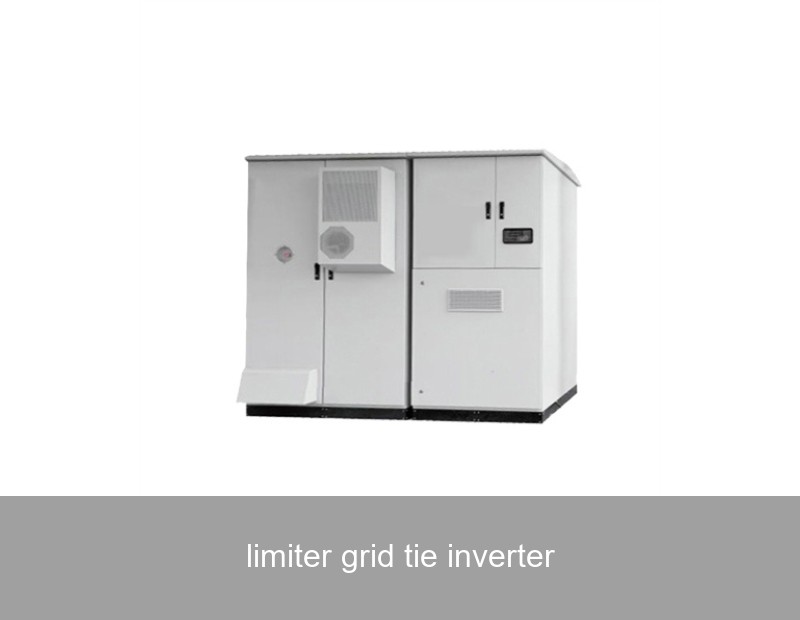
Have you ever wondered how your rooftop solar panels can feed power back to the grid without causing instability? Or perhaps you're a business owner who's been told your local electricity network can't handle any more solar exports. This growing challenge, especially in Europe and the U.S., is where a crucial piece of technology comes into play: the limiter grid tie inverter. Unlike traditional inverters that push out as much power as they can, these intelligent devices are programmed to limit the amount of electricity sent back to the public grid. This isn't a limitation in the bad sense; it's the smart, responsible key to unlocking solar potential in grid-constrained areas and ensuring everyone can participate in the energy transition. Let's explore how this technology works and why it's becoming indispensable.
What is a Limiter Grid Tie Inverter?
A limiter grid tie inverter (often called an export-limited inverter or grid-constrained inverter) is a sophisticated power electronic device that converts the direct current (DC) from your solar panels into grid-compliant alternating current (AC). Its defining feature is the built-in capability to monitor and actively restrict the amount of this AC power that is exported to the public electricity network. It ensures the export stays at or below a pre-set limit, which can be mandated by your local Distribution Network Operator (DNO) or chosen for economic reasons.
Think of it like a smart water valve on a pipe. A traditional inverter opens the valve fully, letting all the solar "water" flow out to the grid. A limiter inverter has a gauge and an adjustable valve, allowing you to precisely set the maximum flow rate, ensuring you never exceed the capacity of the "pipe" (the local grid). Any excess solar energy generated beyond this limit isn't wasted; it can be diverted to charge a battery storage system, power household appliances directly, or, in some cases, be gently "curtailed" (reduced at the panels).
Why Are Export Limiters Suddenly Needed? The Grid Congestion Phenomenon
The push for export limits is a direct result of solar power's incredible success. In many neighborhoods across California, Germany, the UK, and Australia, solar penetration is so high that the local low-voltage grid infrastructure, designed for one-way power flow, is becoming overloaded during sunny midday periods.
- Phenomenon: High voltage levels on neighborhood lines due to excess solar export, risking equipment damage and power quality issues for all residents.
- Data: According to a IEA report, global solar PV capacity is set to triple by 2027. In Germany, over 2.5 million solar systems are already installed, with many clusters at grid capacity.
- Regulatory Response: To manage this, DNOs and utilities are increasingly enforcing strict export limits for new connections, sometimes as low as 1.5 kW per household, compared to a typical 4-6 kW solar system size.
This creates a dilemma: without a limiter, your solar installation permit gets denied. With a traditional inverter, you'd have to install a much smaller, underutilized system. The limiter grid tie inverter is the elegant solution that allows you to install a right-sized solar array for your own consumption while playing by the grid's new rules.

Image Source: Unsplash (Representative image of a modern inverter)
How Does a Grid Export Limiter Work? The Technical Logic
The intelligence lies in continuous monitoring and dynamic control. Here’s a step-by-step breakdown:
- Constant Measurement: The inverter's sensors constantly measure the total power being generated by the solar panels and the power being consumed by the home or business (the "load").
- Calculation: It calculates the net export: Solar Generation - On-Site Load = Potential Export.
- Comparison & Limiting: The inverter compares this potential export to its pre-configured export limit (e.g., 3 kW). If the potential export exceeds the limit, the inverter instantly reduces its output power.
- Energy Diversion (Optimal Path): In a system with battery storage, like those integrated with Highjoule's solutions, the excess energy is automatically channeled to charge the batteries instead of being curtailed.
| Scenario | Solar Generation | Building Load | Without Limiter | With 3kW Export Limiter |
|---|---|---|---|---|
| Sunny Afternoon (Low Load) | 6 kW | 1 kW | 5 kW exported (Grid Violation) | 3 kW exported, 2 kW to battery/curtailed |
| Cloudy Day (Normal Load) | 2 kW | 3 kW | 0 kW exported, 1 kW imported from grid | 0 kW exported, 1 kW imported from grid |
Key Benefits of Implementing an Export Limiter
- Grid Compliance & Faster Approvals: Meets DNO/utility requirements head-on, smoothing the permitting process for your solar installation.
- Optimal System Sizing: Install a solar array sized for your future needs (like adding an EV charger or heat pump) without worrying about export constraints.
- Enhanced Self-Consumption: The limitation incentivizes using more solar power directly on-site, which is often more economical than selling it at low feed-in tariffs.
- Future-Proofing: Prepares your energy system for dynamic grid tariffs and advanced services like virtual power plants (VPPs).
Highjoule's Smart Solution: The EnergyHub Inverter Series
At Highjoule, we've seen this challenge coming for years. Our EnergyHub Hybrid Inverter Series is engineered with advanced, programmable export limiting as a core feature, not an afterthought. Designed for the European and North American markets, it seamlessly integrates solar, battery storage, and grid interaction into one intelligent unit.
What sets the Highjoule EnergyHub apart is its context-aware logic. It doesn't just blindly limit power. Coupled with our Smart Energy Manager software, it can predict your consumption patterns, consider time-of-use electricity rates, and decide the most economical action: export up to the limit, charge the battery, or power your home. For commercial and industrial clients, our Industrial Energy Platform offers three-phase limiter inverters with granular reporting, ensuring compliance and maximizing ROI for large-scale solar+storage projects.

Image Source: Unsplash (Representative graphic of home energy flow)
Real-World Case Study: Müller Bakery, Bavaria, Germany
Phenomenon: A family-run bakery with high daytime energy consumption wanted to expand its 30 kW rooftop solar system to cover new electric ovens and reduce costs. The local DNO denied the request due to severe grid congestion in the industrial park.
Data & Solution: Highjoule's engineering team proposed a solution centered around a 50 kW EnergyHub Industrial Inverter with a strict 5 kW export limit, coupled with a 100 kWh Highjoule battery storage system.
- System Size: Solar expanded to 50 kWp, Battery: 100 kWh, Export Limit: 5 kW.
- Result: The DNO approved the plan within 4 weeks. The bakery now uses over 85% of its solar generation directly on-site. The battery stores the midday excess for use during the early morning baking shift.
- Financial Outcome: Grid electricity purchases reduced by 92%. The system pays for itself in an estimated 6 years, despite the export limitation, thanks to optimized self-consumption and peak shaving.
Insight: This case clearly shows that an export limit is not a barrier but a design parameter. By shifting the focus from selling power to maximizing self-use with storage, businesses can achieve greater energy independence and faster financial returns.
The Future of Grid-Tied Solar and Storage: An Open Question
As we move towards grids powered by renewables, the role of the inverter evolves from a simple converter to the grid-interactive gateway for every building. The limiter function is just the beginning. The next step is bidirectional, communication-enabled inverters that can respond to grid signals in real-time, providing stability services and participating in energy markets.
This raises an exciting, open question for every solar owner and energy manager: When your inverter becomes an active participant in the grid's health, what new value streams and responsibilities are you ready to explore? Could your home or business one day earn revenue by simply agreeing to adjust your export limit dynamically to help balance the grid during critical times?
The technology, as demonstrated by Highjoule's evolving product line, is ready. The market rules are catching up. The decision to invest in a smart, limit-capable system today is an investment in being an active, empowered part of tomorrow's energy ecosystem, not just a passive consumer (or producer).
Is your current solar design prepared for the grid constraints of today and the opportunities of tomorrow?
 Inquiry
 Online Chat