


Your Complete Guide to a Solar System for Home Electricity: Power, Savings, and Independence
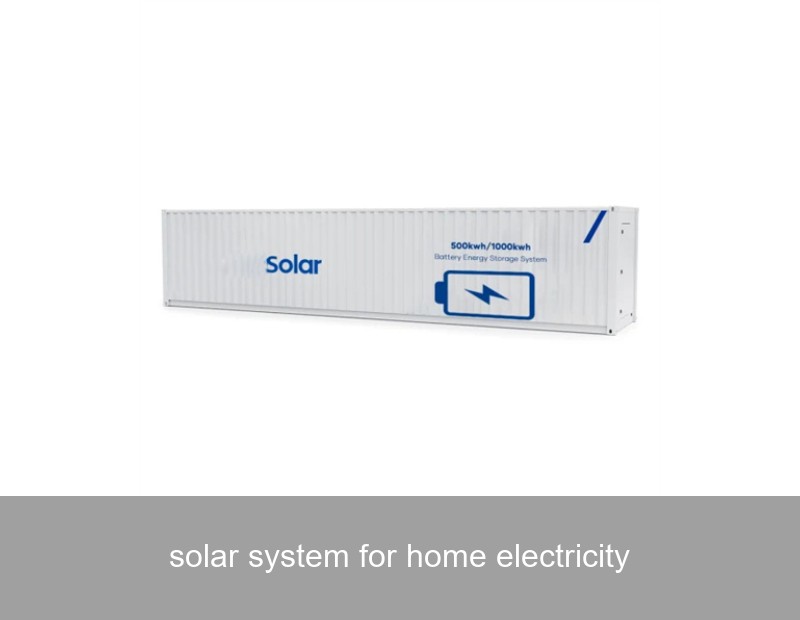
Have you ever looked at your electricity bill and wished for a simpler, more predictable cost? Or felt a desire to take control of your home's power while contributing to a cleaner planet? You're not alone. Across Europe and the US, a quiet revolution is happening on rooftops, driven by the adoption of a solar system for home electricity. This isn't just about panels on a roof; it's about a fundamental shift towards energy self-sufficiency. But with so much information available, how do you navigate the journey from curiosity to a powered-up home? As Highjoule's product technology expert, I'll break down the what, why, and how, blending clear explanation with real-world insights to light your path.
Table of Contents
What is a Home Solar Electric System?
At its core, a residential solar power system is a mini power plant installed at your property. It captures sunlight—a free and abundant resource—and converts it into usable electricity for your appliances, lighting, and devices. Unlike the traditional, one-way flow of electricity from the grid to your home, a modern solar setup can create a dynamic, intelligent energy network. It allows you to generate, consume, store, and even manage surplus power. The ultimate goal? To maximize the use of your self-generated clean energy, reduce reliance on the utility grid, and build resilience against power outages and fluctuating energy prices.

Image: A modern home harnessing solar energy. Source: Unsplash
Key Components: More Than Just Panels
Understanding the pieces of the puzzle helps you appreciate the system's intelligence. Here’s what makes up a typical setup:
- Solar Panels (Photovoltaic Modules): These are the most visible part, acting as the fuel collectors. They convert sunlight into direct current (DC) electricity.
- Inverter: The brain of the power conversion. Since homes use alternating current (AC), the inverter's crucial job is to convert the DC electricity from the panels into usable AC electricity. Modern systems often use more efficient string inverters or panel-level microinverters.
- Battery Energy Storage System (BESS): This is the game-changer. A battery, like those in Highjoule's Residential Energy Hub, stores excess solar energy produced during the day for use at night, during peak tariff hours, or during a grid outage. It turns a solar system from a daylight-only solution into a 24/7 power source.
- Mounting System & Balance of System (BOS): The secure physical framework and all the wiring, switches, and safety components that tie everything together safely and efficiently.
- Energy Management System (EMS): The intelligent software that orchestrates the entire operation. It decides when to use solar power directly, when to charge or discharge the battery, and when to draw from or export to the grid, optimizing for self-consumption and cost savings.
The Compelling Benefits: Beyond the Bill
The motivation to switch to solar is driven by a powerful combination of financial, environmental, and practical advantages.
| Benefit Category | How It Manifests | Long-Term Impact |
|---|---|---|
| Financial Savings | Dramatically reduced monthly electricity bills. In sun-rich areas, savings of 70-100% are achievable. You also lock in energy costs, protecting against future utility rate hikes. | Strong return on investment (ROI), typically with a payback period of 5-10 years, followed by decades of nearly free electricity. |
| Energy Independence & Resilience | With a battery, your home gains backup power during grid failures. You become less vulnerable to blackouts and grid instability. | Peace of mind and security, knowing your essential loads (refrigeration, lights, comms) will stay on. |
| Environmental Contribution | Every kilowatt-hour from solar avoids CO2 emissions from fossil-fuel power plants. A typical home system can offset 3-4 tons of carbon annually. | A direct, measurable reduction in your household's carbon footprint, contributing to climate goals. |
| Increased Property Value | Studies consistently show homes with solar, and especially solar-plus-storage, sell at a premium compared to non-solar homes. | The system is not an expense but a valuable home upgrade that pays for itself and adds equity. |
Real-World Impact: A Case Study from California
Let's move from theory to practice. Consider the Johnson family in Sacramento, California. Facing rising PG&E rates and increasing wildfire-related Public Safety Power Shutoffs (PSPS), they installed a 8.2 kW solar array coupled with a 13.5 kWh Highjoule Residential Energy Hub in 2022.
- Phenomenon: High bills and unreliable grid power.
- Data: In the first full year, their system generated 11,800 kWh of electricity. Their annual electricity cost dropped from ~$2,800 to a mere ~$200 (the basic service charge). The battery provided full-home backup during 5 separate grid outages totaling 42 hours.
- Case Specifics: The Highjoule system's intelligent EMS prioritized using solar to power the home and charge the battery during the day. After sunset, the home seamlessly switched to battery power, avoiding expensive peak grid electricity. During an outage, the transition was automatic and instantaneous.
- Insight: For the Johnsons, the value wasn't just in savings. It was in predictability and control. Their system paid for itself in under 7 years, and they now have a guaranteed, clean power supply for decades. This story is replicable across sunny regions in the US and Europe, where similar grid dynamics and incentives exist.

Image: A modern home battery storage unit, a key component for energy independence. Source: Unsplash
Choosing the Right System for Your Home
Not all systems are created equal. Key considerations include:
- Your Energy Consumption: Analyze your past year's bills (in kWh) to understand your baseline.
- Roof Suitability: Orientation (south-facing in the Northern Hemisphere is ideal), tilt, and shading.
- Local Climate & Incentives: Solar yield varies by region. Crucially, research local subsidies, tax credits (like the US Residential Clean Energy Credit), and net metering policies.
- Future-Proofing: Are you planning an EV? A heat pump? Factor in future load increases. An expandable battery system is wise.
How Highjoule Powers Smarter Home Energy
This is where our expertise comes into play. Since 2005, Highjoule has evolved from a battery technology pioneer into a global provider of integrated, intelligent storage solutions. For homeowners, we don't just sell a battery; we provide a complete, optimized solar system for home electricity.
Our Residential Energy Hub is built on safe, long-life lithium iron phosphate (LFP) chemistry and features a modular design. This means you can start with the capacity you need and easily expand later. Its integrated EMS is the true differentiator—using sophisticated algorithms to learn your consumption patterns and weather forecasts to make real-time decisions that squeeze the maximum value from every watt of solar energy you produce.
We partner with certified, vetted installers across Europe and North America to ensure your system is designed perfectly for your home and installed to the highest safety and performance standards. Our approach turns a complex project into a seamless journey toward energy independence.
Is Your Home Ready for the Solar Shift?
The technology is proven, the economics are compelling, and the need for resilient, clean energy has never been clearer. The journey begins with a simple question: What would energy security and a predictable, low energy cost mean for your household's budget and peace of mind? Imagine a future where power outages are a minor inconvenience and rising utility rates are someone else's concern.
What's the first step you'll take to explore how a solar system for home electricity could redefine your relationship with power?
 Inquiry
 Online Chat