


Lithium Batterie Service: The Key to Maximizing Your Energy Storage Investment
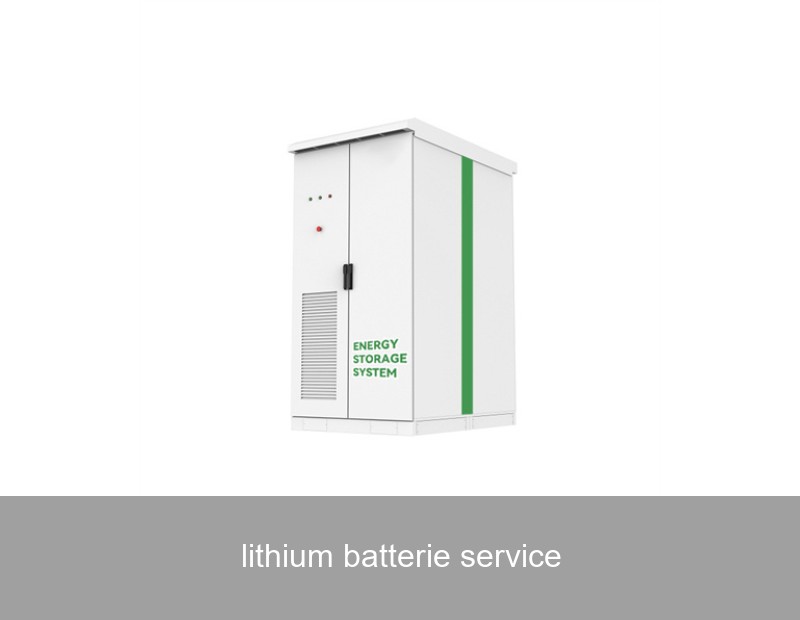
You've made the smart decision to invest in a lithium-ion battery system. The sun powers your home, your business enjoys backup during outages, and you're contributing to a greener grid. But here's a question many don't ask upfront: what happens in five, ten, or fifteen years? The truth is, the long-term performance, safety, and return on investment of your system don't just depend on the hardware you buy on day one—they hinge on the quality and continuity of your lithium batterie service. Let's explore why a proactive service strategy is not an optional extra, but the very foundation of sustainable energy independence.
Table of Contents
The Silent Phenomenon: Gradual Performance Decline
Unlike a blown fuse or a faulty inverter, lithium battery degradation is a slow, silent process. You might not notice it month-to-month. But one day, you realize your home system isn't covering your evening peak load as it used to, or your commercial facility's diesel generator kicks in more frequently during grid dips. This capacity fade and increased internal resistance are natural, but their rate is heavily influenced by three key factors: operational temperature, charging/discharge patterns (depth of discharge, or DoD), and the sophistication of the Battery Management System (BMS). Without dedicated service, these factors can conspire to shorten your system's productive life significantly.
The Data Behind Degradation
Industry research provides a clear picture. A seminal study published in the Journal of Power Sources analyzed real-world degradation, showing that lithium-ion batteries in stationary storage typically retain 60-80% of their original capacity after 10 years. However, the critical finding was the wide variance. Systems with poor thermal management and no active calibration saw capacity drop below 60%, while those with optimized conditions and regular maintenance remained above 80%. This 20+ percentage point difference directly translates to thousands of euros or dollars in lost energy value over the system's lifetime.

Image source: Unsplash (Professional monitoring is key to long-term battery health).
A Case Study in Prevention: Munich Logistics Hub
Consider a real-world example from our operations in Germany. A large logistics hub near Munich installed a 500 kWh lithium-ion battery system in 2018 for peak shaving and backup power. By 2021, their internal monitoring showed a slight but steady increase in system internal resistance. A standard warranty might only cover a complete failure, but their Highjoule ProActive Service contract flagged this anomaly early.
Our technicians performed on-site diagnostics, identifying a slight imbalance in one of the 20 battery racks, exacerbated by a specific daily cycling pattern. The solution wasn't a costly module replacement. Instead, we:
- Performed a full system calibration and BMS software update.
- Adjusted the charge/discharge algorithm to a more optimal pattern for their load.
- Implemented a quarterly remote health check specifically for that imbalance.
The result? The degradation curve flattened, and the projected system capacity at year 10 was restored from an estimated 68% to 79%. This single service intervention preserved over €40,000 in future energy arbitrage value for the client.
Components of a Comprehensive Lithium Batterie Service
So, what does a full-spectrum service entail? It's a multi-layered approach:
- Remote Monitoring & Predictive Analytics: 24/7 data ingestion from the BMS on voltage, temperature, and current. Advanced algorithms detect anomalies long before they cause downtime.
- Preventive Maintenance: Scheduled on-site inspections, thermal imaging checks on connections, firmware updates, and system performance validation.
- Expert Diagnostics & Repair: Access to OEM-trained technicians with the right tools for safe, certified repair or module replacement.
- Performance Optimization: Regular analysis of cycling data to recommend software tweaks that maximize efficiency and lifespan based on your actual usage.
- End-of-Life & Recycling Guidance: Responsible planning for when the system eventually retires, ensuring compliance with evolving regulations like the EU's new battery directive.
The Highjoule Service Philosophy: Beyond Reactive Repairs
At Highjoule, founded in 2005, we view service as an integral part of the product itself. Our IntelliServe platform is the cornerstone of this philosophy. For every system we install—whether it's a residential HomePower solution, a commercial GridMax suite, or an industrial-scale microgrid—IntelliServe provides a continuous digital twin. This allows our engineers, and our clients, to track health metrics in real-time.
Our service packages are designed for scalability. A homeowner might opt for our Essential Monitoring package with annual check-ups. In contrast, a hospital or data center with our GridMax Pro system will require the Platinum Critical Support tier, featuring guaranteed response times, on-site spares holding, and a dedicated account engineer. This tailored approach ensures that the lithium batterie service matches the criticality of the application, providing peace of mind and financial predictability.

Image source: Unsplash (Integrated home energy systems require reliable service).
Choosing Your Service Partner: Key Questions to Ask
Not all service providers are created equal. When evaluating a partner for your system's long-term care, consider asking:
| Question | Why It Matters |
|---|---|
| Is your monitoring platform proprietary or open? Can it integrate with my existing energy management system? | Prevents vendor lock-in and ensures data flows to where you need it. |
| What is the certification level of your field technicians for high-voltage DC systems? | Safety is paramount. Improper handling can void warranties and create hazards. |
| Do you offer performance guarantees or service-level agreements (SLAs) tied to capacity retention? | Aligns the provider's incentives with your long-term performance goals. |
| What is your process for sourcing OEM-compliant replacement parts, and what are the typical lead times? | Directly impacts downtime duration in case of a fault. |
As the energy landscape evolves, so do the demands on your storage assets. With initiatives like the U.S. Department of Energy's Solar Futures Study highlighting storage's critical role, ensuring your system operates at peak potential for its full lifespan is an economic and environmental imperative. A robust lithium batterie service plan is the insurance policy that protects that vision.
 Inquiry
 Online Chat