


Decoding the Lithium Battery 100 Ampere Price in Sweden: Your Guide to Smart Energy Investment
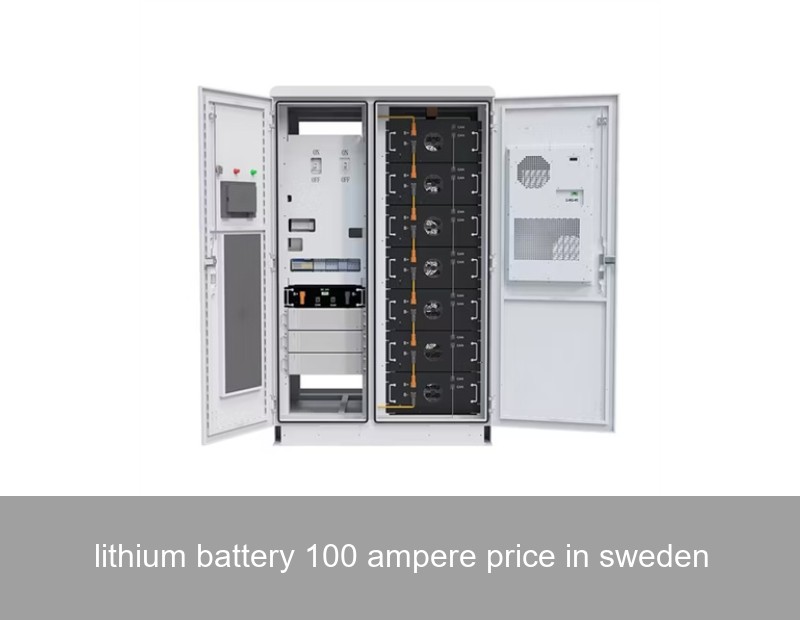
If you're researching energy storage in Sweden, you've likely typed "lithium battery 100 ampere price in Sweden" into a search engine. The results can be overwhelming—a wide range of figures, technical jargon, and conflicting information. But here's the crucial insight: focusing solely on the upfront cost per ampere-hour (Ah) is like buying a car based only on its fuel tank size. It tells you nothing about the engine's efficiency, safety features, or how long the vehicle will last. In the world of energy storage, especially in a market like Sweden with its unique climate and energy goals, the true value lies in understanding the technology, longevity, and intelligent features behind the price tag. This guide will demystify the factors shaping lithium battery prices in Sweden and help you make an investment that powers your home or business reliably for years to come.
Understanding Ampere-Hours: More Than Just a Number
Let's start with the basics. A 100 ampere-hour (100Ah) rating describes the battery's capacity. In simple terms, a 100Ah battery can theoretically deliver 100 amps of current for one hour, or 10 amps for 10 hours, before it's fully discharged. However, this is a nominal rating. The usable energy—what you actually get—depends heavily on the battery's chemistry and built-in management system.
- Lead-Acid vs. Lithium: A traditional 100Ah lead-acid battery might only allow you to use 30-50% of its capacity without damaging it. A Lithium Iron Phosphate (LFP) battery, the dominant technology for home storage, typically offers 90-100% usable depth of discharge (DoD). So, in real terms, a 100Ah LFP battery delivers nearly double the usable energy of its lead-acid counterpart.
- Voltage is Key: The "Ah" rating alone doesn't tell you the total energy storage. Energy is measured in kilowatt-hours (kWh), calculated as Voltage (V) x Ampere-hours (Ah). Most residential battery systems are 48V or 51.2V systems. Therefore, a 100Ah lithium battery at 48V stores 4.8kWh of energy. This is the number you should relate to your household consumption.

Image: A modern home energy storage system. Source: Unsplash
The Real Cost Breakdown: What You're Paying For in a 100Ah Lithium Battery
When you see a price for a lithium battery in Sweden, it's a composite of several critical components:
| Cost Component | What It Encompasses | Impact on Quality & Price |
|---|---|---|
| Cell Quality & Chemistry | Grade A LFP cells from reputable manufacturers vs. lower-grade cells. | High-grade cells ensure longer lifespan (6,000+ cycles), better stability, and consistent performance. This is the core cost driver. |
| Battery Management System (BMS) | The onboard computer that monitors voltage, temperature, and state of charge. | A sophisticated BMS is crucial for safety, longevity, and enabling smart features. It prevents overcharge, deep discharge, and thermal runaway. |
| System Integration & Inverter Compatibility | How well the battery communicates with solar inverters and home energy management systems. | Seamless integration, often through protocols like SunSpec or manufacturer-specific links, maximizes self-consumption and grid service potential. |
| Warranty & Support | The length (e.g., 10 years) and terms (throughput guarantee, end-of-warranty capacity). | A strong warranty reflects manufacturer confidence and protects your investment. Local Swedish support is invaluable. |
| Certifications & Safety | EU CE marks, UN38.3 for transport, and specific fire safety standards. | Non-negotiable for safe, legal installation in the EU and Swedish market. Ensures compliance with building codes. |
Navigating the Swedish Market: Key Factors Influencing Price
In Sweden, specific market dynamics directly affect the lithium battery 100 ampere price:
- Climate Considerations: Swedish winters demand batteries that perform efficiently in low temperatures. High-quality systems include low-temperature charge protection and optionally, integrated heating systems, adding to the cost but ensuring year-round reliability.
- Energy Policy & Incentives: While Sweden doesn't have a direct battery subsidy nationwide, local municipalities may offer grants, and the national Swedish Energy Agency (Energimyndigheten) frequently runs research and development programs that influence market pricing and availability. Furthermore, reducing your annual energy tax (energiskatt) through increased self-consumption is a significant financial benefit.
- Installation & Balance of System (BoS) Costs: The quoted battery price is often just one part of the total system cost. Professional installation by certified electricians, necessary cabling, switchgear, and potentially an hybrid inverter must be factored into your total budget.
From Quote to Kilowatt: A Real-World Swedish Case Study
Let's look at a practical example from Västra Götaland. A family in a detached house with a 15kW solar PV array installed in 2022 was experiencing high grid export in summer and drawing expensive power in winter. Their goal was to increase self-consumption from 35% to over 70%.
- Solution: They installed a modular battery system from Highjoule—specifically, two units of our HJ-Residential 5.12kWh modules (each equivalent to a [email protected] battery), stacked to create a 10.24kWh storage capacity.
- Integration: The system was integrated with their existing solar inverter via a Highjoule Energy Gateway, enabling intelligent, weather-forecast-based charging cycles.
- Data & Outcome: After one year, their self-consumption rate jumped to 78%. They reduced their grid electricity purchases by approximately 2,800 kWh annually. Based on an average spot price (including taxes and grid fees) of 2.50 SEK/kWh, this translates to an annual saving of 7,000 SEK. The system also provides backup power during brief grid outages, a valuable benefit in their rural location.
This case shows that the evaluation of a "lithium battery 100 ampere price in Sweden" must transition to an analysis of the total system's value over time, including energy savings and increased resilience.
Looking Beyond the Price Tag: The Highjoule Advantage for Swedish Energy Independence
As a global leader with nearly two decades of experience, Highjoule designs its systems for markets exactly like Sweden. Our products address the specific factors that influence long-term value:
- Engineered for Nordic Climates: Our LFP battery cabinets are built with robust thermal management, ensuring optimal performance from -10°C to 50°C, with safe operation down to -20°C.
- Intelligent Software: The Highjoule Energy Management Platform isn't just a monitoring tool. It's an AI-driven brain that learns your consumption patterns, integrates with SMHI weather forecasts, and can be configured to charge from the grid during low-cost periods (if allowed by your contract), maximizing your economic return.
- Scalability and Service: Starting with a single 5.12kWh (100Ah) module, our systems can be easily expanded as your needs grow. We partner with a network of certified installers across Sweden, ensuring you have local expertise for installation and maintenance.

Image: Renewable energy generation in Swedish conditions. Source: Unsplash
Making Your Investment Decision: The Right Questions to Ask
Instead of just searching for the lowest "lithium battery 100 ampere price in Sweden," equip yourself with these questions for suppliers:
- What is the real usable energy (in kWh) of the system, and what is its warranted end-of-life capacity (e.g., 80% after 10 years)?
- Can you provide a detailed breakdown of the full installed system cost, including all BoS components and labor?
- How does the battery management system handle Swedish winter conditions to protect the cells and maintain functionality?
- What is the communication protocol, and is it compatible with my existing or planned solar inverter? (Highjoule systems, for instance, offer broad compatibility with major brands like SMA, Fronius, and Huawei).
- Is there a local service partner in my region, and what is the process for claiming the warranty?
Given your specific energy consumption patterns and goals for resilience, what single feature in an energy storage system would provide you the most peace of mind—is it maximum financial return, guaranteed backup power, or seamless integration with your existing green technology?
 Inquiry
 Online Chat