


Understanding the 500 Ah Inverter Battery Price: A Smart Investment in Energy Independence
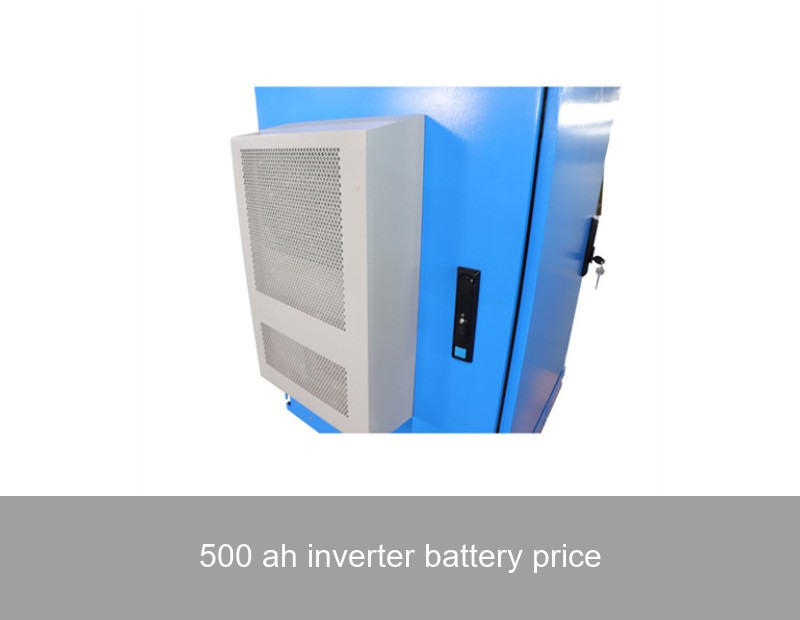
If you're researching energy storage for your home or business, you've likely encountered the term "500 Ah inverter battery" and wondered about its price. The figure you see on a spec sheet is just the starting point. The true cost—and value—of a 500Ah battery system extends far beyond its initial purchase price. It's about the long-term return on investment through reliable power, energy bill savings, and sustainability. As electricity prices in Europe and the U.S. remain volatile and grid stability becomes a growing concern, understanding what drives the price of a robust 500Ah battery bank is the first step toward making a truly empowered energy decision. This guide will break down the factors influencing cost and highlight the intelligent solutions, like those from Highjoule, that maximize your investment.
Table of Contents
- Beyond the Price Tag: What is a 500Ah Battery System?
- Key Factors Driving the 500 Ah Inverter Battery Price
- The Highjoule Difference: Engineering Value into Every Kilowatt-Hour
- Case Study: A German Bakery's Recipe for Resilience
- Making the Right Choice: Questions to Ask Before You Buy
Beyond the Price Tag: What is a 500Ah Battery System?
Let's clarify the terminology first. "500Ah" (Amp-hours) describes the battery's capacity, but alone, it doesn't tell you how much energy it stores. To find that, you multiply the Amp-hours by the battery's voltage (V). A common 48V residential battery system with a 500Ah rating stores 24 kilowatt-hours (kWh) of energy (500Ah * 48V = 24,000 Wh = 24 kWh). Think of it this way: if your home uses an average of 1 kW per hour, this system could theoretically power essential loads for about 24 hours during an outage.
However, the battery is just one component. The term "inverter battery" refers to a complete system: the battery modules (the chemical energy storage), the inverter/charger (which converts DC battery power to AC for your home and manages charging), and the critical Battery Management System (BMS). The BMS is the brain, ensuring safety, longevity, and performance. The price you're quoted must encompass this integrated system's quality and intelligence.
Key Factors Driving the 500 Ah Inverter Battery Price
Why can prices for seemingly similar 500Ah systems vary so widely? It comes down to core technology and engineering.
- Battery Chemistry: This is the biggest differentiator. Traditional lead-acid batteries have a lower upfront cost but a shorter lifespan (3-5 years) and lower usable depth of discharge. Lithium-based batteries, particularly Lithium Iron Phosphate (LFP), command a higher initial 500 ah inverter battery price but offer a far superior lifetime cost. They last 10+ years, can be discharged nearly fully, and require no maintenance.
- System Intelligence & Software: A basic inverter switches power. A smart energy management system, like Highjoule's NeuroCore™ AI Platform, learns your consumption patterns, integrates with solar forecasts, and can optimize for time-of-use electricity rates—automatically shifting your home to battery power when grid prices peak. This software intelligence is a key value driver not always apparent in a simple price quote.
- Scalability & Installation: Can you start with a smaller system and add modules later? Modular design, a hallmark of modern systems, offers flexibility but requires sophisticated engineering. Installation complexity and local permitting costs in the U.S. and Europe also factor into the total project price.
- Brand, Warranty, and Service: Established brands like Highjoule, with nearly two decades of field experience, invest heavily in safety testing, cycle life validation, and robust warranties (often 10 years). This peace of mind and reliable support network are built into the product's value proposition.
| Factor | Impact on Upfront Price | Impact on Long-Term Value |
|---|---|---|
| LFP vs. Lead-Acid Chemistry | Higher | **Much Higher** (Longer life, more cycles, zero maintenance) |
| Advanced BMS & Software | Moderate | **High** (Safety, efficiency, smart savings, future-proofing) |
| Modular Scalability | Slightly Higher | **High** (Protects investment, allows for growth) |
| Professional Installation & Grid Compliance | Variable | **Critical** (Ensures safety, eligibility for incentives, reliable operation) |

Image Source: Unsplash - Professional installation is key to system safety and performance.
The Highjoule Difference: Engineering Value into Every Kilowatt-Hour
At Highjoule, we believe the right 500 ah inverter battery price reflects a total cost of ownership that saves you money for years to come. Our H-Joule Sentinel Series for residential and commercial applications is engineered with this principle. Built with UL-certified LFP cells, our systems are designed for safety and durability. The integrated NeuroCore™ BMS doesn't just protect the battery; it connects to our cloud platform for remote monitoring and performance optimization.
For a homeowner in California or Germany, this means the system can be programmed to automatically store excess solar energy and then power the home during the expensive evening peak, a feature known as peak shaving. This direct bill reduction turns the storage system from an emergency backup into a daily financial asset. Our modular design means you can often start with a 10 kWh configuration and expand to 20 kWh or more as your needs grow, making the initial investment more accessible while protecting its long-term relevance.
Services That Complete the Picture
Highjoule provides more than hardware. Our Energy Independence Audit helps customers in the U.S. and Europe analyze their energy usage, solar production, and local utility rates to right-size their system. We also assist with navigating incentive programs like the U.S. federal Investment Tax Credit (ITC) or various European state subsidies, which can significantly offset the net project cost. This holistic approach—from consultative design to ongoing support—ensures the stated 500 ah inverter battery price translates into maximum real-world value.
Case Study: A German Bakery's Recipe for Resilience
Let's look at a real-world example. Bäckerei Schmidt, a family-owned bakery in Bavaria, Germany, faced two problems: frequent brief grid fluctuations that disrupted sensitive proofing and cooling equipment, and high electricity costs during their pre-dawn operational hours. They needed reliable backup and cost savings.
Solution: Highjoule installed a 25 kWh (effectively ~500Ah at 48V) H-Joule Sentinel Commercial system, integrated with their existing rooftop solar. The system was configured for both uninterruptible power supply (UPS) functionality and intelligent time-of-use management.
Results & Data (12-month period):
- Grid Independence: 22 minor grid interruptions occurred. The bakery operated seamlessly through all of them, preventing spoilage and production halts.
- Cost Savings: By using stored solar energy during high-price morning hours (06:00-10:00), they reduced their grid consumption during peak periods by 68%.
- Financial Return: Combined with the German EEG (Renewable Energy Act) incentives for solar self-consumption, the system achieved an estimated payback period of under 7 years. The bakery now views its energy system not as a cost, but as a competitive advantage.
This case illustrates how the right system, priced for value over the long term, solves multiple business challenges simultaneously.

Image Source: Unsplash - Businesses with high, predictable energy loads gain significant value from storage.
Making the Right Choice: Questions to Ask Before You Buy
As you evaluate quotes for a 500Ah-class system, move beyond just the price. Ask these questions to uncover the true value:
- What is the exact battery chemistry, and what is the warranted cycle life (e.g., 6,000 cycles at 80% depth of discharge)?
- Is the inverter hybrid-ready, and does the system software allow for intelligent, automated control based on time and solar production?
- How modular is the system? Can I easily add more battery capacity next year without replacing the entire inverter?
- Does the provider offer detailed performance modeling and assist with local incentive applications?
- What does the warranty specifically cover, and what is the service response model in my region?
For authoritative information on battery safety standards, homeowners can refer to resources like the U.S. Department of Energy's Solar Office or the International Energy Agency's reports on storage.
The journey to energy independence is an exciting one. The initial 500 ah inverter battery price is a single data point in a much larger equation of resilience, savings, and sustainability. With the right technology partner, that equation tips decisively in your favor. What specific energy challenge—be it unpredictable outages, rising bills, or a desire to use more of your solar power—is motivating you to explore storage solutions today?
 Inquiry
 Online Chat