


Decoding the Lithium Battery 105Ah Price: Value, Performance, and Long-Term Savings
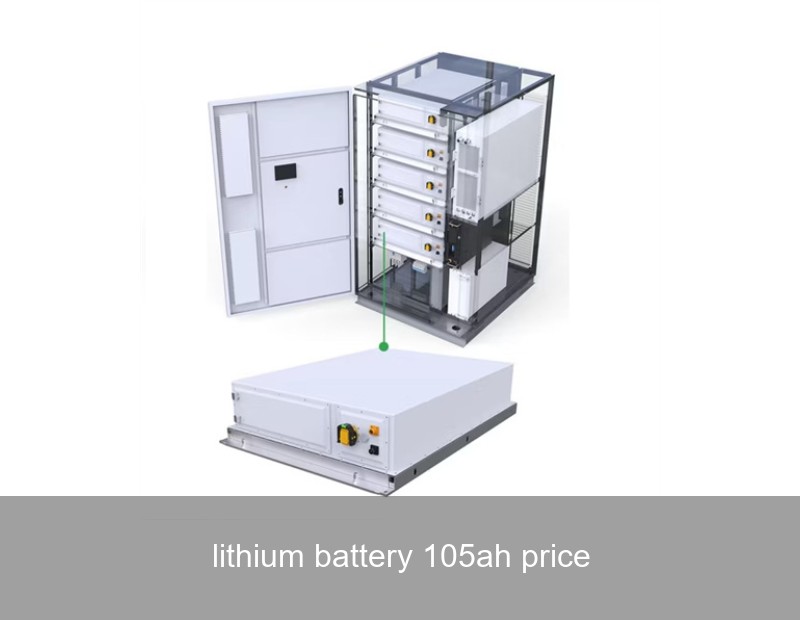
If you're shopping for energy storage, whether for your home solar setup, a commercial project, or an off-grid cabin, you've likely searched for terms like "lithium battery 105Ah price." The results can be dizzying—a wide range of figures that seem to describe the same product. Why does one 12V 105Ah lithium iron phosphate (LiFePO4) battery cost $400 while another is $800? As a seasoned expert in renewable energy systems, I can tell you that focusing solely on the upfront cost is like buying a car based only on the sticker price, ignoring fuel efficiency, safety, and reliability. The true value of a 105Ah battery lies in its total cost of ownership, performance under real-world conditions, and the intelligence that manages it. Let's peel back the layers and understand what you're really paying for.
Understanding the Price Tag: More Than Just a Number
The quoted price for a lithium battery 105Ah unit is a gateway into a world of engineering choices. A 105Ah battery stores 1.26 kWh of energy (12V * 105Ah = 1260Wh). But how reliably it delivers that energy over its lifetime, how safely it operates, and how seamlessly it integrates with your system are what separate a bargain from a wise investment. For businesses and homeowners in Europe and the U.S., where energy prices are volatile and sustainability goals are paramount, this investment is critical.
Key Factors Influencing the Cost of a 105Ah Lithium Battery
Chemistry Matters: LFP vs. NMC
The core chemistry is the biggest price driver. Most 105Ah batteries for stationary storage now use Lithium Iron Phosphate (LFP). LFP batteries, like those in Highjoule's ResiCore series, offer superior safety, longer cycle life (often 6,000+ cycles), and better thermal stability than older Nickel Manganese Cobalt (NMC) chemistries. While LFP cells might have a slightly higher upfront cost, their longevity and safety make them the undisputed value leader for home and business storage. You're paying for peace of mind and decades of service.

Image Source: Unsplash - A look inside a modern lithium battery system reveals the quality of cells and construction.
The BMS: The Brain Behind the Brawn
The Battery Management System (BMS) is the unsung hero. A cheap BMS might only provide basic protection, while a sophisticated one, like the Highjoule Smart BMS, actively manages cell balancing, state-of-charge calculation, temperature monitoring, and communication protocols (like CAN or RS485). This intelligence maximizes usable capacity, prevents damage, and enables integration with solar inverters and energy management systems. This software and hardware intelligence is a significant part of the cost—and the value.
Built to Last: Durability and Certifications
Where is the battery built, and to what standards? Batteries destined for the rigorous markets of the EU and U.S. must carry certifications like UL 9540, IEC 62619, and UN38.3. These ensure safety during operation, storage, and transport. Highjoule's products, for instance, are designed in Germany and manufactured in ISO-certified facilities, undergoing stringent stress-testing. This compliance involves costly materials, engineering, and testing processes, which reflect in the price but are non-negotiable for insurance and safety.
The True Cost of Ownership: A Long-Term Perspective
Let's do some simple math. A low-cost 105Ah battery priced at $450 might last 2,000 cycles before degrading to 80% capacity. A premium battery costing $750 might last 7,000 cycles.
- Cheap Option: $450 / (1.26 kWh * 2000 cycles) = $0.179 per kWh cycled.
- Premium Option (e.g., Highjoule ResiCore): $750 / (1.26 kWh * 7000 cycles) = $0.085 per kWh cycled.
Over its life, the premium battery delivers energy at less than half the cost per cycle. When you factor in fewer replacements, better warranty coverage (Highjoule offers a 10-year warranty), and higher reliability, the initial "lithium battery 105Ah price" becomes a secondary concern.
Case Study: A Berlin Bakery's Recipe for Savings
Let's look at a real-world example. Bäckerei Schmidt, a mid-sized bakery in Berlin, faced rising energy costs and wanted to stabilize operations. They installed a 30 kWh solar array paired with a 40 kWh battery storage system built from Highjoule's commercial-grade 105Ah LFP modules.
| Metric | Before Installation | After Installation (12-month avg.) |
|---|---|---|
| Grid Electricity Consumption | 100% | 35% |
| Solar Self-Consumption Rate | N/A | Increased from 40% to 92% |
| Peak Demand Charges | €1,200/month | €380/month |
| ROI Period | N/A | Projected 4.2 years |
The bakery's manager noted, "The initial investment in Highjoule's robust system was higher than some quotes, but the intelligent energy management has slashed our demand charges. The system paid for itself faster than we expected." This case underscores that the right battery is a productivity tool, not just a cost item. (Source: U.S. Department of Energy reports similar savings patterns for commercial solar+storage).

Image Source: Unsplash - Commercial solar and storage installations, like those for bakeries or factories, rely on durable, high-cycle batteries.
Highjoule's Approach: Delivering Value Beyond the kWh
At Highjoule, we understand that our customers are buying an outcome—energy independence, cost predictability, and resilience. Our ResiCore (residential) and IndustroPower (commercial/industrial) lines featuring 105Ah-class modules are engineered with this holistic view. We don't just sell a battery; we provide an integrated solution that includes:
- Smart System Integration: Our batteries communicate seamlessly with major inverter brands and our proprietary Energy Hub platform for peak shaving and time-of-use optimization.
- Scalable Design: Start with what you need and expand capacity easily, protecting your initial investment.
- Professional Support: From design to commissioning, our network of certified installers in Europe and North America ensures optimal performance.
This ecosystem approach is part of the value proposition that defines the final lithium battery 105Ah price for a Highjoule system.
Making the Right Choice for Your Energy Needs
So, when you evaluate that price quote, ask these questions: What is the cycle life at 80% depth of discharge? What certifications does it hold? How smart is the BMS? What does the warranty actually cover? What is the company's track record? As the scientific literature emphasizes, the degradation rate is the ultimate cost determinant.
Your energy storage system is the heart of your renewable power setup. Will you choose a component based on a tempting upfront lithium battery 105ah price, or will you invest in a solution designed to deliver lower cost per cycle, safety, and intelligent management for the next 15+ years? What specific energy challenge—be it soaring peak rates, backup power needs, or maximizing solar self-consumption—are you aiming to solve with your 105Ah battery investment?
 Inquiry
 Online Chat