


Unlocking Power and Efficiency: The Rise of the 48V Lithium Battery System
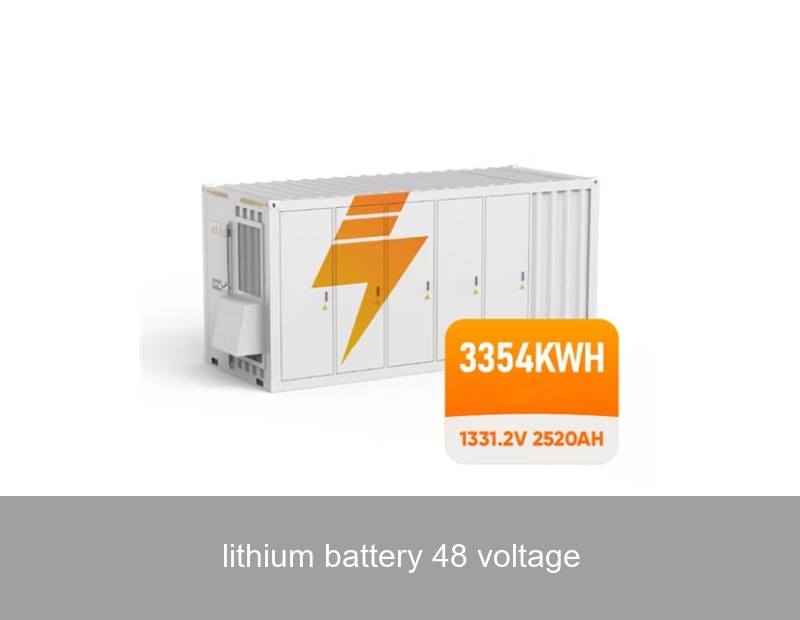
Have you ever wondered what's quietly powering the modern shift towards energy independence? From sleek electric vehicles to backup systems for bustling supermarkets, a common technological thread is emerging: the lithium battery 48 voltage system. This isn't just a random number; 48V represents a sweet spot in electrical engineering, offering a powerful, safe, and highly efficient solution for a wide range of applications. As industries and homeowners alike seek smarter, more sustainable power, understanding why 48V lithium technology is becoming the backbone of advanced energy storage is crucial. Let's delve into the phenomenon, data, and real-world impact of this versatile power platform.
Table of Contents
- The Voltage Sweet Spot: Why 48V?
- Phenomenon: The Silent Revolution in Power Systems
- Data & Advantages: The Hard Numbers Behind 48V Lithium
- Case Study: Powering Commerce with Resilience
- Expert Insights: The Future is Modular and Intelligent
- Highjoule's 48V Ecosystem: Engineered for Real-World Demands
The Voltage Sweet Spot: Why 48V?
You might ask, "Why 48 volts? Why not 24V or 72V?" The answer lies in a perfect balance of safety, efficiency, and power. In many regions, voltages under 50V are considered Safety Extra-Low Voltage (SELV), significantly reducing risks associated with installation, maintenance, and potential electrical faults. This means lower insurance costs and fewer regulatory hurdles. But 48V doesn't sacrifice capability for safety. It delivers substantially more power than 12V or 24V systems with lower current for the same wattage, minimizing energy losses as heat in the wiring. This makes it exceptionally efficient for transmitting power over distances, a key requirement for commercial buildings, microgrids, and larger residential properties. It's the ideal bridge between low-voltage convenience and high-voltage performance.
Phenomenon: The Silent Revolution in Power Systems
Walk into a modern data center, a new residential community with solar rooftops, or a state-of-the-art warehouse. The hum you hear might very well be from a 48V lithium battery bank. This technology is driving a quiet revolution, moving beyond niche applications to become a standard. The phenomenon is fueled by the global push for decarbonization, rising electricity costs, and an increasing frequency of grid instability. Businesses are no longer content with noisy, maintenance-heavy diesel generators as backup. Homeowners want to maximize their solar investment, not send excess power back to the grid for pennies. The 48V lithium battery system sits at the heart of solving these challenges, enabling efficient energy storage, seamless backup power, and intelligent energy management.

Image Source: Unsplash - A representative image of a modern lithium-ion battery energy storage system.
Data & Advantages: The Hard Numbers Behind 48V Lithium
Let's talk specifics. Compared to traditional lead-acid batteries, a lithium battery 48 voltage system offers transformative advantages backed by clear data:
- Higher Energy Density: Lithium batteries pack 3-4 times more energy into the same space as lead-acid. This means a smaller footprint for the same power, a critical factor for space-constrained commercial sites.
- Longer Lifespan: Where a quality lead-acid battery may offer 500-1000 deep cycles, modern lithium iron phosphate (LFP) batteries, common in 48V configs, routinely deliver 4000-6000 cycles to 80% capacity. This translates to years, often over a decade, of reliable service.
- Superior Efficiency: Lithium systems boast round-trip efficiency of 95-98%, meaning almost all the energy you put in is available for use. Lead-acid often loses 15-20% to heat. Over a system's lifetime, this efficiency gap represents massive energy savings.
- Reduced Maintenance: Lithium batteries require no regular watering, equalization charges, or acid checks. This slashes operational costs and downtime, a key consideration for industrial users.
According to a report by the U.S. Department of Energy, the cost of lithium-ion batteries has fallen by nearly 90% in the last decade, making this high-performance technology increasingly accessible.
Case Study: Powering Commerce with Resilience
Let's look at a real-world application. A mid-sized supermarket chain in Southern Germany faced two major issues: frequent short-term grid fluctuations that threatened their sensitive refrigeration systems, and high demand charges from their utility. Their goal was to ensure product safety, reduce operational costs, and incorporate their existing rooftop solar panels into a more resilient system.
The Solution: They deployed a 480 kWh energy storage system built on a modular 48V lithium battery architecture. The system was paired with advanced inverters for seamless grid interaction.
| Metric | Result |
|---|---|
| Peak Demand Reduction | Over 30% reduction in monthly demand charges |
| Solar Self-Consumption | Increased from 35% to over 80% |
| Backup Power | Critical refrigeration secured for up to 8 hours during an outage |
| ROI Period | Estimated at 4.2 years based on energy savings and avoided losses |
This case exemplifies how a 48V lithium system isn't just a backup; it's an active financial and operational asset, providing both resilience and rapid return on investment.
Expert Insights: The Future is Modular and Intelligent
The true power of a 48V lithium system lies in its scalability and intelligence. Think of it as building with LEGO blocks. Starting with a single 48V battery module, you can seamlessly stack capacity to meet exact needs, from a modest home setup to a multi-megawatt-hour industrial storage facility. This modularity future-proofs investments. But hardware is only half the story. The most advanced systems, like those developed by Highjoule, integrate sophisticated Energy Management Systems (EMS). This software is the brain, constantly analyzing energy usage patterns, weather forecasts, and grid signals to autonomously optimize when to store, discharge, or conserve power. It turns a simple battery into an intelligent energy hub.

Image Source: Unsplash - Commercial solar installation with potential for battery storage.
Highjoule's 48V Ecosystem: Engineered for Real-World Demands
At Highjoule, with nearly two decades of experience since 2005, we've engineered our VoltCore 48V Series precisely to meet the demands highlighted above. Our systems are built on the stable and safe Lithium Iron Phosphate (LFP) chemistry, housed in modular, IP-rated enclosures for easy indoor or outdoor deployment. What sets the Highjoule solution apart is the NeuroGrid AI platform. This proprietary EMS doesn't just react; it learns and predicts your energy profile, ensuring your 48V lithium battery bank delivers maximum financial and operational value every single day.
Whether for a commercial facility looking to shave peak demand, an industrial plant needing process-critical backup, a residential community aiming for energy independence, or a complex microgrid project, our 48V platform provides the scalable, intelligent foundation. We don't just sell batteries; we deliver certified, turnkey power resilience solutions backed by global service and support.
As the International Energy Agency notes in its Batteries and Secure Energy Transitions report, secure and sustainable battery supply chains are critical. Highjoule is committed to this principle, ensuring robust and traceable component sourcing for long-term reliability.
Ready to Explore Your Energy Potential?
The transition to smarter, more resilient power is underway. A 48V lithium battery system could be the cornerstone of your energy strategy, but its effectiveness depends on design, integration, and intelligence. What is the single biggest energy challenge your home or business faces today—is it cost, reliability, or sustainability? Identifying that is the first step toward a solution.
 Inquiry
 Online Chat