


Equipos de Energía Renovable: Your Guide to Sustainable Power Systems
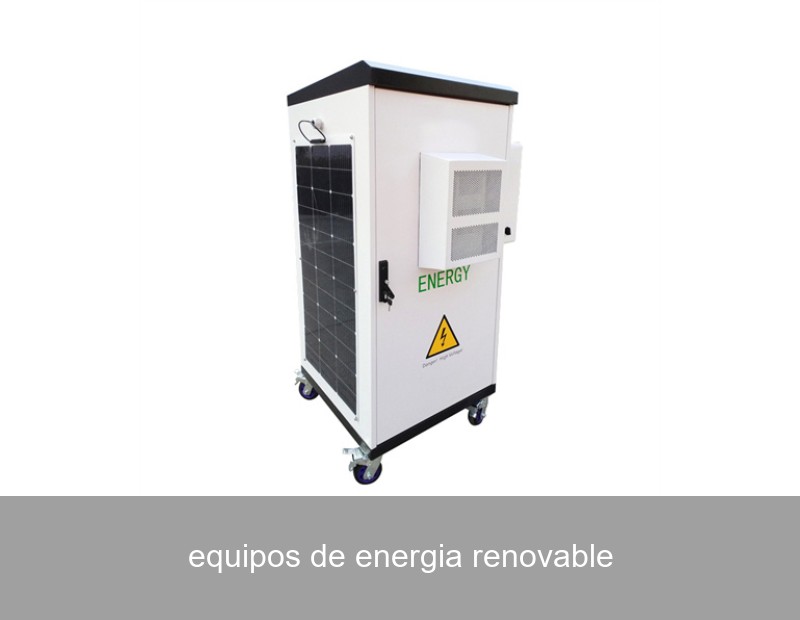
Have you ever looked at your rising electricity bill and wondered if there's a better, more sustainable way to power your home or business? You're not alone. Across Europe and the US, a quiet revolution is underway, driven by advanced equipos de energía renovable (renewable energy equipment). This isn't just about solar panels on a roof anymore; it's about intelligent, integrated systems that capture, store, and manage clean energy seamlessly. As a product technology expert at Highjoule, I've seen firsthand how the right technology can transform energy from a costly utility into a strategic asset. Let's explore what modern renewable energy systems truly entail and how they are reshaping our energy landscape.
Table of Contents
- What Are Modern Equipos de Energía Renovable?
- The Core Challenge: Intermittency and Intelligent Management
- The Heart of the System: The Battery Energy Storage System (BESS)
- A Real-World Case: Stability for a Spanish Manufacturing Plant
- Highjoule's Integrated Approach to Renewable Energy Systems
- Future Trends: Smarter Grids and AI-Driven Management
What Are Modern Equipos de Energía Renovable?
Gone are the days when renewable energy equipment was a simple, standalone component. Today's equipos de energía renovable form a sophisticated ecosystem. Think of it as a symphony orchestra:
- Generation (The Musicians): Solar PV arrays, wind turbines, and sometimes hydro.
- Storage (The Memory/Score): Battery Energy Storage Systems (BESS) that hold excess energy for later use.
- Management (The Conductor): Advanced inverters, energy management systems (EMS), and software that optimize every kilowatt-hour.
- Integration (The Concert Hall): Hardware and software that connects this system safely and efficiently to your property's electrical panel and, optionally, the public grid.
This integrated approach is key. A solar panel without storage often wastes surplus energy. A battery without intelligent software can degrade quickly or fail to capture financial opportunities. At Highjoule, we design every system with this holistic synergy in mind.
The Core Challenge: Intermittency and Intelligent Management
The sun doesn't always shine, and the wind doesn't always blow. This intermittency is the fundamental hurdle for renewables. The data is clear: a typical residential solar system without storage might only directly cover 30-40% of a household's total energy consumption, with the rest exported to the grid or used inefficiently in real-time. For commercial sites, this variability can lead to significant demand charges from utilities, eroding the financial benefits of solar.
The solution isn't just adding more panels; it's about adding intelligence and storage. This transforms intermittent generation into a reliable, dispatchable power source.

Image Source: Unsplash. A modern commercial renewable energy installation featuring solar generation and integrated storage units.
The Heart of the System: The Battery Energy Storage System (BESS)
If the solar panels are the muscle, the BESS is the brain and the pantry. Modern lithium-ion batteries, particularly Lithium Iron Phosphate (LFP), have become the standard for safety, longevity, and performance. But the real magic lies in the Battery Management System (BMS) and the system-level Energy Management System (EMS).
These sophisticated software layers do more than prevent overcharging. They:
- Perform peak shaving: Using stored energy during periods of high grid demand to avoid costly tariffs.
- Enable load shifting: Charging batteries with cheap, abundant solar or off-peak grid power to use during expensive peak hours.
- Provide backup power: Seamlessly keeping critical loads running during a grid outage.
- Participate in grid services: In some markets, aggregated storage systems can help stabilize the grid and generate revenue.
A Real-World Case: Stability for a Spanish Manufacturing Plant
Let's move from theory to practice. A concrete example from Southern Europe illustrates the transformative power of integrated equipos de energía renovable.
The Challenge: A mid-sized automotive parts manufacturer in Valencia, Spain, faced two major issues: volatile energy costs, which comprised nearly 18% of their operational overhead, and occasional grid sags that disrupted sensitive machinery, causing costly production halts.
The Solution: Highjoule engineered a turnkey system featuring a 550 kWp rooftop solar array coupled with a 480 kWh containerized BESS, all managed by our proprietary HiveMind EMS. The system was designed for three primary modes: self-consumption optimization, peak demand shaving, and uninterrupted power supply (UPS) for critical production lines.
The Data-Driven Outcome: Within the first year of operation:
| Metric | Result |
|---|---|
| Grid Energy Consumption | Reduced by 68% |
| Peak Demand Charges | Reduced by 42% |
| Production Downtime from Grid Issues | Eliminated (0 incidents) |
| Annual CO2 Emissions | Reduced by 312 metric tons |
| Estimated Payback Period | 4.2 years |
This case, documented in our portfolio, shows that modern renewable systems are not just an environmental choice but a robust financial and operational one. For more on grid stability challenges, see this report from the International Renewable Energy Agency (IRENA).
Highjoule's Integrated Approach to Renewable Energy Systems
Since 2005, Highjoule's mission has been to move beyond selling components to delivering guaranteed energy outcomes. Our product portfolio is built for the needs of the European and North American markets, focusing on intelligence, safety, and scalability.
- HiveSeries BESS: Our flagship storage solutions, from residential HiveHome units to industrial-scale HiveGrid containers. All feature UL/IEC-certified LFP chemistry and our multi-layered BMS for maximum safety and a 10+ year design life.
- HiveMind Energy Management Platform: This cloud-based AI software is the true differentiator. It doesn't just monitor; it forecasts energy production and consumption, automatically choosing the most economical and efficient operating mode for your system every minute of the day.
- Full-System Integration: We act as the single point of responsibility, providing compatible, high-efficiency solar inverters, smart meters, and all balance-of-system components. Our technical teams handle design, grid compliance (like G99 in the UK or UL 9540 in the US), installation, and ongoing performance monitoring.
Whether it's a residential homeowner seeking energy independence in California, a commercial business in Germany aiming to fix its energy costs, or an island microgrid project in the Mediterranean, our systems are tailored to deliver resilience and return on investment.

Image Source: Unsplash. A sleek, modern home battery storage unit, similar to residential solutions like Highjoule's HiveHome, displaying energy metrics.
Future Trends: Smarter Grids and AI-Driven Management
The evolution of equipos de energía renovable is accelerating. We are moving towards true virtual power plants (VPPs), where thousands of distributed storage systems are aggregated to act as a single, flexible power resource for the grid. This requires even more advanced communication protocols and AI. Furthermore, the rise of bidirectional charging with electric vehicles (V2H/V2G) will turn EVs into mobile storage units, further integrating our transportation and energy ecosystems. You can explore the potential of VPPs in this article from the U.S. Department of Energy.
The technology is here, and the economic case is stronger than ever. But the most common question I get from potential clients isn't about the tech specs—it's about where to start.
 Inquiry
 Online Chat