


Unlocking Energy Independence: The Power of a 3kVA Lithium Battery BESS for Your Home or Business
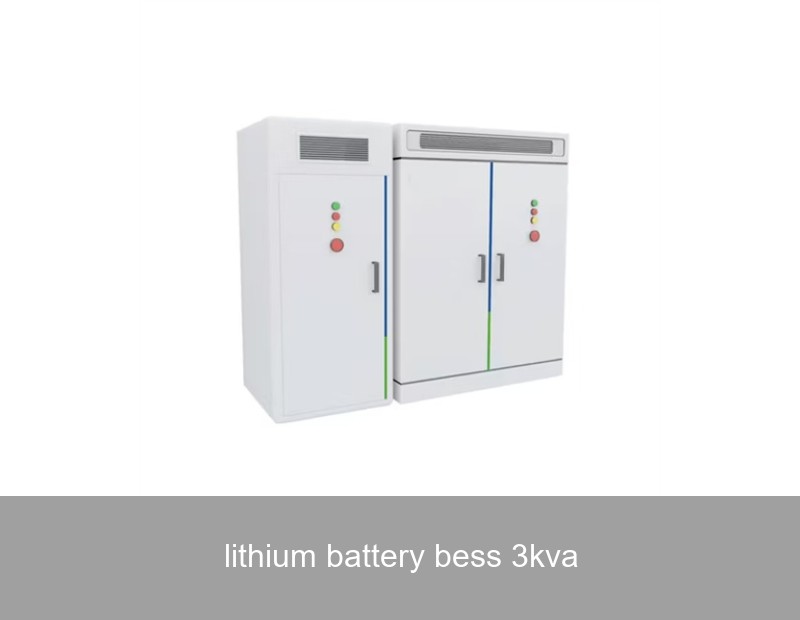
Have you ever watched your electricity meter spin wildly during peak hours, or felt a pang of anxiety as storm clouds gather, threatening a power outage? You're not alone. Across Europe and the U.S., homeowners and small business operators are increasingly seeking control over their energy. The solution gaining remarkable traction is a lithium battery BESS 3kVA system. This compact yet powerful technology is revolutionizing how we think about backup power and energy savings. But what exactly does it do, and is it the right fit for your needs? Let's demystify this technology and explore how it can be a game-changer for energy resilience and efficiency.
Table of Contents
- What is a 3kVA Lithium Battery BESS?
- Why the 3kVA Rating Matters: Power vs. Energy
- Key Benefits of a 3kVA Home & Business Energy System
- A Real-World Case Study: The Berlin Bakery
- Choosing the Right System: Beyond the Basics
- The Highjoule Approach: Smart, Integrated Solutions
What is a 3kVA Lithium Battery BESS?
Let's break down the terminology. BESS stands for Battery Energy Storage System. It's more than just a battery; it's an integrated unit that includes lithium-ion battery cells, a sophisticated battery management system (BMS) for safety and longevity, and an inverter/charger. The 3kVA (kilo-Volt-Ampere) refers to the system's power output capacity—essentially, how much electrical load it can support at once. A 3kVA system can continuously deliver around 3,000 watts of power, which is sufficient to run essential circuits in a home or small business.
Think of it this way: the battery capacity (measured in kilowatt-hours, kWh) is like the size of your fuel tank, determining how long you can run. The 3kVA power rating is like the engine's horsepower, determining what appliances you can start and run simultaneously—your refrigerator, lights, internet router, and a coffee machine, for instance. Lithium-ion technology is the preferred choice due to its high energy density, long cycle life (often over 6,000 cycles), and rapid response time.
Why the 3kVA Rating Matters: Power vs. Energy
This is a crucial distinction many first-time buyers overlook. A common question is: "How long will it last?" The answer depends entirely on what you plug into it.
| Appliance | Approximate Power (Watts) | Runtime on a 5kWh battery with 3kVA inverter* |
|---|---|---|
| LED Lights (10x) | 100W | ~50 hours |
| Refrigerator | 150-400W | ~12-33 hours |
| Laptop | 50W | ~100 hours |
| Electric Kettle | 2,500-3,000W | ~1.5-2 hours |
*Runtime is simplified; actual performance depends on inverter efficiency and battery state of charge.
As the table shows, a lithium battery BESS 3kVA with a decent battery capacity is perfectly sized for essential load backup. It provides enough surge power to start motor-driven appliances like fridges or well pumps, while its continuous power covers the critical basics. This makes it an ideal entry point for residential energy resilience and a robust solution for small commercial critical loads.
Key Benefits of a 3kVA Home & Business Energy System
- Seamless Backup Power: During a grid outage, the system automatically switches to battery power in milliseconds, keeping your lights on and business operational.
- Peak Shaving: In regions with time-of-use (TOU) tariffs (common in California, Germany, Italy), you can use stored battery power during expensive peak hours, slashing your electricity bills.
- Solar Self-Consumption Maximization: For homes with existing solar PV, a BESS stores excess solar energy generated during the day for use at night, increasing energy independence from 30-40% to 70% or more. U.S. Department of Energy highlights this as a key driver for residential storage.
- Grid Support & Sustainability: By reducing draw from the grid during peaks, you contribute to a more stable and greener electricity network.

Image Source: Unsplash (Representative image of a modern home battery installation)
A Real-World Case Study: The Berlin Bakery
Let's move from theory to practice. Consider "Brotzeit," a family-owned artisan bakery in Berlin, Germany. Their challenges were twofold: unpredictable short power outages disrupting their proofing chambers and ovens, and high energy costs during morning operational peaks.
In early 2023, they installed a lithium battery BESS 3kVA system coupled with a 20kWh battery bank. The results were quantified within the first year:
- Zero Production Loss: The system seamlessly bridged 4 grid outages (totaling 11 hours), preventing an estimated €8,500 in lost product and sales.
- Cost Savings: By strategically discharging the battery during peak morning hours (6-9 AM), they reduced their grid consumption during the highest tariff periods by approximately 80%, saving an average of €280 per month on their energy bill.
- ROI Timeline: With available German subsidy programs for commercial storage, their projected payback period is under 5 years, not accounting for future potential price increases.
This case exemplifies how a correctly sized system delivers tangible financial and operational security.
Choosing the Right System: Beyond the Basics
Not all 3kVA BESS are created equal. When evaluating options, consider these critical factors:
- Scalability: Can you easily add more battery modules later if your needs grow?
- Software & Intelligence: Does the system have smart energy management that learns your usage patterns and automatically optimizes for cost or self-consumption?
- Grid Services Compatibility: In some U.S. markets, systems can participate in virtual power plant (VPP) programs to earn revenue by supporting the grid. Is your hardware capable?
- Warranty & Degradation: Look for a long-term warranty (10+ years) that guarantees a high percentage of original capacity (e.g., 70% after 10 years).
The Highjoule Approach: Smart, Integrated Solutions
At Highjoule, with nearly two decades of expertise since 2005, we understand that a storage system is a long-term investment. Our HES-G3 Home Energy Stack series is engineered with the 3kVA power class user in mind. It's not just a battery box; it's an integrated energy management platform.
Our systems feature modular lithium iron phosphate (LiFePO4) batteries, renowned for their safety and ultra-long cycle life. The intelligent inverter hub allows for seamless integration with both new and existing solar arrays. Through the Highjoule Energy OS, users can monitor, control, and optimize their energy flow via an intuitive app, setting preferences for backup priority, cost savings, or green energy usage.
For small businesses like the Berlin bakery, our Commercial ESS Lite solutions offer the same robust 3kVA power backbone with enhanced business-grade monitoring and three-phase compatibility options, ensuring that critical operations never miss a beat. We provide full lifecycle support, from initial site assessment and regulatory guidance to installation and ongoing performance monitoring, making the journey to energy independence smooth and reliable.

Image Source: Unsplash (Representative image of energy system monitoring)
So, as you contemplate taking control of your energy future, what will be the first load you choose to secure with your own lithium battery BESS 3kVA system? Is it the peace of mind that comes with an illuminated home during a storm, or the financial certainty of a predictable energy bill for your business?
 Inquiry
 Online Chat