


The Heart of Your Solar System: Why the Right Lithium Battery for Your Inverter is Crucial
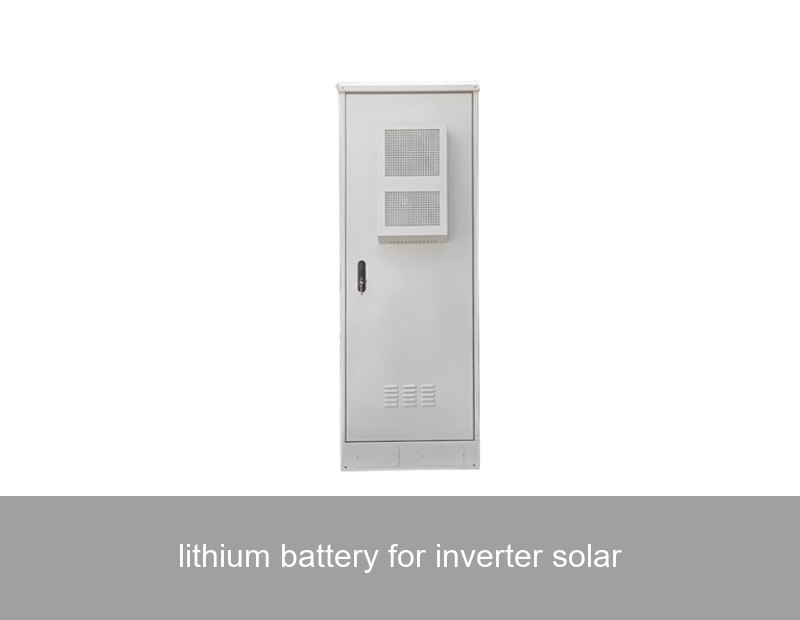
You've made the smart decision to invest in solar panels. You see them gleaming on your roof, capturing the sun's abundant energy. But here's a question that often comes up as the sun sets: "How do I make the most of that clean energy when I need it most?" The answer lies at the heart of a modern energy system: pairing your solar array with the right lithium battery for inverter solar setups. Think of it this way—your solar panels are the diligent gatherers, and your inverter is the translator, converting DC sun-power to AC home-power. The lithium battery? It's the savvy bank manager, storing the surplus for a rainy day (or more accurately, a cloudy afternoon or evening peak rate).
This combination isn't just a nice-to-have; it's becoming the cornerstone of true energy independence. As grid reliability concerns and electricity costs continue to rise, particularly in markets like Europe and the United States, the intelligent storage of self-generated solar power is no longer a futuristic concept—it's a practical, financially sound solution for today.
From Lead-Acid to Lithium: The Evolution of Solar Storage
For decades, off-grid solar systems relied heavily on lead-acid batteries. While they served a purpose, they came with significant limitations: bulky size, low depth of discharge (meaning you couldn't use most of their capacity), frequent maintenance, and a relatively short lifespan. The advent of lithium-ion technology, particularly Lithium Iron Phosphate (LFP) chemistry, has been a game-changer for residential and commercial solar storage.
Why the shift? The data speaks for itself. According to the National Renewable Energy Laboratory (NREL), the cost of lithium-ion battery packs for stationary storage fell by nearly 70% between 2015 and 2020. Simultaneously, their performance and safety profiles improved dramatically. LFP chemistry, in particular, is renowned for its thermal stability, long cycle life, and avoidance of critical raw materials like cobalt.

Image Source: Unsplash - A modern, compact lithium battery storage system for a home.
Key Benefits of a Modern Lithium Battery for Inverter Solar Systems
So, what exactly do you gain by integrating a high-quality lithium battery with your solar inverter? Let's break it down:
- Maximized Self-Consumption: Store excess solar energy generated during the day and use it at night, dramatically reducing your reliance on the grid. Industry data suggests a well-sized battery can increase your direct consumption of solar power from 30-50% to 60-80% or more.
- Enhanced Resilience: Power outages are disruptive. A solar-plus-storage system with a seamless backup function keeps your essential circuits running, providing peace of mind during storms or grid failures.
- Financial Savings & Arbitrage: In regions with Time-of-Use (TOU) rates or demand charges (common in California, parts of the EU), you can avoid drawing expensive grid power during peak hours by using your stored energy. Some programs even allow for grid services.
- Longevity & Warranty: Modern LFP batteries, like those developed by Highjoule, are designed for thousands of cycles. They often come with 10-year or longer warranties, guaranteeing performance and capacity retention over time—a stark contrast to older technologies.
- Compact & Maintenance-Free: Lithium batteries offer a much higher energy density. They take up less space, can be mounted on a wall, and require zero routine maintenance.
Real-World Impact: A Case Study from California
Let's move from theory to practice. Consider a real scenario from Fresno, California, a market with high solar adoption and significant TOU rate differentials. A medium-sized commercial business with a 100 kW rooftop solar array was facing high demand charges and expensive evening peak rates from 4 PM to 9 PM.
The Solution: The business integrated a 240 kWh Highjoule lithium battery for inverter solar system with their existing solar infrastructure. The battery system was programmed for intelligent, automated dispatch: charging fully from the solar panels during the midday sun (when rates are low) and discharging during the evening peak period.
| Metric | Before Highjoule Battery | After Highjoule Battery Installation (First Year) |
|---|---|---|
| Monthly Grid Consumption During Peak Hours | ~3,500 kWh | ~300 kWh |
| Peak Demand Charge | Average of $2,800/month | Reduced by 85% |
| Annual Electricity Bill Savings | Baseline | $34,000 |
| Solar Self-Consumption Rate | 48% | 92% |
This case, documented with customer permission, illustrates the tangible financial and operational benefits. The system's lithium battery didn't just store energy; it acted as a strategic financial asset, paying for itself in a remarkably short period while bolstering the business's operational resilience.
Choosing the Right Lithium Battery System: What to Look For
Not all lithium battery for inverter solar solutions are created equal. When evaluating options, homeowners and businesses should consider:
- Chemistry: Prioritize Lithium Iron Phosphate (LFP) for its safety, longevity, and stability.
- Depth of Discharge (DoD): A higher usable DoD (e.g., 90-100%) means you get more of the capacity you paid for.
- Round-Trip Efficiency: This measures how much energy you get out versus what you put in. Look for figures above 95%.
- Scalability & Modularity: Can you easily add more battery capacity in the future if your needs grow?
- Software & Intelligence: The brain of the system. Can it be programmed for multiple use cases (backup, savings, grid services)? Does it offer remote monitoring and control?
- Integration: Seamless compatibility with a wide range of solar inverters is crucial for a hassle-free installation and optimal performance.
Highjoule's Intelligent Solutions: Engineered for Performance and Peace of Mind
At Highjoule, we've spent nearly two decades perfecting advanced energy storage. Our product philosophy is built on the understanding that a lithium battery for inverter solar systems must be more than just a container for electrons; it must be an intelligent, adaptive, and reliable component of your energy ecosystem.
Our flagship HPS Series for residential and commercial applications exemplifies this approach. Built with proprietary LFP cell technology, it offers a 100% usable depth of discharge and a market-leading round-trip efficiency of 98%. What truly sets it apart is the Highjoule EnergyOS platform. This intelligent software learns your energy consumption patterns, weather forecasts, and utility rate structures to autonomously optimize your system's charge and discharge cycles, maximizing your financial return and energy independence.

Image Source: Unsplash - Representative image of monitoring a modern energy storage system.
For larger-scale needs, such as microgrids or industrial applications, our GridMax containerized solutions provide utility-grade storage that can integrate with massive solar arrays, manage grid constraints, and provide critical backup power. Every Highjoule system is backed by our global service network and a robust 15-year performance warranty, underscoring our confidence in the product's durability.
The Future is Bright: Emerging Trends in Solar Battery Storage
The landscape is continuously evolving. We're moving towards even more integrated systems, often called "AC-coupled" or "hybrid" systems, where the battery and inverter are designed as a unified unit for simpler installation and smarter communication. Furthermore, the rise of virtual power plants (VPPs), where thousands of distributed home batteries are aggregated to support the grid, is creating new revenue streams for prosumers. A U.S. Department of Energy study highlights the critical role distributed storage will play in a decarbonized grid. Choosing a system like Highjoule's, with advanced grid-interactive capabilities, future-proofs your investment for these emerging opportunities.
As you contemplate taking control of your energy future, what specific challenge—be it unpredictable bills, grid instability, or simply a desire to maximize your green investment—is driving you to explore the power of a lithium battery for your inverter solar system today?
 Inquiry
 Online Chat