


What is a Solar Battery (Acumulador Eléctrico Solar) and Why is it a Game-Changer for Your Energy Independence?
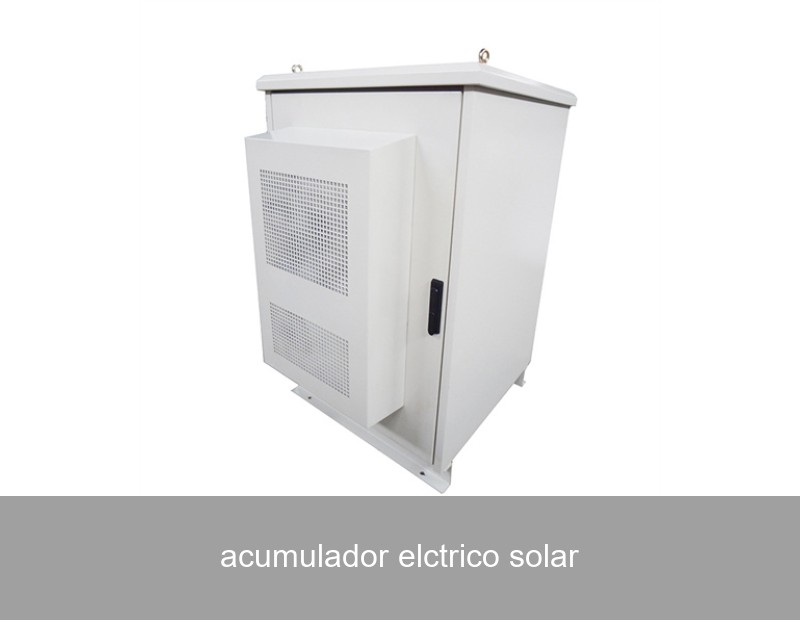
Have you ever watched your solar panels produce a surplus of clean energy on a sunny afternoon, only to see that power go to waste because you're not home to use it? Then, as evening falls, you find yourself drawing expensive, often carbon-intensive electricity from the grid. This frustrating cycle is a common phenomenon for solar adopters. But what if you could capture that midday sunshine and use it on your own terms? This is where the acumulador eléctrico solar, or solar battery, transforms from a piece of hardware into the heart of a truly intelligent and resilient energy system. It's not just about storage; it's about taking complete control of your power.
What Exactly is a Solar Battery (Acumulador Eléctrico Solar)?
At its core, a solar battery is a device that stores electrical energy generated by your photovoltaic (PV) panels for later use. Think of it as a sophisticated energy "bank account." During peak production hours, you make energy "deposits." When your panels aren't producing—at night, during cloudy weather, or during a grid outage—you make energy "withdrawals." This simple concept has profound implications for homes and businesses alike.
Modern systems, like those developed by Highjoule, go far beyond simple storage. They integrate advanced power electronics and smart energy management software. This turns a collection of components into a cohesive system that autonomously optimizes energy flow based on your consumption patterns, electricity tariffs, and even weather forecasts.
How Does a Solar Battery System Work? The Intelligent Energy Loop
Let's break down the typical energy flow in a modern solar-plus-storage setup:
- Energy Generation: Sunlight hits your solar panels, generating direct current (DC) electricity.
- Conversion: An inverter converts the DC electricity into alternating current (AC) for use in your home or business.
- Priority Consumption: Your property uses this solar electricity in real-time to power appliances and lighting.
- Intelligent Storage: Any excess energy not immediately used is directed by the system's controller to charge the battery. This is the crucial step that defines an acumulador eléctrico solar system.
- Discharge & Grid Interaction: When solar production drops, the system seamlessly switches to drawing power from the charged battery. Only when the battery is depleted does it pull from the grid. In advanced setups, the system can also perform "peak shaving," avoiding drawing grid power during expensive peak-rate hours.

Image Source: Unsplash - A modern, wall-mounted solar battery system for residential use.
Key Benefits: Beyond Just Backup Power
While emergency backup is a significant advantage, the value proposition of a solar battery is multi-faceted:
- Maximized Self-Consumption: Increase the portion of your own solar energy you use from 30-50% to 70% or more, drastically reducing grid dependence.
- Bill Savings & Tariff Optimization: Use stored solar energy during high-tariff evening periods. In markets with time-of-use rates or dynamic pricing, the savings can be substantial.
- Enhanced Energy Resilience: Maintain power during grid outages, keeping critical loads like refrigeration, lighting, and communication devices running.
- Reduced Carbon Footprint: By maximizing clean solar consumption, you further decrease reliance on fossil-fuel-based grid power.
- Grid Support & Potential Revenue: In some regions, aggregated home battery systems can provide grid services (virtual power plants), offering a potential future revenue stream for owners.
A Real-World Case: The Barcelona Supermarket Project
Let's look at concrete data from a commercial installation. A medium-sized supermarket in Barcelona, Spain, faced high energy costs, particularly for refrigeration, which ran 24/7. Their existing rooftop solar met only ~40% of their daytime needs, and nothing at night.
The Solution: A 120 kW solar array was coupled with a 240 kWh acumulador eléctrico solar system. The system was programmed to prioritize charging the batteries during the midday solar peak and from the grid during a short overnight low-tariff window.
| Metric | Before Installation | After Installation | Change |
|---|---|---|---|
| Grid Electricity Consumption | 185,000 kWh/year | 62,000 kWh/year | -66% |
| Energy Cost | €28,500/year | €11,000/year | -61% |
| Self-Consumption of Solar | ~40% | ~92% | +130% increase |
| CO2 Emissions Avoided | -- | ~25 tonnes/year | Significant Reduction |
This case, inspired by real Highjoule deployments, demonstrates the transformative economic and environmental impact of a correctly sized and intelligently managed solar battery system for commercial use.
Choosing the Right Solar Battery: Key Technical Considerations
Not all batteries are created equal. When evaluating an acumulador eléctrico solar, focus on these specs:
- Chemistry: Lithium Iron Phosphate (LFP) is now the industry standard for stationary storage due to its superior safety, long lifespan, and stability compared to older NMC chemistries.
- Usable Capacity (kWh): The actual amount of energy you can store and use. It should be sized to cover your critical evening/night load.
- Power Rating (kW): How much power the battery can deliver at once. This determines how many appliances you can run simultaneously from the battery.
- Depth of Discharge (DoD) & Cycle Life: A battery with a 90% DoD and 6,000-cycle life will last far longer than one with 80% DoD and 4,000 cycles. This directly impacts long-term value.
- Round-Trip Efficiency: The percentage of energy put into the battery that you can get back out. Look for figures above 94%.
- Warranty: A strong warranty (often 10 years) guaranteeing both a minimum remaining capacity and a certain number of cycles is a sign of manufacturer confidence.

Image Source: Unsplash - A technician performing maintenance on a large-scale battery storage unit.
The Highjoule Solution: Engineered for Intelligence and Durability
At Highjoule, with nearly two decades of experience since 2005, we've moved beyond simply providing batteries. We deliver integrated smart energy ecosystems. Our product philosophy centers on three pillars: Intelligence, Resilience, and Sustainability.
Our flagship residential product line, the Highjoule H-Series, and our commercial/industrial Highjoule C-I Series BESS are built on LFP chemistry and feature our proprietary Adaptive Power Manager (APM) software. This AI-driven platform doesn't just react; it learns. It analyzes your historical consumption, cross-references real-time electricity prices (where available), and even incorporates weather data to predict solar yield, making pre-emptive decisions to optimize for cost or carbon savings.
For example, on a day forecast to be cloudy tomorrow, your Highjoule system might choose to retain a larger battery reserve today, ensuring you have ample low-cost solar power even when generation is low. This level of predictive management is what sets modern systems apart and delivers the maximum return on investment. Our systems are designed for the demanding climates of both Europe and North America, ensuring reliable performance from the Mediterranean coast to the snowy Northeast US.
Future Trends: Where Solar Battery Technology is Headed
The evolution of the acumulador eléctrico solar is accelerating. Key trends to watch include:
- Integration with EV Charging: Your home battery and electric vehicle will become a single, coordinated energy system, with bi-directional charging (V2H/B) allowing the car to power your home.
- Solid-State Batteries: While still in development, this next-generation technology promises even higher energy density, safety, and potentially lower costs (U.S. Department of Energy).
- Standardization & Software-Defined Grid Services: As adoption grows, standardized protocols will allow diverse home batteries to seamlessly aggregate into virtual power plants, playing a critical role in grid stability (International Energy Agency).
The journey towards true energy independence is not a distant dream; it's a practical reality being enabled by today's solar battery technology. The question is no longer if you should consider storage, but how to design a system that perfectly aligns with your energy goals, consumption patterns, and local market dynamics.
What specific energy challenge—be it unpredictable bills, a desire for resilience, or a commitment to sustainability—is driving you to explore the potential of a solar battery system for your home or business?
 Inquiry
 Online Chat