


The Unsung Hero of Modern Energy: Lithium Battery in Battery Storage Systems
Think about the last time you charged your phone or laptop. That simple, daily action is powered by a technological marvel that's quietly reshaping our entire energy landscape: the lithium battery. But its role extends far beyond our pockets. When we talk about the clean energy transition—powering homes with solar, keeping the grid stable, or running factories on renewable power—the true game-changer is the lithium battery in battery energy storage systems (BESS). This isn't just a battery; it's the intelligent heart of a resilient, efficient, and sustainable power ecosystem. For businesses and homeowners alike, understanding this core component is key to unlocking energy independence and cost savings.
Table of Contents
The Phenomenon: From Intermittent to Uninterruptible Power
We all know the challenge: the sun doesn't always shine, and the wind doesn't always blow. This intermittency has been the Achilles' heel of renewable energy. Enter the modern lithium battery in battery storage systems. These systems do much more than just "store electricity." They act as a buffer, a shock absorber, and a strategic energy reserve. Imagine a solar-powered home. During the day, excess solar energy doesn't go to waste; it charges the lithium-ion battery bank. In the evening, during peak grid demand or a power outage, the system seamlessly switches to battery power. This transforms a variable energy source into a reliable, 24/7 power solution. For commercial and industrial users, this capability isn't just convenient—it's critical for avoiding costly downtime and managing astronomical demand charges from the grid.

A modern containerized BESS, where thousands of individual lithium cells work in harmony to provide grid-scale storage. Credit: Unsplash.
The Data: Why Lithium Reigns Supreme
Not all batteries are created equal. While other chemistries exist, lithium-ion has become the dominant force in stationary storage for compelling, data-driven reasons. Let's break down the key advantages:
| Metric | Lithium-Ion Advantage | Impact on Storage System |
|---|---|---|
| Energy Density | High (150-250 Wh/kg) | More energy stored in less space, crucial for space-constrained sites. |
| Round-Trip Efficiency | High (90-95%) | Minimal energy is lost during charge/discharge, maximizing solar self-consumption. |
| Cycle Life | Long (4,000-10,000+ cycles) | Longer system lifespan and better return on investment. |
| Charge/Discharge Rate | Fast | Can rapidly absorb or dispatch power, perfect for grid services and backup. |
According to a U.S. Department of Energy report, lithium-ion batteries make up over 90% of the global grid-scale battery storage market. This dominance is a direct result of their superior performance profile, which has been continuously improved over decades of R&D and mass production, primarily for consumer electronics and electric vehicles.
The Critical "Battery in Battery" Distinction
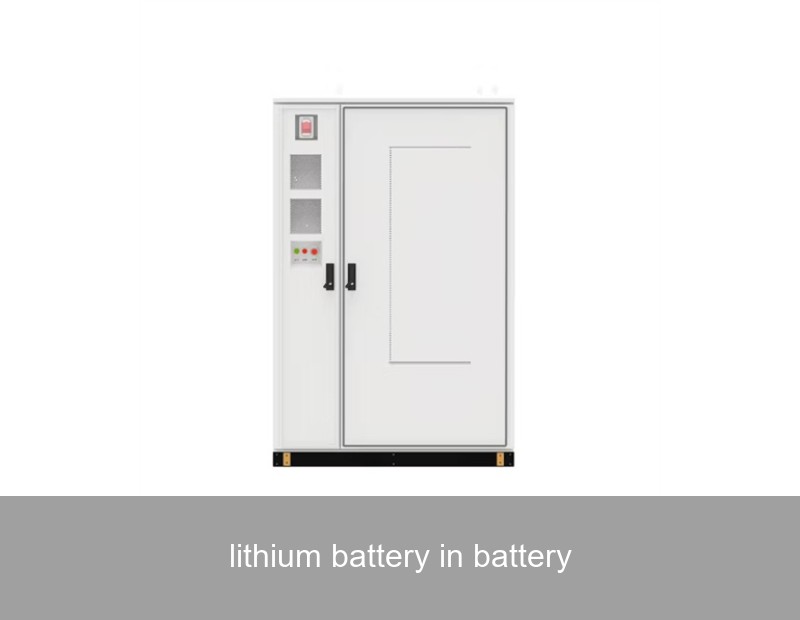
It's vital to understand the hierarchy. A single lithium battery cell (like a standard 18650 or prismatic cell) is the basic unit. Dozens or hundreds of these cells are connected to form a battery module. Multiple modules, combined with a sophisticated Battery Management System (BMS), cooling, and safety hardware, are then integrated into a complete battery storage system. So, the performance and safety of the entire system hinge on the quality of the core lithium cells and the intelligence of the system that manages them. This is where expertise matters most.
A Real-World Case: Powering a German Manufacturing Plant
Let's move from theory to practice. A mid-sized automotive parts manufacturer in Bavaria, Germany, faced two major problems: volatile energy prices and a corporate mandate to reduce carbon emissions. Their rooftop solar array produced ample energy during midday, but their highest energy consumption peaks occurred in the early morning and evening, leading to high grid imports.
The Solution: The company partnered with Highjoule to design and install a tailored 500 kWh / 1000 kWh battery storage system using high-cycle life lithium iron phosphate (LFP) cells, a particularly safe and durable lithium variant. The system was integrated with their existing solar PV and plant energy management system.
The Data-Driven Outcome (after 12 months):
- Self-Consumption of Solar Power: Increased from 35% to over 80%.
- Grid Peak Demand Reduction: Reduced by 40%, slashing capacity charges.
- Energy Cost Savings: Achieved €68,000 in annual savings.
- CO2 Footprint: Reduced by an estimated 185 tonnes per year.
This case exemplifies the transformative power of strategically deploying a lithium battery in battery storage. It wasn't just about backup power; it was an active financial and sustainability asset. The Highjoule system's intelligent software continuously analyzes energy flow, electricity prices, and consumption patterns to decide the most economical moment to charge or discharge the battery.
The Highjoule Insight: Beyond the Cell, The System Intelligence
At Highjoule, we believe that the true value of a lithium battery in battery system is unlocked not just by premium cells, but by the intelligence that surrounds them. Since 2005, we've evolved from providing components to delivering complete, smart energy ecosystems. Our expertise lies in the seamless integration of three core layers:
- The Core (Hardware): We utilize top-tier, automotive-grade LFP and NMC lithium cells, known for their safety and longevity. Our modules are designed for easy serviceability and are housed in robust, passively safe enclosures.
- The Brain (Software): Our proprietary Energy Management System (EMS) is the true differentiator. It uses predictive algorithms and real-time data to optimize every kilowatt-hour for maximum economic return, whether through arbitrage, peak shaving, or providing grid stability services.
- The Integration (Platform): Our systems are built to be agnostic, easily integrating with existing solar inverters, generators, and building management systems. For microgrid applications, this control capability is essential for balancing multiple generation and storage sources.
For a commercial facility manager or a homeowner, this means you're not buying just a battery. You're investing in a automated energy asset that works tirelessly to lower your bills and increase your resilience. Our Highjoule Sentinel residential stack and Highjoule Matrix commercial containerized solutions embody this philosophy, delivering plug-and-play simplicity with grid-grade intelligence.

Home energy independence: Solar panels paired with a wall-mounted lithium battery storage system. Credit: Unsplash.
The Future is Modular and Sustainable
The innovation in lithium battery technology continues at a rapid pace. We are seeing a strong trend towards even safer chemistries like LFP, longer cycle lives, and lower costs per cycle. Furthermore, the concept of second-life batteries—repurposing EV batteries for stationary storage—is gaining traction, promising a more circular economy for energy storage. A study by the National Renewable Energy Laboratory (NREL) explores this potential in depth.
At Highjoule, our system architecture is future-proof. Our modular design allows for capacity expansion as needs grow and facilitates easier maintenance and potential upgrades to newer battery technologies down the line. Sustainability is baked into our design process, considering not just operational emissions, but the entire lifecycle of our products.
The journey to a decarbonized future is complex, but the path is illuminated by intelligent technology. The humble lithium battery in battery systems has evolved into the central nervous system of a new, dynamic, and resilient grid. It empowers you to take control, to predict your costs, and to contribute directly to a sustainable energy landscape.
What could a smart energy storage system optimize for you—is it slashing your facility's peak demand charges, achieving 100% solar self-sufficiency for your home, or providing critical backup for a community microgrid? Let's explore the specific energy challenge you're looking to solve.
 Inquiry
 Online Chat