


Cuánto Sale un Panel Solar para Alimentar una Casa? Uncovering the True Cost of Home Solar Power
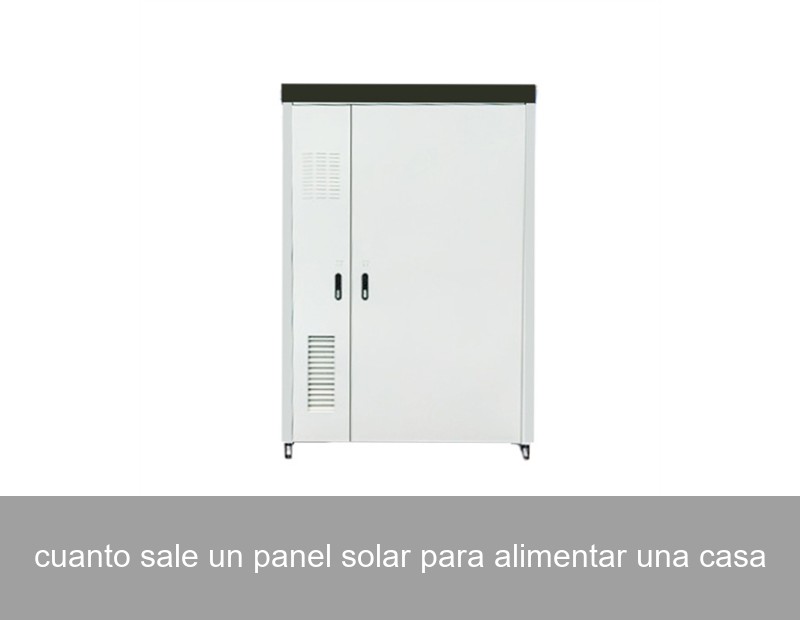
"How much does a solar panel cost to power a house?" It's the most common question we hear at Highjoule, and it's a fantastic starting point. But if I'm being completely honest, asking for the price of a single panel is like asking for the price of a single tire when you need a whole car. The real question you're asking is: "What is the investment for a complete, reliable home solar energy system that will genuinely cover my needs and provide energy independence?" Let's peel back the layers of this question, explore the real costs for homeowners in Europe and the US, and see how modern technology makes this a smarter investment than ever.
Breaking Down the Solar System Investment
A fully functional home solar system is an integrated ecosystem of components. Here’s a typical breakdown of what you're actually paying for:
- Solar Panels (Photovoltaic Modules): These are the visible elements on your roof. Prices vary by efficiency and brand. While a single 400-watt panel might cost between €150-€300, you'll need many of them.
- Inverters: The brain of the operation. Solar panels produce direct current (DC), but your home uses alternating current (AC). The inverter converts the energy. You can choose between string inverters (for the whole system) or microinverters (one per panel for better shade management).
- Mounting System & Hardware: The secure, often aluminum framework that attaches the panels to your roof, designed to withstand decades of weather.
- Electrical Components & Wiring: All the safety switches, conduits, and cabling that connect your system to your home's main electrical panel.
- Permitting & Installation Labor: Professional installation ensures safety, compliance with local building codes, and optimal performance. This includes the cost of permits, inspections, and the labor of certified electricians.
- The Most Important Modern Addition: The Battery Energy Storage System (BESS). This is where the game has completely changed. We'll dive deeper into this next.
| Region | Estimated Total Cost Range (6 kW System) | Primary Cost Drivers |
|---|---|---|
| United States | $16,000 - $21,000 | Local labor rates, state incentives, panel brand choice. |
| Germany / Western Europe | €12,000 - €18,000 | High-quality component standards, regulatory compliance. |
| Spain / Southern Europe | €10,000 - €15,000 | Higher solar yield can allow for slightly smaller systems. |
The Critical Role of Energy Storage: Why a Battery Isn't Optional Anymore
Here's a crucial insight: a solar-only system without a battery often leaves 40-60% of the energy you produce unused by your home directly, as it's generated when you're at work or asleep. This energy gets sent back to the grid, often for a minimal feed-in tariff. Then, you buy expensive power back from the utility in the evening.
This is where the complete solution shines. Adding a battery allows you to store your excess solar energy for use at night, during peak rate hours, or during a grid outage. It transforms your system from a partial supplement into a true pillar of energy independence and resilience. The question shifts from "how much for panels?" to "how much for a self-sufficient energy system?"

Image Source: Unsplash - A complete home energy solution.
A Real-World Case Study: The Schmidt Family in Berlin
Let's look at concrete data. The Schmidt family lives in a suburban Berlin home, consuming about 4,800 kWh annually. In 2022, they installed a 5.5 kW solar array. Without a battery, their self-consumption rate was only 35%. They decided to upgrade with a Highjoule H2-Residential battery system (10.2 kWh capacity).
- Result: Their self-consumption rate jumped to over 85%.
- Financial Impact: Their annual electricity bill decreased from an estimated €1,400 to just under €300—primarily grid standing charges.
- System Payback: Factoring in the German EEG incentives and energy savings, their calculated payback period for the combined solar + storage system is now under 8 years. For a system with a 20+ year lifespan, that's a compelling investment.
Highjoule: Your Partner in Comprehensive Energy Independence
Since 2005, Highjoule has been at the forefront of intelligent energy storage. We understand that the true value of solar is unlocked only when paired with robust, smart storage. For homeowners asking "cuánto sale," we provide not just products, but a holistic analysis and solution.
Our H-Series Residential Battery Systems are designed for seamless integration with new or existing solar arrays. With features like AI-powered energy management in our Highjoule Energy Hub, our systems learn your consumption patterns, automatically optimize for time-of-use rates, and ensure you have backup power during outages. We move you beyond just generating energy to intelligently managing and controlling it.
Key Factors That Shape Your Final Price
Understanding these variables will help you get an accurate quote:
- Your Energy Consumption: The first step is analyzing your past year's utility bills (in kWh). This determines the size of the system you need.
- Roof Characteristics: Size, orientation (south-facing is ideal in the Northern Hemisphere), shading from trees or chimneys, and roof material.
- Local Climate & Solar Irradiance: A home in Malaga will produce more energy per panel than one in Hamburg, potentially needing fewer panels for the same output.
- Equipment Quality & Technology: High-efficiency panels or advanced battery chemistry (like Lithium Iron Phosphate, which Highjoule uses for its safety and longevity) may have a higher upfront cost but offer better long-term value.
- Government Incentives & Tax Credits: These are massive cost reducers. In the US, the Residential Clean Energy Credit covers 30% of the cost. Countries like Italy, Poland, and the UK also have various grants and subsidy programs.

Image Source: Unsplash - Monitoring your system's performance.
Calculating Your Return on Investment (ROI): The Long-Term View
Instead of just looking at the sticker price, consider the system as a 25-year financial and environmental asset. The equation is simple:
Total System Cost - Incentives = Net Investment.
Net Investment / Annual Savings on Energy Bills = Simple Payback Period.
After the payback period, you have essentially "free" electricity for the system's remaining life, while protecting yourself against rising utility rates. Furthermore, studies show that homes with solar-plus-storage systems can see an increase in property value. The International Renewable Energy Agency (IRENA) consistently reports that renewables are the cheapest source of new power generation, a trend that benefits homeowners directly.
So, are you ready to transform the question from "What does it cost?" to "What value can it bring to my home, my wallet, and our planet for the next generation?"
 Inquiry
 Online Chat