


Lithium Battery Inverters: The Intelligent Heart of Modern Energy Storage
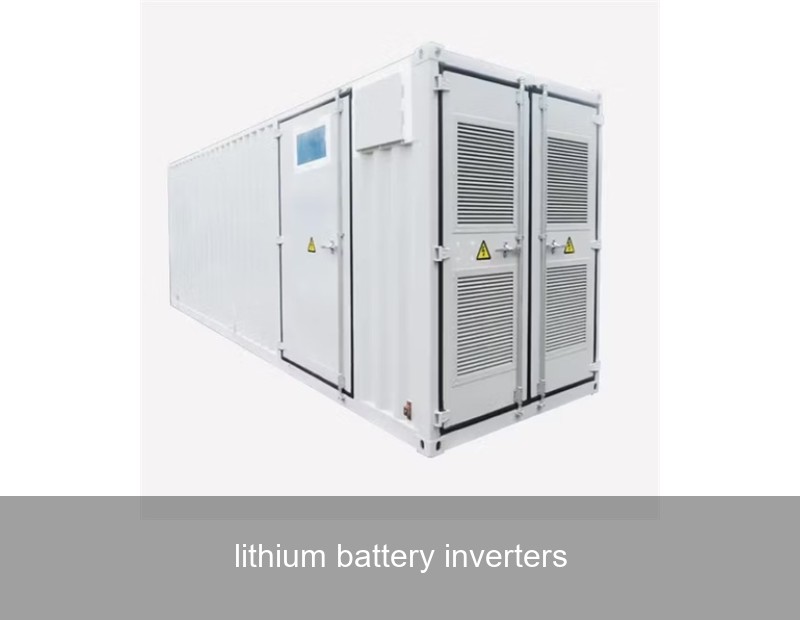
Have you ever wondered what makes a modern solar-plus-storage system tick? While the lithium-ion batteries get most of the attention for storing power, there's a silent, intelligent maestro orchestrating the entire performance: the lithium battery inverter. This crucial component is far more than a simple converter; it's the brain and gateway that determines how efficiently you store, manage, and use your renewable energy. For homeowners and businesses across Europe and the U.S., understanding this key technology is the first step towards true energy independence and resilience.
Table of Contents
What Exactly is a Lithium Battery Inverter?
Let's break it down. A lithium battery inverter, often called a hybrid or battery-based inverter, is a sophisticated power electronics device designed specifically to work with lithium-ion battery banks. Its core job is twofold: converting direct current (DC) from your batteries into alternating current (AC) to power your home or business, and managing the charging/discharging of the battery system based on a set of intelligent parameters.
Think of it this way: if your lithium battery is a high-performance fuel tank, the inverter is the advanced engine and computer that decides when to use that fuel, how much to use, and at what efficiency, all while communicating with solar panels and the grid.

Image Source: Unsplash - A modern hybrid inverter is the command center for energy storage.
Why the Right Inverter is Critical for System Performance & Safety
The phenomenon is clear: simply pairing any inverter with a lithium battery can lead to underperformance, reduced battery life, or even safety risks. Lithium batteries have unique charge/discharge curves and stringent management needs compared to older lead-acid technology.
Here’s what the data tells us: A study by the National Renewable Energy Laboratory (NREL) highlights that system efficiency losses can be significantly minimized when the battery and inverter are optimally paired and managed. An advanced lithium battery inverter can achieve round-trip efficiency (AC to AC) above 94%, whereas a mismatch can drop efficiency below 88%, wasting valuable solar generation.
More critically, lithium batteries require precise Battery Management System (BMS) communication. A quality inverter speaks the right "language" (like CAN bus or RS485) to the BMS, continuously monitoring cell voltage, temperature, and state of charge to prevent dangerous conditions like overcharge or thermal runaway.
Key Risks of an Inverter-Battery Mismatch:
- Reduced Battery Lifespan: Improper charging cycles can degrade lithium cells years ahead of schedule.
- Lower Usable Capacity: You might pay for 10 kWh of storage but only safely use 7 kWh.
- System Faults and Downtime: Poor communication leads to frequent tripping or shutdowns.
- Lost Financial Returns: Lower efficiency means less self-consumption and higher grid bills.
Case Study: A German Bakery's Recipe for Energy Resilience
Let's look at a real-world example from Bavaria, Germany. Schmidt's Family Bakery faced two problems: soaring energy costs for their ovens and refrigeration, and occasional grid instability that threatened production. Their goal was to maximize self-consumption of their existing rooftop solar and ensure uninterrupted operation.
They installed a 25 kWh lithium iron phosphate (LFP) battery system. The pivotal choice was the inverter technology. They needed a solution that could handle high surge loads from industrial baking equipment, seamlessly switch to backup power during grid outages, and intelligently shift energy use to avoid peak tariffs.
The installed lithium battery inverter system was programmed with time-of-use settings and could manage a 150% surge power for 30 seconds. The results after one year:
| Metric | Before Installation | After Installation |
|---|---|---|
| Grid Electricity Consumption | 72% of total load | 31% of total load |
| Solar Self-Consumption Rate | 35% | 89% |
| Estimated Payback Period | N/A | 6.2 years |
| Production Halt Due to Grid Outage | 3 incidents (avg. 2 hrs) | 0 incidents |
This case underscores that the inverter's intelligence—its software and grid-management capabilities—was just as important as its power rating in delivering tangible business value.
Choosing Your Inverter: Beyond Basic Specs
When selecting a lithium battery inverter, look for these essential features that define modern, capable systems:
- True Hybrid Functionality: Can it simultaneously manage power from PV arrays, batteries, and the grid, routing it dynamically based on priority and cost?
- Grid Services Readiness: In many U.S. and European markets, inverters can provide grid support (frequency regulation, voltage support). Does yours have the certifications and software capabilities?
- Scalable Power and Storage: Can you easily add more battery modules or even a second inverter in parallel as your needs grow?
- Advanced Software & Monitoring: A user-friendly portal and app are non-negotiable for tracking performance, savings, and system health in real-time.
- Robust Warranty and Support: The inverter is the most complex part of your system. Look for a minimum 10-year warranty and strong local technical support.
The Highjoule Approach: Seamless Integration with Intelligent Control
At Highjoule, with nearly two decades of experience since 2005, we view the inverter not as a separate component, but as the core of an integrated energy ecosystem. Our H-PowerCube series for commercial and industrial applications and the H-Essence system for residential use are built on this principle.
Our lithium battery inverters are pre-configured and tested with our proprietary LFP battery modules, ensuring perfect BMS communication and safety protocols from day one. The embedded Highjoule Energy Operating System (E-OS) takes the guesswork out of optimization. It learns your load patterns, integrates with local weather forecasts, and can automatically adjust your system's strategy to maximize economic return—whether you're on a net metering plan in California or a dynamic tariff in the UK.

Image Source: Unsplash - Example of a clean, integrated residential energy storage installation.
For microgrid and off-grid applications, our inverters feature advanced grid-forming technology, allowing them to create a stable "grid" without any utility connection, powering entire communities or critical facilities with a mix of solar, storage, and backup generation.
Future Trends: The Inverter as a Grid Citizen
The role of the lithium battery inverter is rapidly evolving. With the rise of virtual power plants (VPPs), your inverter could soon become an active participant in the energy market. Imagine your system automatically selling stored power back to the grid during a regional peak demand event, generating revenue for you while strengthening community resilience.
Furthermore, standards like the SunSpec Alliance communication protocols are driving interoperability, allowing inverters from different manufacturers to work together seamlessly in aggregated systems. The future inverter will be a plug-and-play grid citizen, a far cry from the simple box of a decade ago.
Ready to See the Difference an Intelligent Inverter Makes?
Your energy storage system is a significant investment. The choice of its most critical component—the inverter—deserves careful consideration. How will you ensure your system is not just storing energy, but managing it with the intelligence required to meet your specific economic and resilience goals?
 Inquiry
 Online Chat