


Unlocking Energy Independence: The Ultimate Guide to the 10kW Solar Hybrid Inverter
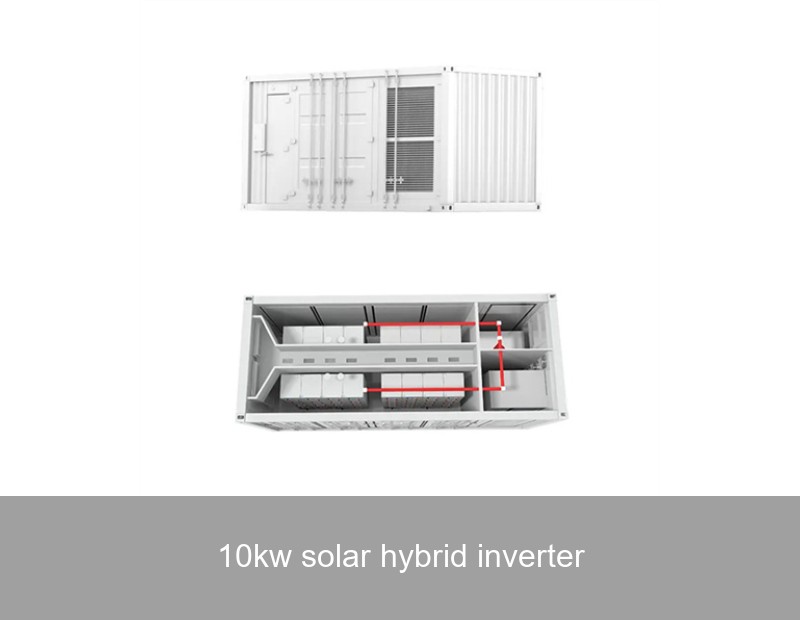
Have you ever watched your electricity meter spin backwards on a sunny day, only to be hit with a hefty bill when the sun goes down? This common experience highlights a fundamental challenge with solar power: it's intermittent. For homeowners and small business owners across Europe and the US looking to maximize their solar investment, the solution is increasingly clear. The 10kW solar hybrid inverter has emerged as the brain of a modern, resilient energy system, seamlessly blending solar generation, battery storage, and grid power. This article will demystify this critical technology and explore how it can transform your energy profile from passive consumer to proactive manager.
Table of Contents
- What is a 10kW Solar Hybrid Inverter?
- The Rising Demand: Why 10kW Systems are the Sweet Spot
- Key Benefits of a 10kW Hybrid System
- Inside the Technology: How It Works
- A Real-World Case Study: Resilience in California
- Choosing the Right 10kW Hybrid Inverter
- Highjoule's Smart Energy Solutions
What is a 10kW Solar Hybrid Inverter?
Let's break it down. A 10kW solar hybrid inverter is an all-in-one power conversion and management unit. Unlike a standard solar inverter that only converts DC from your panels to AC for your home, a "hybrid" model integrates a second channel for a battery bank. The "10kW" rating refers to its continuous power output capacity—enough to handle the base load of a large family home or a small commercial operation simultaneously. Think of it as an intelligent energy traffic controller: it directs solar energy to power your appliances, charge your batteries, or export to the grid, all based on your settings and real-time conditions.

Image Source: Unsplash - A modern hybrid inverter is the central hub of an advanced energy system.
The Rising Demand: Why 10kW Systems are the Sweet Spot
The shift towards 10kW hybrid systems isn't accidental. It's a direct response to market and technological trends. Firstly, the average energy consumption of an efficient single-family home in Germany or the US, when combined with an electric vehicle (EV), often falls within the 8-12kW peak demand range. Secondly, as feed-in-tariffs decline in many regions, the economic logic shifts from selling power to using and storing it yourself. A 10kW system provides a robust foundation for self-consumption. Data from the International Energy Agency (IEA) shows that distributed solar PV, of which these systems are a key part, is the fastest-growing renewable energy segment globally.
Key Benefits of a 10kW Hybrid System
- Maximized Self-Consumption: Use more of the solar energy you produce, sometimes boosting self-consumption rates from 30% to 70% or more.
- Backup Power: Keep essential circuits running during grid outages—a critical feature in areas prone to wildfires or extreme weather.
- Energy Bill Savings: Reduce reliance on expensive peak-hour grid electricity by discharging stored battery power.
- Grid Support & Future-Proofing: Advanced models can provide grid services and are ready for emerging smart energy ecosystems.
Inside the Technology: How It Works
The magic lies in the inverter's software and topology. A high-quality 10kW solar hybrid inverter uses sophisticated algorithms to manage energy flows in milliseconds. Here’s a typical priority ladder:
- Primary Source - Solar PV: Solar energy is the first priority, directly powering home loads.
- Secondary Source - Battery Storage: Excess solar charges the battery. When solar is insufficient (e.g., at night), the battery discharges to cover the load.
- Tertiary Source - The Grid: The grid acts as a backup, only importing power when both solar and battery are depleted, or during exceptionally high demand.
This logic ensures the highest possible degree of energy autonomy. Modern units also feature maximum power point tracking (MPPT) for optimal solar harvest and battery management systems (BMS) communication for safety and longevity.
A Real-World Case Study: Resilience in California
Let's look at a concrete example from Sonoma County, California, an area frequently impacted by Public Safety Power Shutoffs (PSPS). A medium-sized winery with a peak load of 9kW installed a system centered around a robust 10kW hybrid inverter, coupled with 12kW of solar panels and a 20kWh lithium iron phosphate (LFP) battery.
| Metric | Before Installation | After Installation |
|---|---|---|
| Monthly Grid Import | ~1,800 kWh | ~220 kWh (Grid as backup only) |
| Self-Consumption Rate | 35% | 92% |
| Outage Resilience | Zero hours of backup | Critical operations (cooling, pumps) sustained for over 18 hours off-grid |
| Estimated Bill Savings | Baseline | 78% reduction |
The system paid for itself in under 7 years, not even factoring in the value of avoided business interruption during grid outages. This case, documented in part by the National Renewable Energy Laboratory (NREL), underscores the dual value proposition: economic savings and operational resilience.
Choosing the Right 10kW Hybrid Inverter: Beyond the Spec Sheet
Not all inverters are created equal. Key selection criteria include:
- Efficiency: Look for peak efficiency ratings above 97%.
- Battery Chemistry Compatibility: Ensure it works seamlessly with leading battery types like LFP.
- Scalability & Phase: Can the system be expanded? Is it single or three-phase to match your grid connection?
- Software & Monitoring: Intuitive apps for monitoring and controlling your system are non-negotiable for modern users.
- Warranty & Service: A minimum 10-year warranty and strong local technical support are essential.

Image Source: Unsplash - Comprehensive monitoring software puts energy control at your fingertips.
Highjoule's Smart Energy Solutions: Engineered for Reliability
At Highjoule, with nearly two decades of experience since 2005, we understand that a 10kW solar hybrid inverter is more than a component—it's the cornerstone of a trusted energy system. Our HPS-10K Hybrid Power Station is engineered for the European and North American markets, addressing the specific needs we've discussed.
The HPS-10K features dual high-efficiency MPPTs for complex roof layouts, universal compatibility with major battery brands, and an exceptional 98% peak efficiency. Its true standout feature is the Highjoule EnergyOS platform. This AI-driven software doesn't just report data; it learns your consumption patterns, weather forecasts, and utility rate schedules to automatically optimize energy flow for maximum savings and comfort. Whether for a robust residential setup, a small business, or as part of a community microgrid, our systems are designed for seamless integration and unparalleled reliability.
Integrating with Highjoule's Ecosystem
Choosing Highjoule means access to a holistic ecosystem:
- Professional Design & Support: Our network of certified installers ensures perfect system sizing and commissioning.
- Comprehensive Monitoring: Real-time insights and alerts through our intuitive portal and app.
- Future-Ready Architecture: Our systems are designed to adapt, whether you're adding a second EV charger or participating in a virtual power plant (VPP) program.
For more on the science behind solar integration, the U.S. Department of Energy provides excellent foundational resources.
Your Energy Future
The journey to energy independence is a series of informed choices. A well-designed system with a 10kW solar hybrid inverter at its heart can fundamentally change your relationship with energy, providing control, savings, and peace of mind. As you consider your next step, what specific energy challenge—be it unpredictable bills, outage anxiety, or simply a desire to reduce your carbon footprint—is most compelling for you to solve with technology like this?
 Inquiry
 Online Chat