


Lithium Battery Malaysia: The Strategic Hub Powering Global Energy Storage
When you think of cutting-edge technology manufacturing, Southeast Asia might not be the first region that comes to mind. But a quiet revolution is underway. The global surge in demand for energy storage, driven by renewable energy integration and grid modernization, has created a new geostrategic map. And squarely at its center is lithium battery Malaysia. This isn't just about low-cost labor; it's about a calculated evolution into a high-tech, integrated supply chain node that is becoming indispensable for companies worldwide seeking reliable, advanced battery solutions. For businesses in Europe and the U.S., understanding this shift is key to securing a resilient and competitive energy storage strategy.

Modern lithium-ion battery manufacturing requires precision, clean environments, and advanced technology – a sector where Malaysia is rapidly advancing.
The Rise of Malaysia as a Lithium Battery Powerhouse
The story begins with a phenomenon we all know too well: the world's insatiable appetite for clean energy and the devices that store it. From EVs to home solar systems to grid-scale storage, lithium-ion batteries are the linchpin. However, concentrated supply chains pose risks, as highlighted by recent global disruptions. Companies are actively seeking diversification, and Malaysia has emerged as a prime candidate.
Let's look at the data. According to the Malaysian Investment Development Authority (MIDA), the electrical and electronics (E&E) sector, which includes battery production, attracted over RM50 billion (approximately USD 10.6 billion) in investments in recent years. Major global players have established significant facilities there. For instance, one leading Korean manufacturer operates one of its largest overseas battery cell plants in Malaysia, supplying key markets globally. This isn't happenstance; it's the result of a decades-long build-up of expertise.
The Foundation: From Semiconductors to Battery Cells
Malaysia has been a global hub for semiconductor packaging and testing for over 50 years. This established a deep-rooted ecosystem of precision engineering, quality control, and a skilled technical workforce. The leap from silicon wafers to battery electrodes is smaller than you might think. Both require ultra-clean environments, meticulous process control, and expertise in electrochemistry and materials science. Malaysia's existing E&E infrastructure provided the perfect springboard into the more complex world of advanced battery manufacturing.
Why Malaysia? Decoding the Strategic Advantage
So, what makes the "lithium battery Malaysia" proposition so compelling for international buyers and project developers? The advantages are multifaceted:
- Established Supply Chain & Logistics: With world-class ports like Port Klang and Penang, Malaysia offers seamless export routes to Europe, the U.S., and the rest of Asia. The presence of numerous component suppliers (for casings, separators, etc.) within the region reduces lead times and complexity.
- Technical Proficiency & English Literacy: The workforce isn't just numerous; it's highly educated. Engineers and technicians fluent in English ease collaboration and ensure precise adherence to international technical standards and project specifications.
- Government Support & Stable Environment: Pro-investment policies, including tax incentives for high-tech industries, and a relatively stable political climate make it a reliable long-term partner for capital-intensive industries like battery production.
- Strategic Geographic Location: Positioned in the heart of ASEAN, with access to key raw material sources in the region, Malaysia offers a logistical sweet spot for serving both Eastern and Western markets.
This environment doesn't just benefit giant corporations. It creates a fertile ground for partnerships with innovative system integrators. At Highjoule, we leverage such globally dispersed, high-quality manufacturing hubs as part of our robust supply chain strategy. Our IntelliBESS commercial and industrial battery storage systems, for example, utilize cells sourced from tier-1 partners within strategic networks that include facilities in Malaysia, ensuring consistent quality, scalability, and supply security for our clients in Europe and North America.
A Real-World Case: Powering a Malaysian Industrial Park
Let's move from theory to practice. The potential of lithium battery Malaysia isn't just for export; it's being activated domestically in impressive ways.
Project: A large industrial park in Selangor, facing frequent grid instability and rising demand charges (costs based on peak power usage). Their goals were clear: ensure uninterrupted power for critical manufacturing processes and reduce operational energy costs.
Solution: A turnkey 2 MWh containerized battery energy storage system (BESS) was deployed. This system was charged during off-peak hours or via the park's existing solar panels and dispatched during peak hours to shave demand and provide backup during outages.
Data & Results (First 12 Months):
| Metric | Result |
|---|---|
| Peak Demand Reduction | Up to 25% |
| Energy Cost Savings | ~18% reduction in monthly bills |
| Backup Power Coverage | Critical loads protected for over 4 hours per outage |
| ROI Timeline | Projected within 5 years |
This case, documented in part by the International Renewable Energy Agency in regional reports on ASEAN energy storage, exemplifies the dual value proposition: economic efficiency and resilience. The system itself featured battery modules assembled locally with cells from a Malaysian plant, integrated with advanced power conversion and control systems from a global provider like Highjoule. Our GridSynergy platform for microgrids and industrial applications would provide precisely this kind of intelligent energy management, optimizing every kilowatt-hour for maximum financial and operational return.

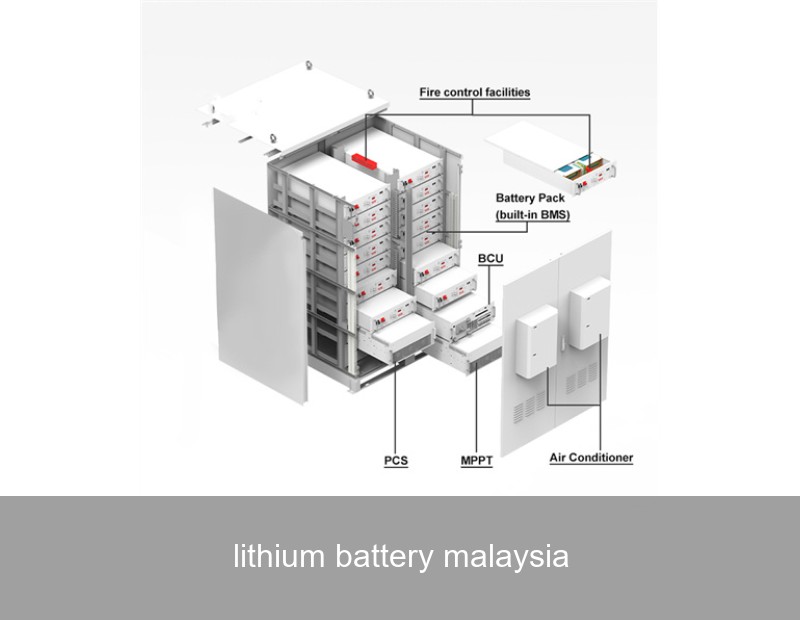
Containerized BESS units, like those Highjoule provides, offer scalable and resilient power for commercial and industrial applications worldwide.
Beyond Manufacturing: Malaysia's Own Energy Transition
The narrative extends further. Malaysia is not just a factory floor; it's a burgeoning market. The government's ambitious renewable energy targets, aiming for 31% renewable capacity by 2025 and 40% by 2035, create a massive domestic need for energy storage to stabilize the grid as solar penetration grows. This internal demand drives innovation and quality, as local manufacturers must meet the stringent performance and safety standards required for grid-connected systems.
This creates a virtuous cycle. Local demand supports the scaling of manufacturing, which improves technology and lowers costs. This, in turn, makes Malaysian-made battery components and systems even more competitive on the global stage. For an end-user in Germany or California, this means the battery pack in their storage system benefits from technology refined in a real-world, demanding market.
Choosing the Right Storage Partner for Your Project
With the importance of supply chain origin growing, how should a business in the U.S. or Europe proceed? The key is to partner with a system provider that has both global technology expertise and a sophisticated, transparent supply chain strategy.
- Look for System Intelligence, Not Just Cells: The battery cells are crucial, but the brain of the system—the Battery Management System (BMS) and energy management software—is what unlocks safety, longevity, and value. Highjoule's NeuralOS, for instance, uses AI-driven algorithms to optimize charge/discharge cycles, extending system life by up to 20% compared to conventional management.
- Demand Proven Safety Protocols: Ensure your provider's systems, whether incorporating components from Malaysia or elsewhere, adhere to the highest international standards (UL, IEC, etc.). Safety is non-negotiable.
- Seek Partners with Integration Expertise: The perfect battery must communicate flawlessly with solar inverters, grid interfaces, and building management systems. Highjoule's solutions are designed for this seamless integration, providing a holistic power solution rather than just a battery box.
The Future Outlook for Lithium Battery Malaysia
The trajectory is set. Malaysia is poised to move further up the value chain—from cell manufacturing to advanced pack assembly, and even into recycling (urban mining) to create a circular economy for batteries. Research into next-generation solid-state batteries is also gaining traction in its academic institutions.
For global stakeholders, this means "lithium battery Malaysia" will increasingly be synonymous with innovation, sustainability, and reliability. It represents a critical, resilient node in the global clean energy infrastructure. As you plan your organization's energy resilience or decarbonization strategy, the question isn't just about what technology to choose, but how its entire ecosystem—from origin to end-of-life—supports your long-term goals for stability and sustainability.
Is your current energy storage strategy accounting for the geopolitical and technological shifts represented by hubs like Malaysia, and are you partnering with a provider that can navigate this landscape to deliver truly future-proof solutions?
 Inquiry
 Online Chat