


HyGreen Energy: How Much Does It Really Cost to Power Your Future?
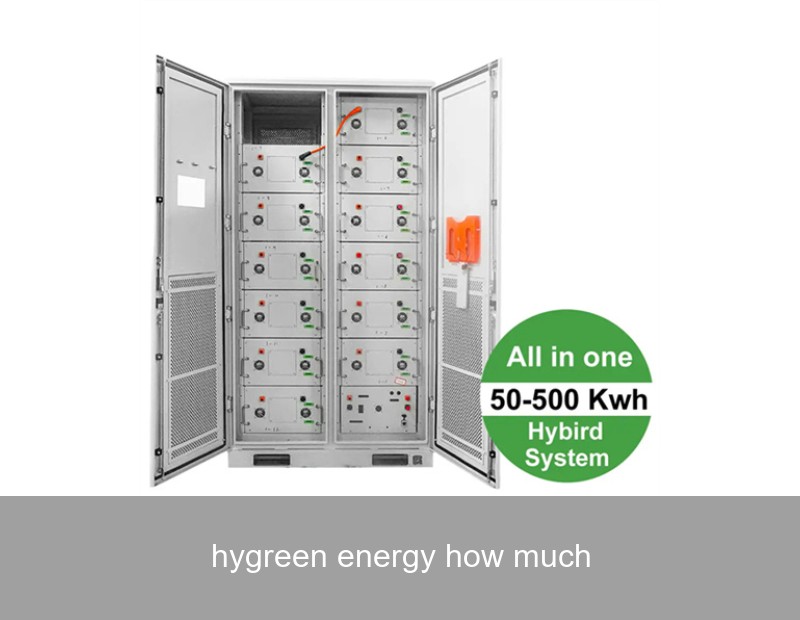
If you're a homeowner or business leader looking at the future of power, you've likely heard the term "HyGreen Energy" buzzing around. It sounds ideal—a blend of hydrogen and green renewable sources like solar, promising clean, independent, and resilient power. But then comes the immediate, practical question that stops many in their tracks: "HyGreen energy, how much will it actually cost me?" It's a fair query. Moving beyond traditional grid reliance is a significant decision, and understanding the investment is the first crucial step. Let's demystify the costs, explore the real-world value, and see how modern solutions are making this transition more accessible than ever.
What is HyGreen Energy, Really?
Before we talk numbers, let's clarify the concept. HyGreen energy isn't a single, off-the-shelf product. It's an integrated energy strategy. Typically, it combines on-site renewable generation (like solar PV panels) with an advanced energy storage system. The "green" hydrogen aspect often comes into play for larger-scale or long-duration storage, where excess renewable electricity is used to produce hydrogen via electrolysis, which can then be stored and converted back to power when needed. For many commercial, industrial, and residential applications, the heart of a HyGreen system is a sophisticated Battery Energy Storage System (BESS) that manages solar energy intelligently.
This system doesn't just store power; it transforms your property into a smart energy hub. It captures free energy from the sun, stores it for use during peak expensive hours or at night, and provides critical backup during outages. The goal? To maximize self-consumption of clean energy, slash electricity bills, and achieve a new level of energy security.

Image Source: Unsplash - A typical starting point for a residential HyGreen system: solar generation.
The Million-Dollar Question: How Much Does HyGreen Energy Cost?
So, let's address the core question. There's no universal price. A small residential system differs vastly from a industrial microgrid. However, we can break down the cost components to give you a clear framework. The total investment for a comprehensive HyGreen system generally includes:
- Solar PV Array: The cost per watt for solar panels has dropped dramatically, often between $2.50 to $3.50 per watt installed, depending on region and panel quality.
- Battery Energy Storage System (BESS): This is a significant portion. Costs are typically measured in dollars per kilowatt-hour ($/kWh) of storage capacity. As of 2023, prices for advanced lithium-ion battery systems can range from $800 to $1,500 per kWh of installed storage capacity, with economies of scale for larger systems.
- Energy Management System (EMS) & Inverter: The "brain" of the operation. This smart technology manages energy flow, prioritizes loads, and ensures system efficiency. It's often integrated into the BESS or inverter cost.
- Installation & Balance of System: Wiring, electrical upgrades, mounting, and professional labor.
- Potential Hydrogen Components: For projects requiring seasonal storage, electrolyzers and fuel cells add substantial capital cost, often in the hundreds of thousands to millions, making them viable primarily for large-scale commercial/utility applications.
For a typical American or European household aiming for substantial energy independence, a robust solar-plus-storage system might have a total installed cost before incentives in the range of $25,000 to $50,000. But here's the critical shift in perspective: this is not just an expense; it's a capital investment with a measurable return.
A Real-World Case Study: From Theory to Practice
Let's move beyond averages with a concrete example. Consider a medium-sized winery in Northern California. Facing frequent Public Safety Power Shutoffs (PSPS) to prevent wildfires and high demand charges, their energy costs and operational reliability were major concerns.
- Challenge: Ensure uninterrupted cooling for wine storage, reduce peak demand charges, and lower overall energy costs.
- Solution: A tailored HyGreen system featuring a 250 kW solar canopy and a 500 kWh Highjoule IntelliBESS commercial battery storage unit.
- Investment: Total project cost was approximately $850,000.
- Results (Data from first year of operation):
- Energy Bill Savings: Reduced grid electricity consumption by 75%, saving over $65,000 annually.
- Demand Charge Mitigation: Sliced peak demand charges by 90%, a critical saving for commercial operations.
- ROI & Payback: Combined with available state and federal incentives (like the ITC for storage), the projected payback period was under 7 years. The system now provides a 20+ year asset.
- Resilience: Provided 18+ hours of backup power for critical loads during grid outages, protecting inventory and business continuity.
This case illustrates that the "how much" question is best answered by "what is it worth?" For this winery, it was worth securing their business, locking in long-term energy costs, and contributing to sustainability goals.
Key Factors Influencing Your HyGreen System's Price Tag
Your specific cost will hinge on several variables:
| Factor | Impact on Cost | Highjoule's Approach |
|---|---|---|
| Energy Consumption & Goals | Do you want full off-grid independence or just peak shaving? Larger loads and higher independence require bigger solar and storage capacity. | Our experts conduct a detailed energy audit to right-size your system, avoiding over- or under-investment. |
| Local Climate & Solar Resource | Sunnier locations need fewer panels to generate the same energy, potentially lowering system size. | We use geospatial data to model precise solar yield for your exact location. |
| Available Incentives & Policy | In the US (ITC) and many EU countries, generous tax credits and rebates can reduce net cost by 30-50%. IEA Policy Database. | Highjoule's project teams help navigate the complex landscape of incentives, from the US ITC to European Union grants. |
| Technology Choice | Battery chemistry (e.g., LFP vs. NMC), cycle life, and inverter efficiency affect upfront cost and long-term value. | We specialize in durable, safe Lithium Iron Phosphate (LFP) batteries in our IntelliBESS line, optimized for thousands of cycles and lower total cost of ownership. |
How Highjoule Simplifies the HyGreen Energy Journey
At Highjoule, with nearly two decades of experience since 2005, we turn the complexity of "HyGreen energy, how much?" into a clear, actionable plan. We are not just component vendors; we are providers of integrated, intelligent power solutions. For our residential and commercial clients across Europe and North America, we offer:
- The Highjoule IntelliBESS Family: Our scalable battery storage systems, from the compact HomeHub for residences to the modular CommercialStack, come with integrated, AI-driven energy management. They seamlessly integrate with new or existing solar arrays.
- Highjoule EnergyOS Platform: This cloud-based platform provides real-time monitoring, predictive energy scheduling (using weather and tariff data), and remote system management, ensuring your investment performs optimally every day.
- End-to-End Project Delivery: From initial consultation and financial modeling to system design, installation, and ongoing support, we manage the entire process, ensuring a single point of accountability.
By providing a holistic solution, we control more variables, leading to more predictable project outcomes and costs for our clients.

Image Source: Unsplash - Representative image of a professional battery energy storage system installation.
Looking Beyond Upfront Cost: The Long-Term Value Proposition
Focusing solely on the initial price tag is like buying a car based only on the sticker price, ignoring fuel, maintenance, and resale value. The true economics of HyGreen energy are found in its Total Cost of Ownership (TCO) and Return on Investment (ROI).
- Locked-in Energy Rates: Once your system is installed, your "fuel" from the sun is free for 25+ years. You are insulating yourself from volatile and rising grid electricity prices. The U.S. EIA forecasts continued fluctuations in energy costs.
- Increased Property Value: Studies consistently show that homes with solar and storage sell at a premium, often absorbing a significant portion of the system cost.
- Operational Resilience: For businesses, the cost of a single power outage can dwarf the investment in a resilient energy system. How much is keeping your doors open or your data center running worth?
- Sustainability Leadership: The intangible value of meeting corporate ESG goals and appealing to eco-conscious customers or tenants is increasingly tangible in today's market.
Is Your Property Ready for the HyGreen Shift?
The journey to answering "HyGreen energy, how much?" for your specific situation begins with understanding your own energy profile. What does your last year of electricity bills look like? When is your consumption highest? What are your primary drivers: financial savings, sustainability, or unwavering reliability?
We invite you to start that conversation. What single energy challenge—be it a soaring bill last summer or anxiety about grid instability—would you most like to solve with a clean, modern solution?
 Inquiry
 Online Chat