


Unlocking Energy Independence: The Power of Lithium Battery Solar Battery Systems
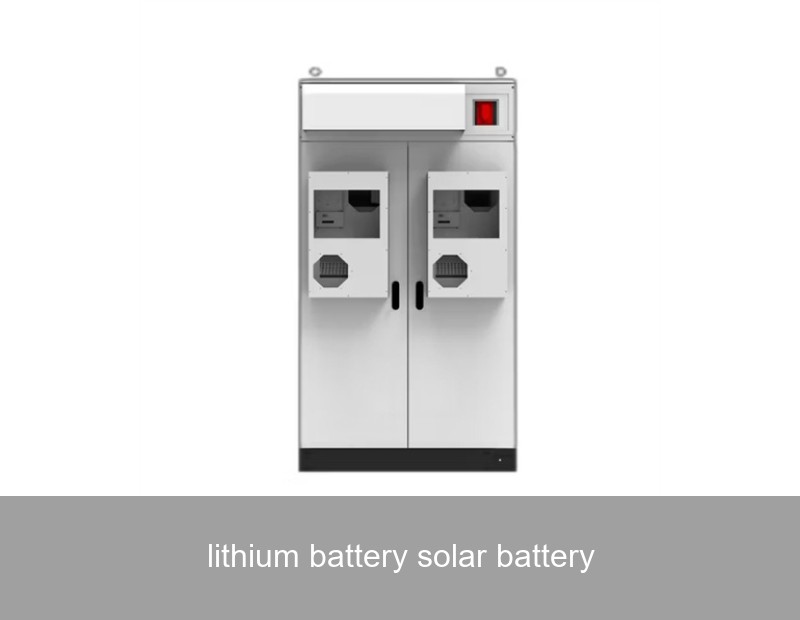
Have you ever watched your electricity meter spin backwards on a sunny day, only to face high utility bills after sunset? You're not alone. This daily dance with the grid is a common frustration for homeowners and businesses across Europe and the US who have invested in solar panels. The solution lies not just in generating clean energy, but in intelligently storing it. This is where the modern lithium battery solar battery system comes into play, transforming solar arrays from intermittent producers into reliable, 24/7 power stations. As a leading provider in this space, Highjoule has witnessed this evolution firsthand since 2005, engineering storage solutions that make true energy independence not just a concept, but a daily reality.
Table of Contents
- The Storage Gap: Why Solar Panels Aren't Enough
- Why Lithium-Ion Dominates the Solar Battery Scene
- Beyond Backup: The Smart Multi-Function System
- Real-World Impact: A Case Study from California
- Choosing the Right System: Key Considerations
- The Highjoule Approach: Intelligent Storage for Demanding Applications
- Your Power, Your Control: The Future of the Grid Starts at Home
The Storage Gap: Why Solar Panels Aren't Enough
The phenomenon is clear: solar generation peaks in the middle of the day, often when household consumption is at its lowest. Meanwhile, energy demand soars in the evening—the so-called "duck curve"—as people return home, turning on lights, appliances, and heating. Without storage, excess solar energy is fed back to the grid, often for minimal compensation, only for you to buy expensive power back hours later.
Let's look at the data. According to the U.S. Department of Energy, solar energy accounted for over 50% of all new electricity-generating capacity added in the US in recent quarters. Yet, the value of this energy is time-sensitive. Studies in markets like Germany and California show that adding a lithium battery solar battery can increase self-consumption of solar power from 30-40% to 70-80% or more. This isn't just a minor upgrade; it's a fundamental shift in how we utilize the sun's energy.
Why Lithium-Ion Dominates the Solar Battery Scene
You might remember older battery technologies like lead-acid. While they served a purpose, lithium-ion chemistry is the undisputed champion for modern solar storage, and for compelling reasons:
- Higher Depth of Discharge (DoD): You can safely use 90% or more of a lithium battery's capacity without harming it, compared to about 50% for lead-acid. This means you get more usable energy from a similarly sized unit.
- Longer Lifespan & Warranty: Quality lithium batteries for solar are designed to last thousands of cycles. Highjoule's systems, for instance, are engineered for longevity, often carrying warranties that guarantee performance for 10 years or more.
- Compact Size & Scalability: Their high energy density means they take up less space. More importantly, systems can be modularly expanded, allowing you to start with what you need and grow your storage capacity as your needs evolve.
- Faster Charging & Smart Management: They charge rapidly from excess solar and can seamlessly switch to discharge in milliseconds during an outage or peak rate period. This intelligence is key.

This technological evolution is what allows a lithium battery solar battery system to be more than just a backup; it's an active financial and energy management tool.
Beyond Backup: The Smart Multi-Function System
Think of today's advanced systems as the "brain" of your energy ecosystem. A quality inverter and energy management system (like those integrated into Highjoule's solutions) orchestrate three primary functions:
| Function | How It Works | Direct Benefit |
|---|---|---|
| Self-Consumption Optimization | Automatically stores excess solar for use later in the day. | Reduces electricity bills by minimizing grid imports. |
| Backup Power | Provides instantaneous power during a grid outage, keeping essential loads running. | Ensures comfort, safety, and continuity for homes and businesses. |
| Peak Shaving | Discharges during periods of high grid demand (and high prices) to avoid costly peak tariffs. | Lowers demand charges for commercial users and protects against volatile time-of-use rates. |
Real-World Impact: A Case Study from California
Let's make this concrete. Consider a medium-sized commercial bakery in Southern California. They have a 100 kW solar array but face steep "Time-of-Use" rates from 4 PM to 9 PM, precisely when their ovens are still running but solar production is waning. Before adding storage, their monthly demand charges were a significant burden.
In 2023, they installed a 120 kWh Highjoule lithium battery solar battery system. The results, monitored over one year, were telling:
- Demand Charge Reduction: The system was programmed to discharge during the 4-9 PM window, reducing peak grid draw by 85%. This directly cut their demand charges by an average of $1,800 per month.
- Increased Self-Consumption: Their direct use of solar power jumped from 35% to 89%, slashing their energy consumption charges.
- ROI & Sustainability: The combined savings projected a full return on investment in under 6 years. Furthermore, the system ensures their nightly operations are powered by clean, self-generated solar energy, not grid power which still relies partially on fossil fuels during peak hours.
This isn't a hypothetical. It's a tangible example of how intelligent storage turns a solar investment into a strategic asset. You can explore more on the financial mechanisms of such systems through resources like the Solar Energy Industries Association (SEIA).
Choosing the Right System: Key Considerations
Not all lithium battery solar battery systems are created equal. When evaluating options, ask these critical questions:
- Is it AC- or DC-coupled? DC-coupled systems (where the battery connects before the inverter) can be more efficient for new solar installations. AC-coupled systems (battery connects with its own inverter) are often ideal for retrofits to existing solar arrays. Highjoule provides both configurations to match the project's specific architecture.
- What is the usable capacity vs. total capacity? Always look at the kilowatt-hours (kWh) you can actually use.
- How intelligent is the software? Can it integrate with local utility rate structures for automated peak shaving? Does it offer user-friendly monitoring? Highjoule's platform provides granular control and visibility via a smartphone app.
- What is the warranty and expected cycle life? This is a long-term investment. Look for a robust warranty that guarantees both capacity retention and a minimum number of cycles over a decade or more.

The Highjoule Approach: Intelligent Storage for Demanding Applications
At Highjoule, our expertise goes beyond supplying hardware. We design integrated energy solutions. For over 18 years, we've focused on the unique demands of commercial, industrial, and sophisticated residential applications. Our lithium battery solar battery systems are built with:
- Grid-Forming Inverter Technology: In some of our advanced systems, this capability allows the creation of a stable "microgrid" that can operate independently from the main grid, a critical feature for community resilience and remote operations.
- Scalable Architecture: From a single residential unit to multi-megawatt-hour industrial installations, our modular design allows for seamless expansion.
- Focus on Safety and Reliability: Our battery cabinets feature integrated thermal management, advanced battery management systems (BMS), and rigorous safety certifications, providing peace of mind for installation in diverse environments.
Whether it's a hospital requiring flawless backup power, a factory aiming to cap its peak demand, or a homeowner seeking complete energy self-sufficiency, Highjoule engineers systems that are not just products, but pivotal components of a smarter, more resilient energy infrastructure. For deeper technical insights, resources like the National Renewable Energy Laboratory (NREL) provide valuable research context.
Your Power, Your Control: The Future of the Grid Starts at Home
The transition to renewable energy is accelerating, but its true potential is unlocked at the point of consumption. A lithium battery solar battery system empowers you to take direct control of your energy costs, your carbon footprint, and your resilience. It transforms your relationship with the grid from one of passive consumption to active management.
So, the question we leave you with is this: As electricity markets continue to evolve and the push for decarbonization grows stronger, what role do you want to play in your own energy future—a ratepayer subject to volatility, or a proactive manager of your own clean power plant?
 Inquiry
 Online Chat