


Navigating Lithium Battery Storage Regulations in the UK: A Complete Guide for 2024
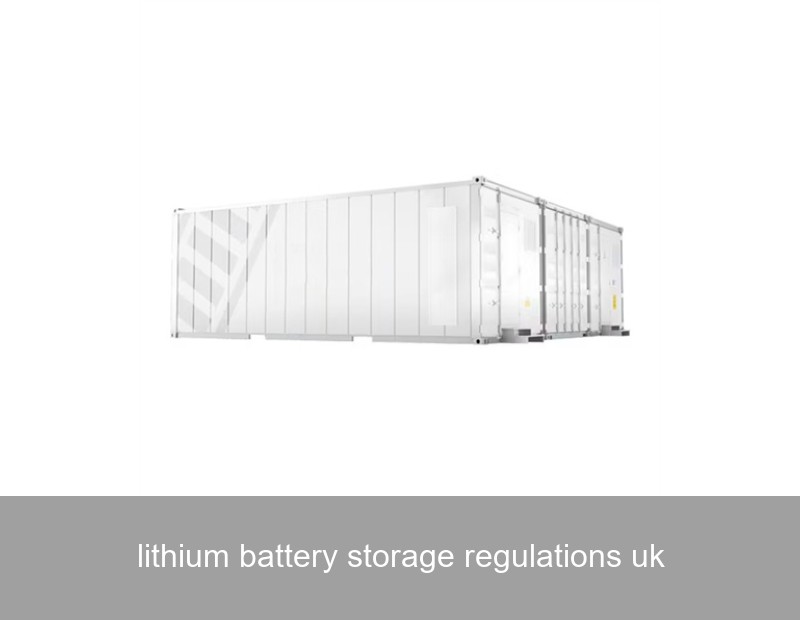
If you're considering a lithium battery storage system for your UK home or business, you're making a smart move towards energy independence and sustainability. But have you stopped to consider the regulatory landscape? The rapid rise of battery energy storage systems (BESS) has prompted necessary updates to safety standards and installation rules. Understanding lithium battery storage regulations in the UK is not just about compliance; it's about ensuring the safety, performance, and longevity of your investment. This guide will break down the key rules, explain why they matter, and show you how to navigate them seamlessly with the right partner.
Table of Contents
- Why Regulations Are Evolving: The Safety Imperative
- Key UK Standards and Regulations Explained
- Installation Rules: From Location to Fire Separation
- Case Study: A Commercial Installation in Manchester
- Choosing a Compliant System: What to Look For
- The Future of UK Battery Storage Policy
Why Regulations Are Evolving: The Safety Imperative
Let's address the elephant in the room first. Why all these rules? It's simple: safety first. Lithium-ion batteries are incredibly energy-dense, which is what makes them so efficient for storage. However, this also requires robust engineering and careful handling to manage risks like thermal runaway—a chain reaction leading to overheating and potential fire. The UK's regulatory framework has evolved proactively, learning from global best practices and incident data to create a safe environment for widespread adoption.
According to a 2023 report by the UK Government's Department for Energy Security and Net Zero, the number of domestic and commercial battery installations is projected to quadruple by 2030. This exponential growth necessitates clear, enforceable standards to protect people, property, and the electrical grid itself. Regulations aren't barriers; they are the foundation for trustworthy, sustainable growth in the energy storage sector.
Key UK Standards and Regulations Explained
Navigating the regulatory landscape can feel like alphabet soup. Here are the most critical acronyms and what they mean for your project:
- BS EN 62619 & IEC 62933: These are the paramount international standards for the safety and performance of large-format lithium batteries used in industrial applications. They cover everything from basic design requirements to rigorous testing for electrical, mechanical, and thermal hazards.
- BS 7671 (IET Wiring Regulations): The bible for UK electrical installations. The 18th Edition (Amendment 2) includes new, specific requirements for energy storage systems, including isolation, labelling, and connection to the grid.
- Building Regulations: Primarily Part B (Fire Safety) and Part P (Electrical Safety). These dictate how a system should be installed in relation to the building's structure, with specific guidance on fire containment and escape routes.
- MCS Certification: While not a legal requirement, MCS (Microgeneration Certification Scheme) certification is crucial if you want to access certain government incentives or export tariffs. It certifies that the installed products and the installer company meet rigorous quality and reliability standards.
For homeowners and businesses, the simplest path is to work with a provider whose systems are designed from the ground up for compliance. At Highjoule, for instance, our ResiFlow Home and VoltMax Commercial battery systems are engineered to exceed BS EN 62619 and IEC 62933 standards. We integrate advanced battery management systems (BMS) with multi-layer protection and provide full technical documentation to support your installer's compliance with BS 7671 and Building Regs.
Installation Rules: From Location to Fire Separation
Where and how you install your battery is heavily influenced by regulations. Key considerations include:
| Consideration | Typical Regulatory Requirement | Practical Implication |
|---|---|---|
| Location | Preferably external, a dedicated plant room, or a well-ventilated garage. Internal habitable spaces often have stricter rules. | External or garage installations are often the simplest path to compliance. Highjoule's outdoor-rated enclosures are designed for this. |
| Fire Separation | If installed inside, may require 30-60 minutes of fire resistance from living spaces (Building Regs Part B). | Systems may need to be in a dedicated compartment with appropriate fire-rated walls/doors. |
| Clearances & Ventilation | Adequate space around the unit for cooling, maintenance, and emergency access as per manufacturer's instructions. | Our installation guides specify precise clearances to ensure safe operation and easy compliance. |
| Signage & Isolation | Clear "Emergency Isolation" instructions and permanent warning labels as per BS 7671. | Highjoule provides compliant labelling and clear isolation procedures as standard. |

Image: A compliant battery installation in a garage, showing clear space and signage. Source: Unsplash
Case Study: A Manufacturing Facility in Manchester
Let's look at how these regulations come to life in a real project. A mid-sized textile manufacturing facility in Manchester was facing high peak-time electricity charges and wanted to increase the self-consumption of their rooftop solar PV. Their goals were clear: reduce costs, enhance sustainability, and ensure absolute safety within a busy industrial setting.
The Challenge: The installation needed to comply with strict commercial building codes, fire safety regulations (Part B), and complex grid connection agreements. The system had to be installed in a corner of their warehouse, requiring careful risk assessment for fire separation and emergency access.
The Solution with Highjoule: The facility installed a 120 kWh Highjoule VoltMax Commercial system. Our team conducted a full site survey and provided a comprehensive design pack that included:
- Fire risk assessment and recommendation for a dedicated, marked safety zone around the installation.
- Integration of our proprietary GridShield management system, which ensures automatic compliance with DNO (Distribution Network Operator) export limits and G99 connection requirements.
- Full documentation pack demonstrating compliance with BS EN 62619, BS 7671, and manufacturer's instructions for the local authority building control.
The Results: The system passed inspection seamlessly. In its first year of operation, it reduced the site's peak grid demand by 40% and is projected to deliver a return on investment in under 5 years. Most importantly, the facility manager reports having "complete peace of mind" regarding safety and regulatory adherence.
Choosing a Compliant System: What to Look For
As a consumer or business owner, you don't need to become a regulations expert. Your focus should be on choosing a provider that makes compliance inherent and simple. Here’s your checklist:
- Certifications First: Ask for proof of relevant third-party certifications (e.g., UN 38.3 for transport, BS EN 62619). Highjoule products carry these as a baseline.
- Technical Support: Does the manufacturer provide detailed, UK-specific installation manuals and design support? We offer this as part of our partner program.
- Integrated Safety: Look for systems with a multi-layered BMS, thermal monitoring, and built-in safety disconnects. Our systems feature cell-level monitoring and passive fire-retardant materials.
- Reputable Installer: Always use a MCS or NICEIC certified installer. They are trained and assessed on the latest regulations. Highjoule works exclusively with a network of certified, trained partners.

Image: A certified engineer reviews system schematics to ensure compliance. Source: Unsplash
The Future of UK Battery Storage Policy
The regulatory environment is not static. With the UK's ambitious net-zero targets, we can expect further refinements. Areas of likely development include:
- Circular Economy Standards: Regulations around battery recycling and second-life applications are on the horizon, aligning with the UK's Battery Strategy. Highjoule is already investing in design-for-recyclability.
- Grid Integration Codes: As more storage comes online, DNOs and the National Grid will update grid codes (like G99) to ensure stability. Our GridShield software is designed for remote, future-compliant updates.
- Enhanced Fire Safety Testing: More detailed fire testing protocols for entire system enclosures, rather than just cells, may become standard.
Staying ahead of these trends is what separates leading providers from the rest. By choosing a forward-looking partner like Highjoule, you future-proof your investment against regulatory shifts.
Ready to Power Your Future, Compliantly?
The journey to energy resilience with lithium battery storage is exciting. While lithium battery storage regulations in the UK provide an essential framework, they shouldn't feel daunting. The right technology partner turns compliance from a hurdle into a guarantee of quality and safety. With over 18 years of global experience, Highjoule's intelligent storage solutions are built to the highest standards, giving you confidence from design through to decades of operation.
What's the first question you will ask your potential battery storage provider about their approach to UK safety standards and regulations?
 Inquiry
 Online Chat