


Lithium Home Battery ESS: Your Complete Guide to Energy Independence
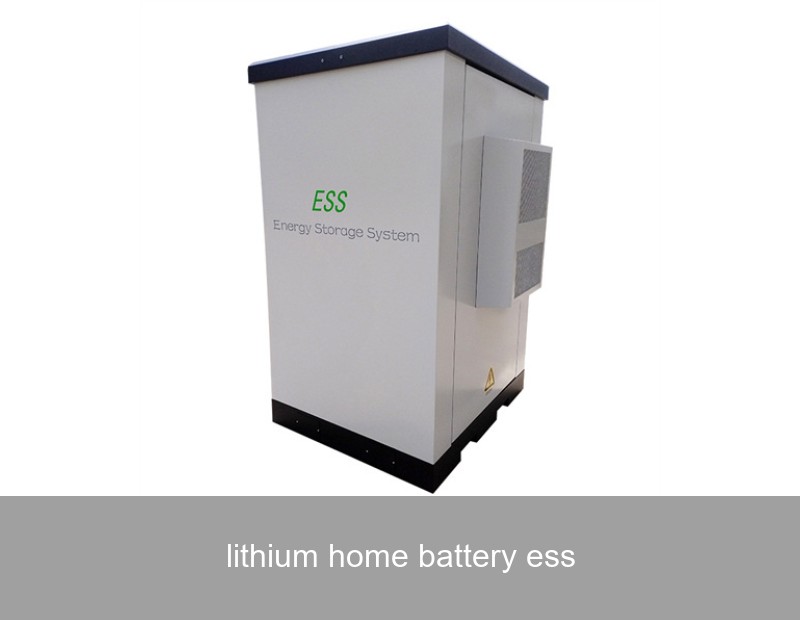
Have you ever watched your electricity bill climb steadily, wondered about the next grid outage, or felt a desire to make your home's power cleaner? You're not alone. Across Europe and the United States, homeowners are increasingly turning to a powerful solution: the lithium home battery energy storage system (ESS). This isn't just a backup power source; it's the heart of a modern, resilient, and intelligent home energy ecosystem. Let's explore how this technology is transforming how we power our lives.
Table of Contents
What is a Lithium Home Battery ESS?
At its core, a lithium home battery ESS is a sophisticated device that stores electrical energy for use in your home. Think of it as a giant, high-tech rechargeable battery for your entire house. It typically pairs seamlessly with solar panels, storing excess energy generated during sunny days for use at night or during cloudy periods. But its role is far greater. Modern systems like those developed by Highjoule are integrated energy managers. They intelligently decide when to store grid power (during low-cost, off-peak hours), when to discharge it (during expensive peak times), and how to ensure critical loads stay on during an outage—all automatically.

The "lithium" refers to the battery chemistry, predominantly Lithium Iron Phosphate (LFP), which has become the industry standard for home storage due to its exceptional safety, long lifespan (often over 6,000 cycles), and stability. The "Energy Storage System" encompasses not just the battery cells, but the critical power electronics: the inverter, battery management system (BMS), and software that makes it all work intelligently and safely.
Why Now? The Data Driving the Shift
The adoption of home battery systems is not a niche trend; it's a mainstream movement backed by compelling data. In the U.S., residential energy storage installations saw a record year in 2023, growing over 40% year-over-year. In Europe, driven by high energy prices and a strong sustainability ethos, countries like Germany, Italy, and the UK are leading the charge.
The phenomenon is clear: volatile and rising electricity costs make financial predictability a challenge. Simultaneously, extreme weather events are making grid outages more frequent. The U.S. Energy Information Administration notes that the average U.S. customer experienced just over 5 hours of outages in 2021, with major events causing significantly more disruption. This combination of economic and reliability concerns is the primary catalyst for homeowners to take control.
Key Benefits: Beyond Just Backup
A high-quality lithium home battery ESS delivers a multi-faceted return on investment:
- Bill Savings & Load Shifting: Automatically use stored battery power during peak rate periods (e.g., 4-9 PM), drastically reducing your draw from the expensive grid. This "peak shaving" can slice a significant portion off your monthly bill.
- Enhanced Energy Independence: Maximize your consumption of self-generated solar energy. Instead of sending excess solar back to the grid at low feed-in tariffs, store it for your own use, increasing your self-consumption rate to 70% or more.
- Uninterruptible Power Supply (UPS): In the event of a grid failure, the system switches to backup power in milliseconds. Lights stay on, refrigerators run, and your home remains safe and functional.
- Grid Support & Sustainability: By reducing demand on the grid during peak times, you're contributing to a more stable and efficient community energy infrastructure. You're also directly lowering your carbon footprint.
A Real-World Case Study: The Smith Family in Bavaria
Let's make this tangible. The Smith family (name changed for privacy) in southern Germany installed a 10 kWp solar array on their home in 2020. While they reduced their grid imports, they were still exporting over 50% of their summer production. In early 2023, they integrated a 13.5 kWh lithium home battery ESS.
| Metric | Before ESS (2022) | After ESS (2023) | Change |
|---|---|---|---|
| Solar Self-Consumption | 48% | 92% | +44% |
| Annual Grid Import | 3,200 kWh | 850 kWh | -73% |
| Monthly Energy Cost (Avg.) | €145 | €32 | -78% |
Furthermore, during a planned grid maintenance outage that lasted 8 hours, their home operated seamlessly on battery and solar power. "The system paid for itself faster than we calculated, and the peace of mind is priceless," the homeowner reported. This case highlights the triple win: financial, environmental, and practical resilience.
Choosing the Right System: What to Look For
Not all home battery systems are created equal. When evaluating options, consider these critical factors:
- Battery Chemistry & Safety: Insist on Lithium Iron Phosphate (LFP). It is inherently non-combustible and offers a longer cycle life compared to older NMC chemistries.
- Usable Capacity & Depth of Discharge (DoD): Ensure the advertised capacity is the *usable* amount. A quality system will offer a 100% DoD, meaning you can use all the stored energy without harming the battery.
- Power Rating (Continuous & Surge): Can the system output enough power to run your essential loads simultaneously? Look for continuous power ratings of at least 5 kW, with higher surge capability for starting motors (like well pumps).
- Integration & Smart Software: The system should be an AC-coupled or hybrid inverter solution that easily integrates with new or existing solar. Its software should allow for customizable modes (e.g., self-consumption, time-based control, backup priority).
- Warranty & Lifespan: A robust warranty (10+ years) guaranteeing a high percentage of remaining capacity (e.g., 70% at year 10) is a sign of manufacturer confidence.
The Highjoule Solution: Engineered for Reliability
At Highjoule, with nearly two decades of experience since 2005, we've engineered our HomePower ESS series to meet and exceed these exacting criteria. Designed for the diverse climates and grid standards of Europe and North America, our systems are built on three pillars: intelligence, safety, and durability.
Our HomePower ESS utilizes premium LFP cells in a modular, scalable design from 5 kWh to 30 kWh. The integrated AI Energy Director software goes beyond simple scheduling. It learns your household's consumption patterns, factors in weather forecasts, and dynamically optimizes energy flow to maximize savings and readiness. For safety, our proprietary multi-layer BMS provides cell-level monitoring and thermal management, a standard that has made us a trusted partner for commercial and microgrid applications worldwide.
We understand that installation should be straightforward. Our systems feature a sleek, wall-mounted design and come with comprehensive support for installers, ensuring a smooth process from design to commissioning. For homeowners, the intuitive Highjoule Home Energy App provides real-time visibility and control, putting the power of your personal energy plant in the palm of your hand.
Your Home's Energy Future: What's Next?
The journey towards a fully intelligent home doesn't end with a battery. The future lies in integration—connecting your EV charger, heat pump, and smart appliances into a cohesive, automated energy network. With a robust lithium home battery ESS as the foundation, your home is ready to participate in virtual power plants (VPPs) or dynamic grid services, potentially creating new revenue streams.
The question is no longer *if* home energy storage will become a standard household feature, but *when*. With the combined pressures of economics, climate, and energy security, the value proposition only grows stronger. What is the first step you will take to understand your home's potential for energy independence and resilience?
 Inquiry
 Online Chat